Carnival stock: The rich are cruising while the economy slows

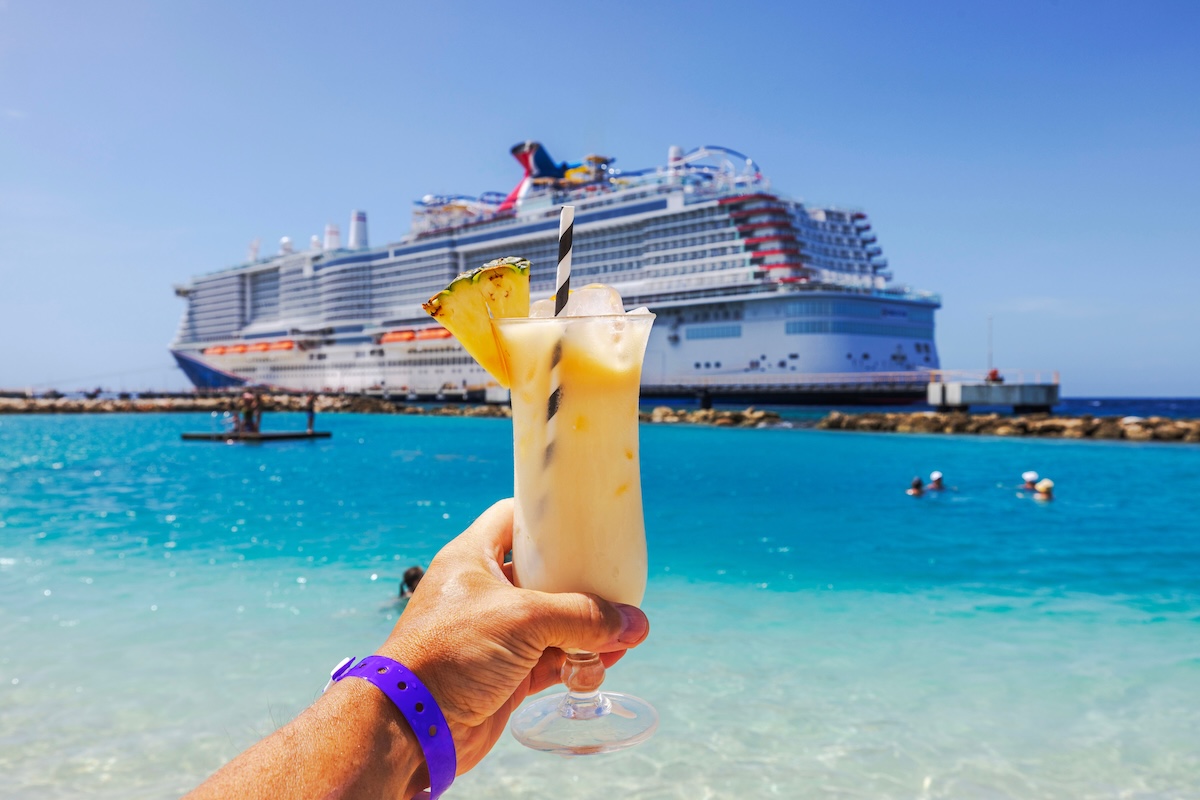
Shares of Carnival Corporation (CCL) surged last week after the North American cruise operator delivered a stronger-than-expected earnings report.
On Friday, Carnival reported record results for the full fiscal year, driven by strong pricing power, elevated net yields, and last-minute bookings that helped lift both ticket and onboard spending, according to the company’s presentation.
The company posted record revenues, record net yields, record adjusted EBITDA, record operating income, and the highest level of customer deposits in its history, culminating in an adjusted net income of $3.1 billion for the full year.
For the fiscal fourth quarter, Carnival reported an adjusted earnings per share of $0.34, a 140% year-over-year increase that beat consensus expectations, and revenues of $6.33 billion, a quarterly record that rose nearly 7% from the prior year.
Carnival also signaled solid momentum heading into 2026, with management saying bookings are already at historically high levels and pricing remains strong, even as the company has raised prices for next year’s sailings.
Approximately two-thirds of its 2026 capacity is already booked, outpacing the typical pace seen at this point in the booking cycle.
Perhaps just as notable, U.S. customers accounted for 56% of Carnival’s total customer base, indicating that demand from the world’s largest economy remains resilient, even as cost-of-living pressures persist.
The upbeat results helped extend a recent rally in Carnival shares. The stock jumped more than 9% on Friday, pushing weekly gains past 11%, and is now up more than 17% over the past month.
What recession?
Carnival’s strong results were echoed by CEO Josh Weinstein, who said the company saw powerful booking activity during the holiday period, with sales from Black Friday through Cyber Monday surpassing last year’s already elevated levels.
Taken together, the results contribute to growing evidence that many Americans continue to spend freely on travel, absorbing higher living costs and a cooling labor market, to prioritize vacations.
At the same time, the figures highlight a widening economic divide, as households with stable employment and in-demand skills remain able to splurge, even as financial pressures intensify for others.
Some economists describe this dynamic as a “two-speed economy,” in which gains from financial assets disproportionately boost wealth at the top, while a growing share of lower-income households is left behind.
Others characterize it as a “K-shaped economy,” a term that emerged after the pandemic to describe a recovery in which higher-income households and asset owners pulled further ahead, while lower-income workers faced slower wage growth and greater financial strain.
Data from the Federal Reserve reinforce that view, showing that the top 10% of households hold roughly 70% of total U.S. wealth, while the bottom half controls just 2.5%.