Analyst warns that a Tesla recall 'ends' its 'robotaxi story'
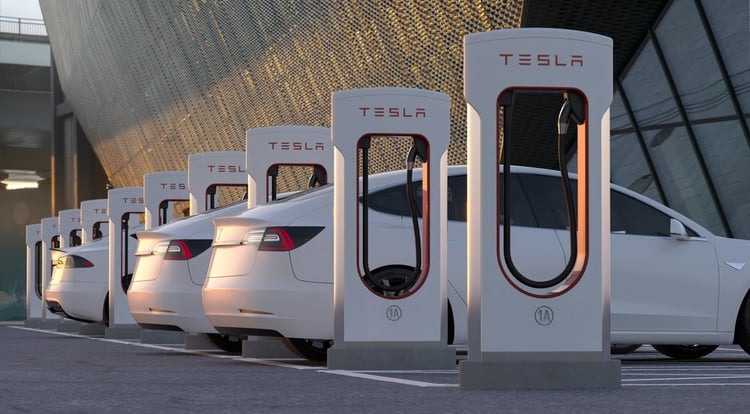
One could argue that Tesla, Inc.'s (TSLA) $1.4 trillion market cap is most indicative of the unwavering confidence that Tesla bulls have in Elon Musk more than how it currently views his company.
Despite the fact that Tesla has fallen significantly behind Alphabet's (GOOG) Waymo in launching a robotaxi service in the United States, or that Musk's foray into politics last year may have caused Tesla to lag behind rivals in terms of innovation, Tesla bulls are confident that Musk is smart enough and savvy enough to eventually right the ship.
But with TSLA shares down more than 18% so far this year, it's possible that some cracks are starting to show in that confidence.
And that confidence got tested further when the National Highway Traffic Safety Administration's (NHTSA) Office of Defects Investigation (ODI) said last week that it has escalated its investigation into Tesla's Full Self-Driving (Supervised) system, specifically targeting its inability to handle reduced visibility conditions on the roads.
The ODI first opened a probe into Tesla's FSD system in October 2024 following four reported crashes that Tesla had in low-visibility conditions, including one that involved the death of a pedestrian and another that left a pedestrian injured.
Its latest probe that it opened on Thursday is what the ODI calls an "engineering analysis," which is its highest level of investigation. It is the last step taken before an automaker is ordered to make a full recall of its vehicles.
After news of the expanded investigation broke, GLJ Research said that it would add a "short exposure" to TSLA shares based on the news.
"The consensus bull case on Tesla is built on autonomous driving optionality," the firm said in a note. "That optionality requires regulatory tolerance for the FSD software stack. Today's EA escalation is the most concrete regulatory signal yet that such tolerance is being withdrawn — not politically, but procedurally, through the formal defect determination process that ends in recalls."
GLJ Research did not mince words about what the worst case scenario could mean for Tesla.
“A forced recall on FSD does not slow the robotaxi story,” it said. “It ends it.”
Gordon Johnson, the founder and CEO of GLJ Research argued in a post on X that the potential for a forced recall has not been priced into Tesla's shares yet.
"You cannot build a $1.2T robotaxi company on software the federal government is one determination away from forcing off the road," Johnson said.
Johnson also cited third-party tracking data - which he claims Musk himself has interacted with - showing that Tesla is at 809 city miles to critical disengagement. Critical disengagement is when the FSD fails to handle a situation and needs immediate human intervention.
However, Tesla has already pulled its safety drivers from behind the wheel in its testing on public roads in its home base of Austin, Texas.
By comparison, Johnson notes that Waymo waited until it reached 30,000 city miles before it pulled its safety drivers from its vehicles.
He questions why the NHTSA, which is the top automotive safety regulator in the United States, is allowing Tesla to pull its safety drivers so soon.
In terms of TSLA shares, GLJ Research said that the ODI's expanded investigation is "the beginning of the end of the regulatory runway that the robotaxi valuation requires."