Gary Black: Tesla and SpaceX merger could erase $750B in value

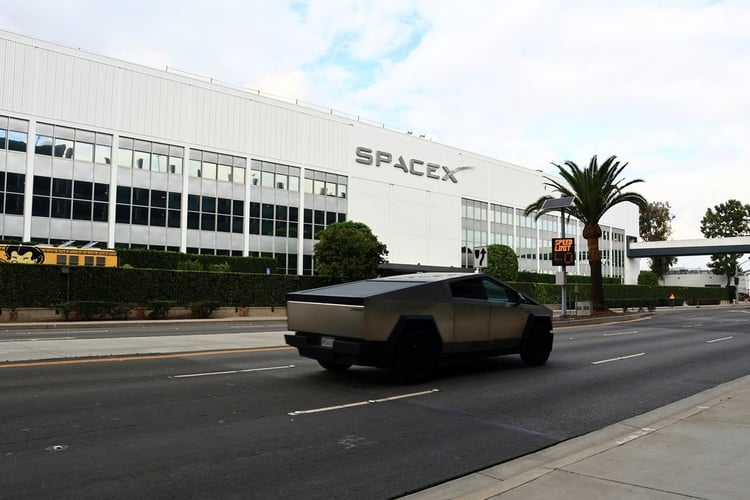
Given the fact that the common denominator connecting Tesla, Inc. (TSLA), SpaceX and xAI is Elon Musk, it's not surprising that the operations of the three companies tend to be considerably intertwined.
In fact, Musk himself noted this fact in a post on X back in November.
"My companies are, surprisingly in some ways, trending towards convergence," he said.
This convergence became even more pronounced in January when Tesla poured $2 billion into xAI, the OpenAI competitor that Musk launched three years ago. And in 2024, SpaceX had about $2.4 million in expenses related to commercial, licensing and support agreements with Tesla.
While Tesla invested billions in xAI, Bloomberg reported that the company had also "discussed the feasibility of a tie-up between SpaceX and Tesla, an idea that some investors are pushing."
Bloomberg noted that companies are also "exploring a tie-up" between SpaceX and xAI ahead of the former's looming IPO.
But Gary Black, managing partner of The Future Fund and a frequent Musk critic, warns that a potential merger between Tesla and SpaceX would be bad news for Tesla shareholders.
"In short, a TSLA/SpaceX merger is a solution looking for a problem," Black said in a post on X. "It’s dilutive for $TSLA shareholders and so unlikely to happen."
According to Black, a merger between Tesla and SpaceX could erase $750 billion in market valuation, citing the "lowest multiple rule."
"In my 30 years as a professional investor I have rarely seen post-merger companies trade at 'blended multiples' based on the underlying companies’ respective multiples and growth prospects," he said. "Financial history is littered with examples where unrelated companies with different multiples and growth prospects were merged together and the lowest common multiple won out."
He notes that the one exception to this rule is with Berkshire Hathaway, Inc. (BRK-B), "because of the Warren Buffett premium that attaches to the company purchased."
Based on his calculations, Black said that if Tesla issued about $1.5 trillion in equity to acquire SpaceX at comparable valuations, the combined company would have about $3 trillion in equity value and approximately $22.5 billion in annual earnings before interest, taxes, depreciation, and amortization (EBITDA).
When Tesla’s multiple is applied to the combined entity instead of SpaceX’s higher implied growth multiple, the expected valuation would drop about $2.25 trillion, resulting in a roughly 25% reduction for Tesla shareholders.
"The 25% value reduction is commonly referred to as a 'conglomerate discount' since stocks trading separately on their own multiples and growth prospects almost always trade at higher multiples vs two companies merged together where the lowest common multiple generally prevails," Black said.
However, if SpaceX were to buy Tesla instead, Black would expect Tesla shareholders to realize short-term gains, "but expect TSLA investors who bought TSLA for its upside in EVs, autonomy, and robots and who now own SpaceX stock to sell their shares post merger."
TSLA had once been Black's largest position, but in August he noted that his fund had sold all of its TSLA shares, saying the stock’s valuation had become “disconnected from underlying fundamentals.”
Tesla's stock is down more than15% so far this year.