Gary Black doubts bull case for Tesla's robotaxis

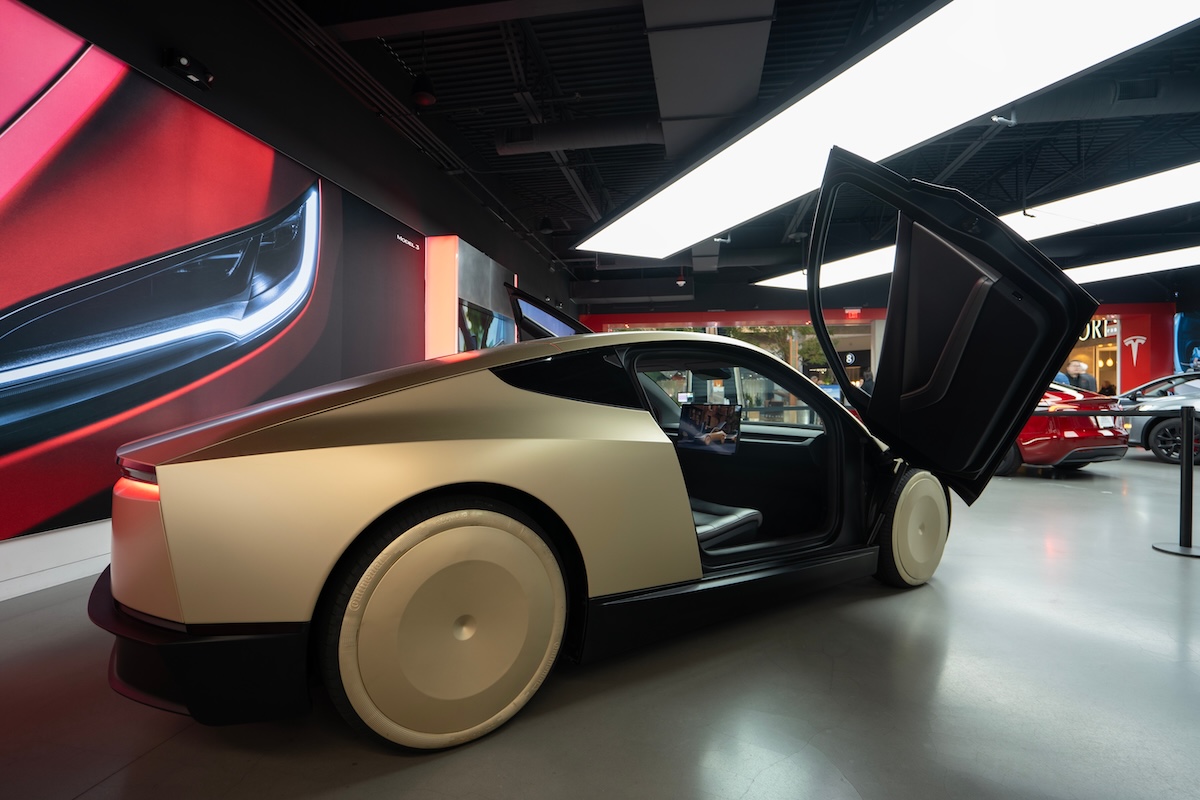
When it comes to the burgeoning robotaxi market in the United States, most analysts focus on the competition between Alphabet's (GOOG) Waymo and Tesla, Inc. (TSLA).
But thus far, it hasn't really been much of a competition. When Waymo announced last month that it was expanding its service to four new US cities, it brought its total commercial areas of operation in the country to 10.
The company is expected to add 18 additional cities in the United States by the end of this year. Waymo also said last year that it plans to launch its service in London this year as well, marking its first expansion into Europe.
Meanwhile, Tesla has still yet to expand beyond its home base of Austin, Texas.
But no matter how many times Musk may fail to deliver on the bold promises he makes for the company's robotaxi production, Tesla bulls haven't lost faith in his ability to ultimately deliver at some point.
In fact, many Wall Street analysts continue to see robotaxis as a strong tailwind for the company.
Rivals are pulling ahead of Tesla
But Gary Black, managing partner at The Future Fund and a frequent Musk critic, isn't buying the bull case for Tesla winning the robotaxi wars in the US.
He noted in a post on X that the losing streak for TSLA shares has hit three weeks and the stock is now down over 11% so far this year.
"Investors clearly growing wary of Elon’s promise that TSLA unsupervised autonomy will be in 25%-50% of the U.S. by year-end, when today only 8 vehicles out of ~400 TSLA robotaxis in operation have removed safety monitors," Black said.
He added that the "current hype that $TSLA will come to dominate unsupervised ride hailing reminds me of 2020-21, when TSLA bulls were adamant that Elon would reach his goal of delivering 20M vehicles per year by 2030."
Back in 2020-21, Tesla was Black's largest position. But in August, he noted that his fund had sold all of its TSLA shares, saying the stock’s valuation had become “disconnected from underlying fundamentals.”
He said in his latest post that the projection of Tesla delivering 20M vehicles by 2030 was "an absurd projection since 20M delivs/year would have represented 25% market share of the OVERALL auto business."
"Roll forward to 2026 and TSLA bulls are now convinced that only TSLA will solve for unsupervised autonomy," Black said. "TSLA bulls offer valuation models of $1,000/$2,000 and more that assume Tesla takes nearly ALL of the autonomous ride hailing market, which is as absurd as TSLA taking 25% of the overall auto market by 2030."
He points out that rivals like Waymo, Amazon (AMZN), Pony AI (PONY), WeRide Inc. (WRD) and Baidu, Inc. (BIDU) are already offering paid fully autonomous rides. And Nvidia Corporation (NVDA) is planning to provide fully autonomous hardware/software stacks to Tesla’s competitors.
“To argue no one else can achieve generalized unsupervised autonomy flies in the face of reality,” Black said.
He points to three reasons why Tesla bulls are "likely to get this wrong," including that they "consistently conflate production and demand, believing incorrectly that if TSLA produces it, consumers will buy it despite no marketing."
Black has long been pressing Tesla to begin a comprehensive marketing effort, something it has so far been adverse to do.
As for his other two reasons to doubt the Tesla bull case, he reiterates his point that other companies are already solving for fully autonomous capabilities ahead of Tesla, and then also accused Tesla bulls of believing "everything Elon says and so refuse to acknowledge anything negative about TSLA given his past record of successes."
Black isn't the only one on Wall Street who has begun to doubt Musk. Ross Gerber, co-founder and CEO/CIO of wealth management firm Gerber Kawasaki and an early Tesla investor, said in January that the company was "behind everyone now" in terms of innovation, blaming Musk's foray into American politics last year for setting Tesla back.