DraftKings shares gain on bill aiming to curb prediction markets

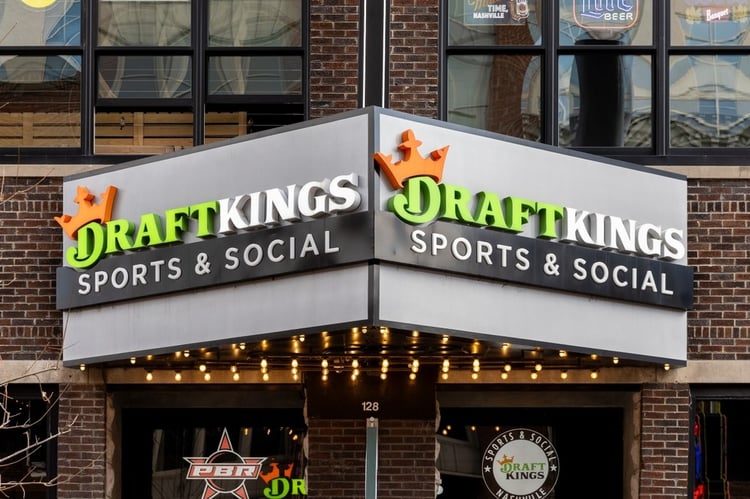
The US Senate introduced a bipartisan bill on Monday that aims to prohibit any companies registered with the Commodity Futures Trading Commission (CFTC) from listing a prediction contract that resembles a sports bet or "casino-style game."
The bill - which was co-sponsored by Adam Schiff, a Democrat from California, and John Curtis, a Republican from Utah - appears to be taking aim at Kalshi and Polymarket, the two companies that have led the surge in popularity with prediction markets.
Although prediction market platforms allow users to bet - or trade "event contracts" - on nearly everything happening in the world (including the weather), the primary business for both Kalshi and Polymarket is sports.
In fact, Kalshi said that it saw over $1 billion in trading volume during the Super Bowl in February.
However, the NFL banned commercials by prediction market companies in this year's Super Bowl, which points to the uncomfortable gray area that the platforms exist in at the moment.
“We're concerned that if these markets aren't properly regulated, they could be susceptible to manipulation or price distortion," David Highhill, VP of sports betting for the NFL, said in a call with reporters in August. "So, however this comes to be through the legal channels, I think it's really important that we take advantage of the robust framework that we've put in place via the legalized sports betting process."
While sports betting apps like DraftKings Inc. (DKNG) and Flutter Entertainment (FLUT) are only allowed in the 39 states where gambling is legalized in the US, Polymarket and Kalshi are legal in all 50 states since they are thus far not considered to be gambling platforms.
“Sports prediction contracts are sports bets — just with a different name," Schiff said in a statement. "And yet, these contracts have been offered in all fifty states in clear violation of state and federal law."
DraftKings could see $10B in revenue threatened
Although CFTC chairman Michael Selig said in a speech in January that it "is time for clear rules" around prediction markets, he appears to be following the same approach that the Trump administration has taken with cryptocurrencies, where the Securities and Exchange Commission (SEC) loosened many of the restrictions that had been put in place under the Biden administration.
As part of his initiative to set clear rules for the space, Selig has "directed CFTC staff to withdraw the 2024 event contracts rule proposal that would prohibit political and sports-related event contracts," as well an advisory from this year "which cautioned registrants about offering access to sports-related event contracts due to ongoing litigation."
“Rather than enforce the law, the CFTC is greenlighting these markets and even promoting their growth,” Schiff said. “It’s time for Congress to step in and eliminate this backdoor which violates state consumer protections, intrudes upon tribal sovereignty, and offers no public revenue.”
Curtis said in a statement that the bill, which is called “Prediction Markets Are Gambling Act,” is about “respecting states’ authority, protecting families, and keeping speculative financial products out of spaces where they don’t belong.”
“Too many young people in Utah are getting exposed to addictive sports betting and casino-style gaming contracts that belong under state control, not under federal regulators,” he said. “Our bipartisan legislation clarifies regulatory jurisdiction, ensuring that states can maintain their authority over sports betting and casino gaming.”
Flutter's stock gained over 4% on Monday, while DraftKing's shares were up just over 1%.
While the legislation would seem to benefit a company like DraftKings by preventing Kalshi and Polymarket from encroaching on its business, the reality is not that cut and dry. The company actually has its own prediction markets platform and DraftKings CEO Jason Robins told The Wall Street Journal earlier this month that it was looking to make it available in all 50 US states, but that "he is primarily focused on building out predictions markets for sports events, rather than political or cultural events."
If this bipartisan bill passes and blocks prediction market platforms from offering what is essentially sports betting, it would present a major roadblock to that part of the business for DraftKings, which Robins estimates could present an opportunity to bring in $10 billion in revenue.
The bill could also pose challenges for crypto and crypto-adjacent firms like Coinbase Global (COIN) and Robinhood Markets (HOOD), which are both offering prediction market platforms.
Robinhood has said that prediction markets have become the company's "fastest-growing product line by revenue ever," with 11 billion contracts traded by more than 1 million customers since it launched the service at the end of 2024.