CFTC to set 'clear rules' over booming prediction markets sector

In its ongoing effort to diversify its business away from its cryptocurrency exchange, Coinbase Global (COIN) announced on Wednesday that prediction markets were now live on its platform across all 50 states in the US, allowing users to trade contracts tied to real-world events.
While the company had already been offering the service in select regions, it expanded nationwide through a partnership with Kalshi, which along with Polymarket is one of the biggest prediction market platforms in the world.
“Prediction markets are the ultimate form of truth seeking. When there’s skin in the game, the output is far more reliable,” Coinbase CEO Brian Armstrong said on Wednesday in a post on X. "Everything else is biased by someone's agenda. I think we’ll look back at prediction markets as a breakthrough in how we discover truth in the world.”
There is little doubt that prediction markets are having a moment. Roughly $12 billion was traded on Kalshi and Polymarket in December, up more than 400% year-over-year, according to data from Piper Sandler.
The allure of the platforms is that it allows users to bet - or trade "event contracts" - on nearly everything: From who will win the US presidential election, who will win the Super Bowl, who will win at the Oscar's, who will replace Jerome Powell as chair of the Fed, and on down to the smallest possible thing like the temperature in New York City on any given day.
Prediction markets have gotten so popular that some people are even quitting their day jobs because they are making enough money off of wagering on current events.
Robinhood Markets (HOOD) said last month that since it launched the service at the end of 2024, prediction markets have become the company's "fastest-growing product line by revenue ever," with 11 billion contracts traded by more than 1 million customers.
Providing 'certainty' to prediction markets participants
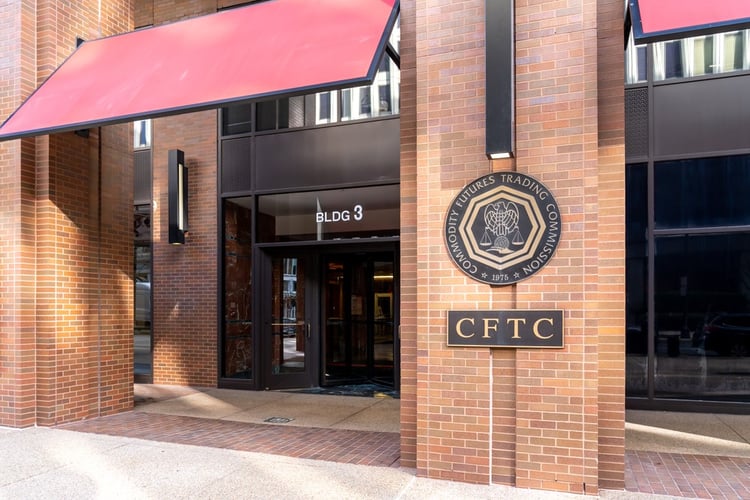
But in a speech on Thursday, Michael Selig, chairman of the US Commodity Futures Trading Commission (CFTC), noted that despite the booming business that the platforms are doing now, they have "operated within the CFTC’s regulatory perimeter for more than two decades."
"Despite their history, many view them as novel or unsettled," he said. "That uncertainty has not served our markets well, nor has it served the public interest."
Selig said that it "is time for clear rules" to be set for the industry "to support the responsible development of event contract markets and the important role they play in the broader financial system."
As part of this initiative, Selig has "directed CFTC staff to withdraw the 2024 event contracts rule proposal that would prohibit political and sports-related event contracts," as well an advisory from this year "which cautioned registrants about offering access to sports-related event contracts due to ongoing litigation."
As for any ongoing litigation cases, Selig is directing CFTC staff to reassess the agency's "participation in matters currently pending before the federal district and circuit courts."
He is also directing the agency's staff to put together an event contracts rule making draft.
"For too long, the CFTC’s existing framework has proven difficult to apply and has failed our market participants," Selig said. "That is something I intend to fix by establishing clear standards for event contracts that provide certainty to market participants."
The CFTC will also be working with the Securities and Exchange Commission (SEC) in an effort to "draw clearer lines between certain commodity and security options, CFTC-regulated swaps, and SEC-regulated security-based swaps."
The issue of regulating prediction markets is taking center stage with the looming Super Bowl on Feb.8, which is by far the biggest annual sports event in the United States, with over 127 million people tuning into watch the game last year.
The Super Bowl is also the biggest sports gambling event of the year in the US, with more than $1.5 billion expected to be wagered on it this year, according to the Wall Street Journal.
But while 11 states have not legalized sports gambling - including California and Texas, the two most populous states in the US - prediction markets have used a "legal loophole" to be allowed in all 50 states, according to the Journal.
The NFL, which has partnerships with sports betting companies Caesars Entertainment (CZR), DraftKings (DKNG) and FanDuel, has expressed concern about the prediction markets not facing the same regulated guardrails.
“We're concerned that if these markets aren't properly regulated, they could be susceptible to manipulation or price distortion," David Highhill, VP of sports betting for the NFL, said in a call with reporters in August. "So, however this comes to be through the legal channels, I think it's really important that we take advantage of the robust framework that we've put in place via the legalized sports betting process."
The NFL has banned commercials by prediction market companies in this year's Super Bowl, which also happens to be the most lucrative event for advertising every year, where a 30-second spot during the big game can cost $8 million.