Will the midterms bring checks and balances to the stock market too?

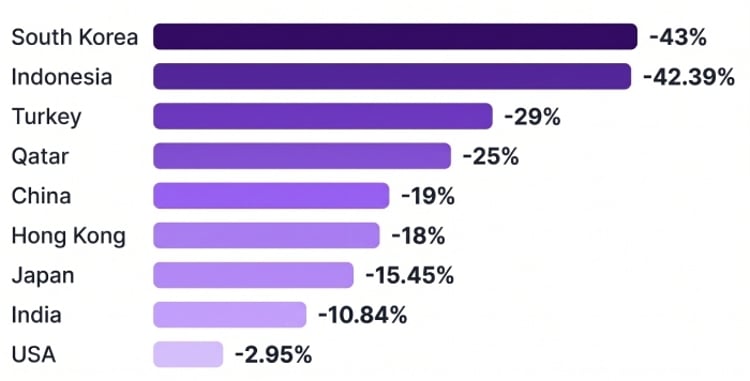
Global stocks have shed roughly $10 trillion in market value from their peak earlier this year. But the midterms could usher in an even more dangerous phase.
Peter Schiff warned that the global stock market is at risk from a combination of historically expensive stocks, rising inflation, higher bond yields, and a weakening economy.
The fact that Democrats are gaining ground ahead of the elections isn't helping either.
That's because a Democratic shift could change expectations for taxes, spending, and business regulation, adding a political dimension to Wall Street's recent anxieties.
An October Washington Post-ABC News-Ipsos poll showed Democrats leading Republicans by eight points in congressional voting preferences.
Meanwhile, a Harvard forecasting model gave Democrats a 94% chance of winning the House and a 72% chance of flipping the Senate as of Oct. 23.
Wall Street's history with divided governments
Retirement Researcher, a retirement education and financial research platform, examined S&P 500 returns under different combinations of presidential and congressional control between 1926 and 2023.
Over the 34 years when a Republican occupied the White House and Congress was divided, the S&P 500 returned an average of 7.33% per year.
By comparison, returns averaged 14.52% under unified Republican control and 14.01% under unified Democratic control.
📌 Bottom line: While a divided Congress doesn't guarantee lower stock market returns, the historical precedent isn't encouraging.