When will AI bring the promised deflation?

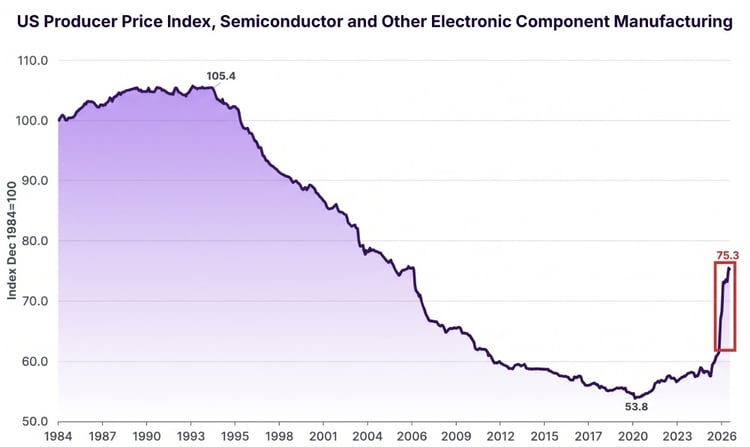
The AI revolution was supposed to make the world more productive by boosting productivity and automating routine cognitive tasks. Yet one of its most important inputs - semiconductors - is reversing decades of decline in producer prices.
The AI (price) boom
According to Federal Reserve and BLS data, the Producer Price Index (PPI) for semiconductor and other electronic component manufacturing surged 26% year over year in September, its fourth-largest annual increase on record.
It also marked the sixth consecutive month of annual price increases of at least 25%.
Since July 2025, the index has climbed 31%, a remarkable reversal for an industry where producer prices declined every year from 1994 through 2021.
When technology costs more than the labor it replaces
The cost of AI is becoming a problem for companies trying to save money by replacing workers with technology.
Forbes has documented the paradox of businesses cutting jobs to invest in AI systems that can end up costing more than the labor they replace.
Consumers are also competing with the AI industry for increasingly expensive electronic components.
"We are in the midst of a huge AI-related buildout, which requires inputs like chips that also go into consumer goods," said BofA Securities economist Stephen Juneau.
"So now consumers are competing for these goods with businesses, which is crowding out demand."
📌 Bottom line: AI's promised productivity savings could take years to materialize, while the costs of building it are already showing up in producer prices.