Trump’s blue-collar base is getting crushed by a ‘booming’ economy

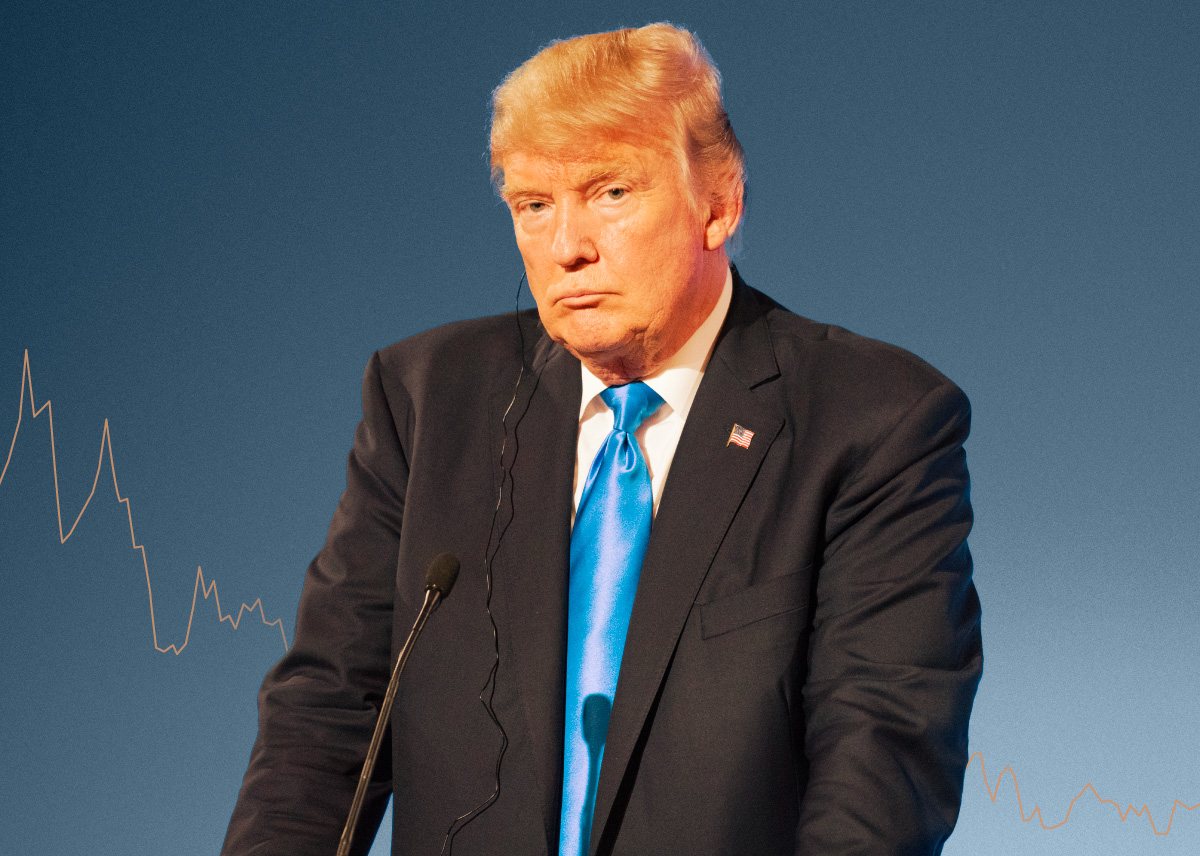
America’s manufacturing base is in its worst slump since the financial crisis, throwing a wrench in headline GDP figures.
Earlier this week, the Institute for Supply Management (ISM) reported that U.S. manufacturing activity contracted again in December, marking the sector’s tenth consecutive month of decline, according to its purchasing managers’ index (PMI).
The sector has been largely in contraction for the past three years.
In comments to ISM, business managers pointed to depressed activity and weakening consumer demand, citing the combined impact of high interest rates and tariffs.
However, a closer look at the data reveals a more troubling picture. Fifteen manufacturing industries reported contraction during the month, while only two registered growth.
As economist David Rosenberg noted, that translates to just 11% of U.S. manufacturing industries in expansion mode, down from the prior month and from roughly 39% a year earlier.
“That 11% share of industries in expansion mode, as an aside, is tied for the second-lowest reading since [...] April 2009, when the Great Recession hadn’t even reached its worst point,” Rosenberg wrote.
The economist also drew parallels between the weak PMI data and the latest GDP report, which showed the U.S. economy expanding at a rapid 4.3% annualized pace in the third quarter.
Critics, however, have flagged potential distortions in the report, including outsized gains in healthcare-related activity that may have inflated the headline growth figures.
A widening disconnect
The gap between strong headline GDP growth and a struggling manufacturing sector is not new.
Manufacturing’s share of U.S. economic output has been shrinking for decades, and recent signs of a freight industry downturn have added further strain to the industrial economy.
That disconnect complicates the Trump administration's efforts to reindustrialize the economy, with tariffs positioned as a tool to encourage companies to reshore production and invest domestically.
So far, the results have been limited.
According to economist Joseph Politano, the United States is now losing blue-collar jobs year over year for the first time since 2008.
According to Politano, job losses have been concentrated in manufacturing, transportation, and mining, while employment growth in construction has largely stalled.
The US is losing blue-collar jobs for the first time since the pandemic—year-on-year job losses have hit 65k as manufacturing, transportation, & mining industries lose jobs at a rapid pace while growth in construction has nearly zeroed out pic.twitter.com/vLoyqpWAme
undefined Joey Politano :rainbow-flag: (@JosephPolitano) December 16, 2025
The picture adds another layer of complication for President Trump, whose political rise was fueled in large part by support from blue-collar workers who have borne the brunt of the industrial slowdown.