WeRide (WRD) secures landmark city-level driverless permit in Abu Dhabi

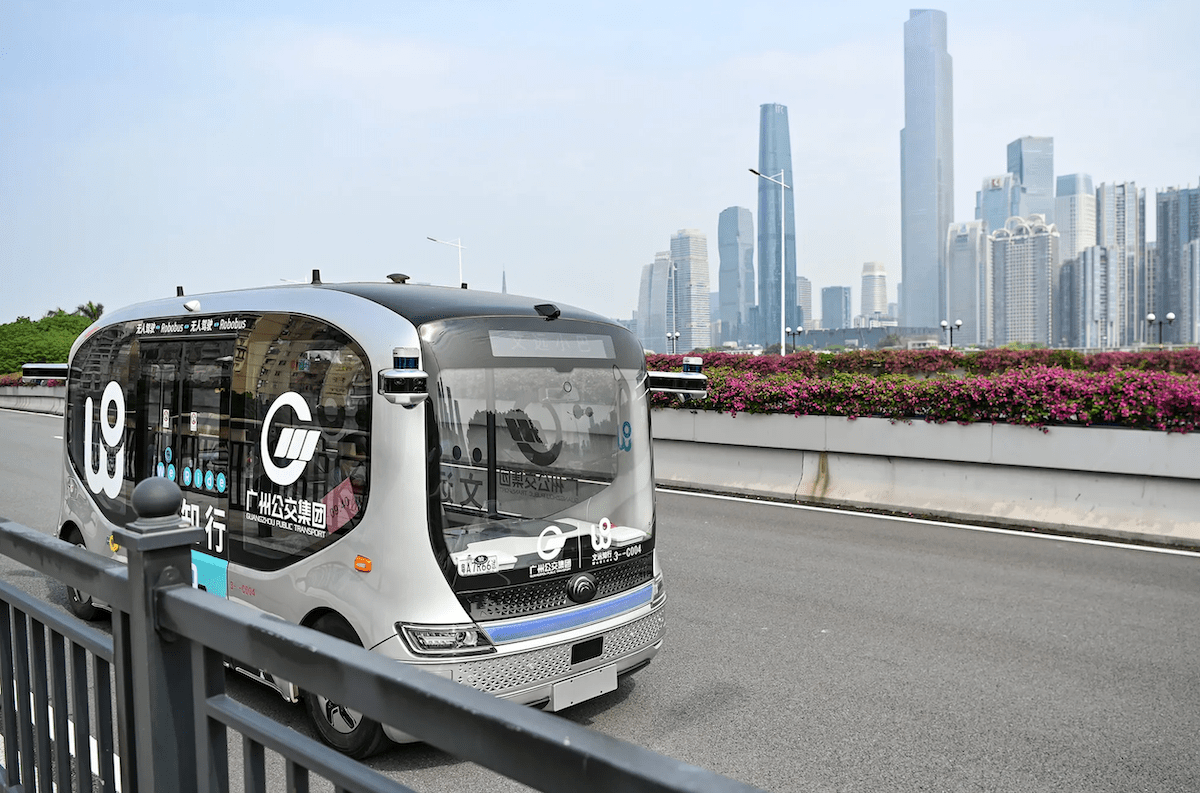
WeRide (WRD) said on Monday that it has been granted a permit to conduct fully driverless commercial robotaxi operations in Abu Dhabi, becoming the first international company to get this approval in the United Arab Emirates (UAE).
WeRide is also one of the first companies to receive a city-level commercial permit for Level 4 autonomous driving outside the United States.
Level 4 is considered "high automation" and means that the vehicle can drive itself without any human input within a limited area or set of conditions.
The Chinese company said that it will launch the service in Abu Dhabi through partnerships with Uber Technologies (UBER) and TXAI, which provides AI-powered geospatial intelligence solutions.
It's unclear when the service will launch, but WeRide said that "further details to be communicated soon."
WeRide became the first AV provider to secure the UAE’s national license for self-driving vehicles on public roads in July 2023.
Last year, WeRide and Uber launched a ride-hailing partnership in Abu Dhabi — the first time AVs were available on Uber outside the US. The companies expanded their partnership in July to cover about half of Abu Dhabi's core areas.
WeRide is aiming to cover most of the country's core areas by the end of the year. The company said that its vehicles have driven close to one million kilometers of roads in Abu Dhabi as of October.
By acquiring this latest permit for Level 4 autonomous driving, WeRide will be allowed to offer its services without an in-vehicle safety officer.
This will allow it "to achieve financial breakeven on unit economics" with its robotaxi business in Abu Dhabi, the company noted.
WeRide also partnered with Uber earlier this year to launch its robotaxis in Dubai. The company said that it wants to expand its fleet in the Middle East to 1,000 robotaxis by 2026, and deploy "tens of thousands" by 2030.
Middle East and Europe become key to expansion
The Middle East has become a welcoming market for AV companies, as governments in the region aggressively try to tackle worsening traffic congestion and a shortage of taxi services.
Dubai is aiming to have 25% of the daily vehicle transportation on its roads be driverless by 2030. Abu Dhabi is aiming for the same percentage by 2040.
Saudi Arabia has targeted 15% by 2030.
WeRide has also been pushing into Europe, entering the Belgium market in September with the launch of its robobus fleet in the city of Leuven.
The expansion is coming through a partnership with Flemish public transportation company De Lijn and mobility consultancy firm Espaces-Mobilités.
This marked the 11th global market that WeRide has entered into and strengthened its business in Europe, after having also launched its service in France, Spain and Switzerland.
WeRide CEO Tony Han told The Wall Street Journal earlier this year that his long-term vision for the company is to scale internationally and reach profitability fast.
Its partnership with Uber is central to this strategy, with Han telling the Journal that it can reach profitability faster than "pure" robotaxi rivals that have "to maintain 5,000 robotaxis in a single city to reach profitability," while WeRide can achieve it "with only five to 10 cars" thanks to its Uber integration.