Wall Street is starting to panic about Tesla’s revenue trap

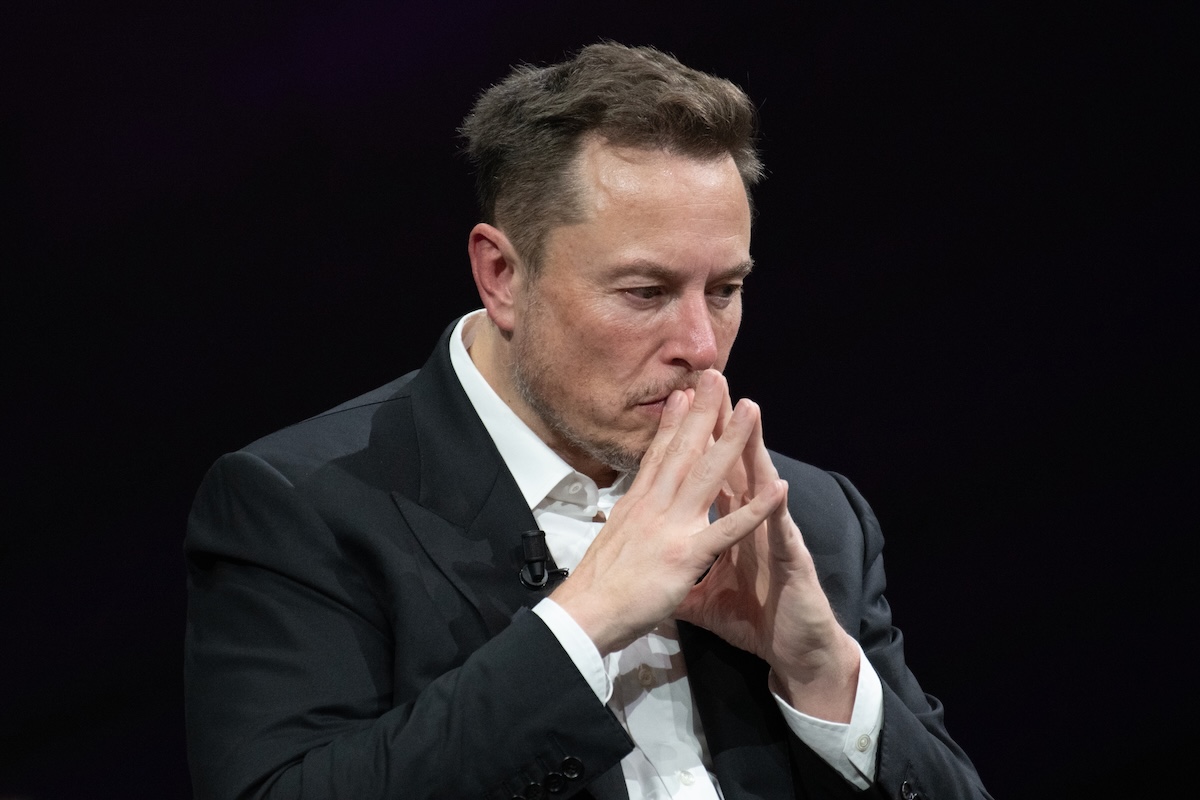
Tesla’s sharp underperformance this year has been blamed in part on CEO Elon Musk’s political activism tied to the Trump White House, but the company’s deeper problem is a growing struggle to reignite momentum amid intensifying global EV competition.
A closer look at the company’s financials shows that revenue has failed to grow for two consecutive years — an unusual break from the expansion narrative that once defined the business.
Tesla hasn't grown revenues for two years straight$TSLA pic.twitter.com/pSn8VdBLQS
undefined Aria Radnia (@QualityInvest5) December 1, 2025
As of its September quarter, Tesla’s trailing 12-month revenue stood at $95.6 billion, essentially flat from the third quarter of 2023.
For most of its public life, the company has been valued as a high-growth technology stock rather than a traditional automaker. Flat revenue undermines that investment thesis and pulls its valuation closer to legacy manufacturers such as Ford and General Motors, rather than growth-driven tech leaders like Nvidia or Amazon.
When growth stalls, valuation often compresses — a concern recently echoed by investor Michael Burry, who labeled the stock “ridiculously overvalued.”
Burry pointed to shareholder dilution and reliance on a perpetual growth narrative that, in his view, is no longer materializing.
Growth pressures have weighed on Tesla shares, which are up just 10% this year and 18% over the past 12 months, both underperforming the Nasdaq Composite. Given the company’s current market position, its $1.4 trillion valuation is becoming harder to justify.
Tesla’s plunging market share
Amid intensifying global competition in the electric-vehicle market, Tesla’s share of U.S. EV sales has fallen to its lowest level since 2017, according to data from Cox Automotive shared with Reuters.
At its peak, Tesla once controlled more than 80% of the U.S. EV market. That share has since slid to roughly 38%, marking the first time its dominance has fallen below 40% in eight years.
Much of that erosion has come from rising competition by domestic and global brands, including Chevrolet, Cadillac, Ford, and Hyundai, according to data from Cox Automotive.
“I know they’re positioning themselves as a robotics, AI company. But when you’re a car company, when you don’t have new products, your share will start to decline,” said Stephanie Valdez Streaty, Cox’s director of industry insights.
The challenge extends beyond the United States. Tesla made a high-profile push into India this year, but early sales have been dismal. In its first five months of operations, the company delivered only about 100 Model Y vehicles.
Ironically, the company is facing pressure not only from more affordable rivals, but also from premium brands such as BMW and Mercedes-Benz. As The Street reported, these brands have “easily” eclipsed Tesla’s premium EV sales.