Here's why Supermicro’s (SMCI) correction is misunderstood

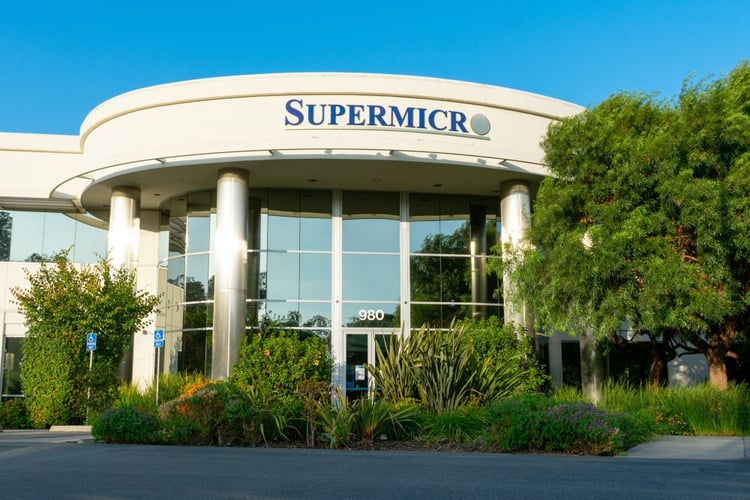
Shares of Super Micro Computer (SMCI) have tumbled over the past month, reflecting a mix of weaker-than-expected earnings, contracting margins, and shipment delays.
But zooming out, the recent turbulence also marks an arguably healthy pullback after the company’s relentless run-up.
SMCI shares have declined by roughly 12% over the past five days and more than 35% over the past month. While the sell-off has unfolded alongside a broader decline in technology stocks, it accelerated after Supermicro’s disappointing quarterly report.
In its fiscal first quarter of 2026, the company posted revenue of about $5.02 billion, well below the $6.09 billion analysts expected. Earnings of $0.35 per share also came in short of the $0.41 consensus estimate.
It marked the sixth consecutive quarter in which Supermicro missed Wall Street’s revenue and earnings expectations — an unusual streak for a company that had become synonymous with hypergrowth.
Even so, management raised its full-year revenue outlook to $36 billion from $33 billion, citing strong demand for AI servers and compute infrastructure.
High expectations remain partly driven by Supermicro’s positioning as an early leader in AI-optimized server design, including systems built around Nvidia chips. As a result, the company’s performance is often viewed as a proxy for broader AI infrastructure demand.
Despite the recent setbacks, Supermicro remains a company where context matters.
Even before the turbulence of 2025, its stock had been one of Wall Street’s standout performers and the long-term AI narrative continues to loom large.
Supermicro’s hot streak
As data analyst Cata Paul has noted, Supermicro’s meteoric rise has received far less mainstream attention than tech giants like Nvidia and Tesla.
Yet over the five-year period ending Nov. 30, 2024, Supermicro posted a staggering 1,432% total return, including dividends, which was only surpassed only by Nvidia and Tesla.
The company remains well-positioned in the AI infrastructure build-out. It recently unveiled a new AI factory cluster based on Nvidia’s enterprise reference architecture, underscoring its role as a key supplier of high-performance, AI-optimized server systems.
Supermicro has also partnered with Intel to demonstrate advanced computing solutions for the financial services industry.
This marks a significant development, as banks, insurers, and trading firms are among the earliest adopters of AI for risk modeling, fraud detection, and real-time analytics.
That said, one of the biggest risks for Supermicro from an investor standpoint is the widening gap between revenue growth and profitability, especially as the company pursues increasingly large AI infrastructure deals.
As JPMorgan analyst Samik Chatterjee noted, “the profit opportunities have been dramatically different than the revenue opportunities in AI compute, with AI server leaders continuously sacrificing margins to participate in large deals.”