Rocket Lab doesn’t need Mars

Rocket Lab (RKLB) didn’t just “lose Mars.”
Investors just decided it did.
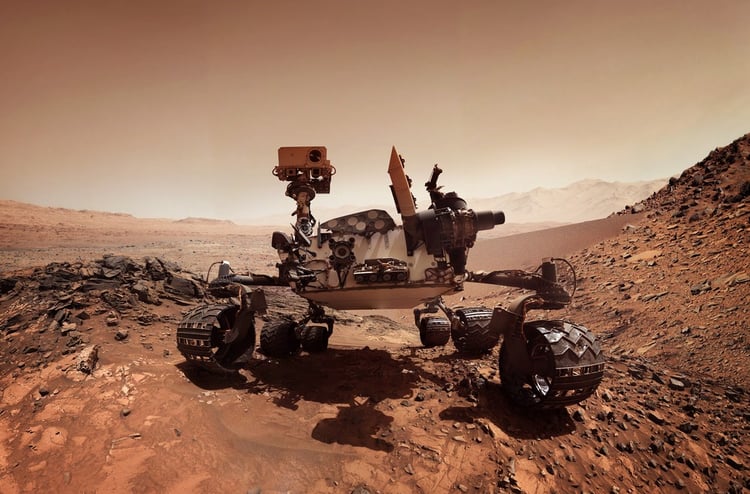
Shares plunged more than 7% after Congress shelved plans to return samples from Mars… a mission tied to NASA’s Perseverance rover that Rocket Lab had pitched with a lower-cost retrieval system. Some investors had attached as much as $4 billion in upside from a future retrieval mission.
That reaction rests on a bad assumption: that Rocket Lab needs a flagship Mars mission to make the business work.
It doesn’t.
The business Rocket Lab already controls
While investors fixated on a deep-space payday, Rocket Lab is already getting paid to launch satellites and supply the hardware that keeps them running.
Its Electron rocket is designed for a simple job: launching small satellites into precise orbits for governments, defense agencies, and commercial operators. Its track record stands out:
- 81 Electron launches completed
- Two launches in eight days to start the year
- 300 kg payload capacity to low Earth orbit, priced for small satellite customers, not mega-constellations
Electron’s job ends once the satellite reaches orbit. Then the real constraint begins.
Satellites don’t fail because they can’t fly… They fail when they run out of power.
Why solar is the part investors ignore
Once satellites are in orbit, they need electricity to operate… often for years. That power usually comes from solar panels.
Instead of outsourcing that layer, Rocket Lab owns it.
In 2021, the company acquired SolAero for $80 million, quietly becoming one of the world’s largest suppliers of space-grade solar cells and panels… a niche with high technical barriers and repeat demand.
As CEO Peter Beck put it plainly: “We’re the largest space-grade solar cell provider and panel provider in the world now.”
That combination is starting to show up in the financials. In the most recent reported quarter, Rocket Lab posted:
- 48% revenue growth to $155.1 million
- Net loss of just $0.03 per share, well ahead of expectations
- Backlog exceeding $1.1 billion
- More than $1 billion in cash on the balance sheet
Launch revenue isn’t steady. Solar and space systems bring repeat orders.
Together, they form a business model most space companies don’t have.
Bottom line: Mars made for an easy story… and an easy selloff. But Rocket Lab’s business doesn’t hinge on flags, rovers, or politics. It hinges on launch access and onboard power, the boring pieces the space economy can’t function without.