Red Cat CEO: Strait of Hormuz creates opportunity 'from now on'

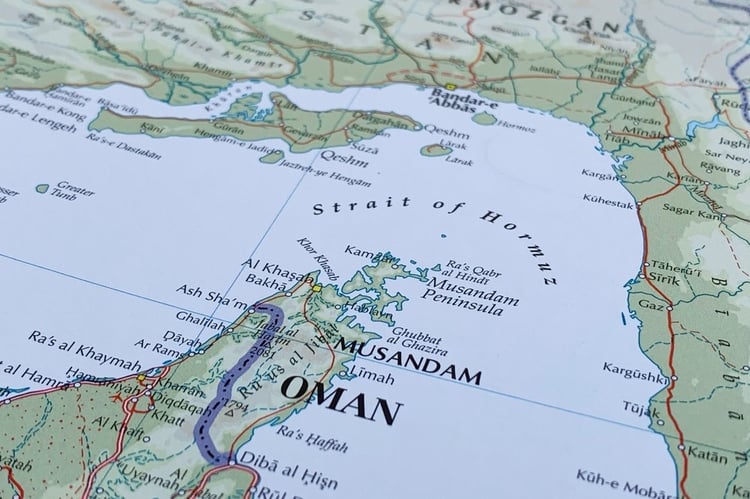
As Iran has effectively blocked the Strait of Hormuz in response to the ongoing war with the United States and Israel, it's creating a global oil crisis not seen since the 1970s.
The crisis has only deepened as Iran and Israel both exchanged attacks on crucial oil and gas facilities this week. Crude futures surged as much as 10% in early trading on Thursday to reach $119, before easing back down to just over $103.
According to estimates from the US Energy Information Administration (EIA), about 20 million barrels of oil and oil products passed through the Strait of Hormuz per day in 2025.
Connecting the Persian Gulf and the Gulf of Oman, the Strait of Hormuz serves as passage for oil delivery not only from Iran, but also other Gulf states like Saudi Arabia, Kuwait, Iraq, Qatar and the United Arab Emirates.
And according to Red Cat Holdings (RCAT) CEO Jeff Thompson, the disruption happening in the Persian Gulf right now points to a long-term problem that the United States and its allies will have to solve.
During the company's fourth-quarter and full-year 2025 earnings call on Thursday, Needham analyst Austin Bohlig asked whether the "heightened conflict" in the waterways has resulted in an increased interest in its drones. Thompson said that the company's business development team and "all of our different teams have been getting stuff coming at us in every which way and direction."
"Some people are calling, asking panic questions, what can we get here now?" Thompson said.
He added that "it looks like there's going to be some pretty massive RFPs coming out of the Gulf states" because of the ongoing disruption.
Many of the calls Red Cat is getting are for counter-drones, which are used to protect airspace and critical infrastructure, Thompson noted.
"And you got to remember, everyone's talking about how this is so urgent right now in the Strait, but we believe that the Strait's going to need to be protected not for years, (but) forever, from now on," he said.
"No longer is it going to be acceptable for the world to be held hostage by that one gap in a small area there between the Persian Gulf and the Gulf of Oman."
According to Thompson, the "very long-term solution" will not be having "billion-dollar ships escorting tankers," but rather utilizing 30 or 40 unmanned surface vehicles (USVs), or drone boats, to protect the ports.
Mixed earnings, but 'significant upside' for Red Cat
Red Cat's stock fell nearly 11% on Thursday.
The company reported mixed earnings for Q4. It had a loss of 17 cents per share, which was more than 13% higher than the loss of 15 cents a share that Wall Street was expecting. But its revenue came in at $26.2 million, topping consensus estimates of $23.9 million.
In a client note on Thursday, Needham's Bohlig reiterated a Buy rating on RCAT shares, citing "significant upside from expanding pipeline and large international opportunity."
The expanded pipeline is being "driven by a significant emerging opportunity in Ukraine" where Red Cat is reportedly in "advanced discussions" to support the replacement of about 350K DJI drones.
In September, Red Cat’s Black Widow System drone, which was developed by its subsidiary Teal Drones, got added to the NATO Support and Procurement Agency (NSPA) catalogue.
This allows NATO member nations to acquire the Black Widow through NSPA-managed channels.