MP Materials has now been upgraded four times over the past month

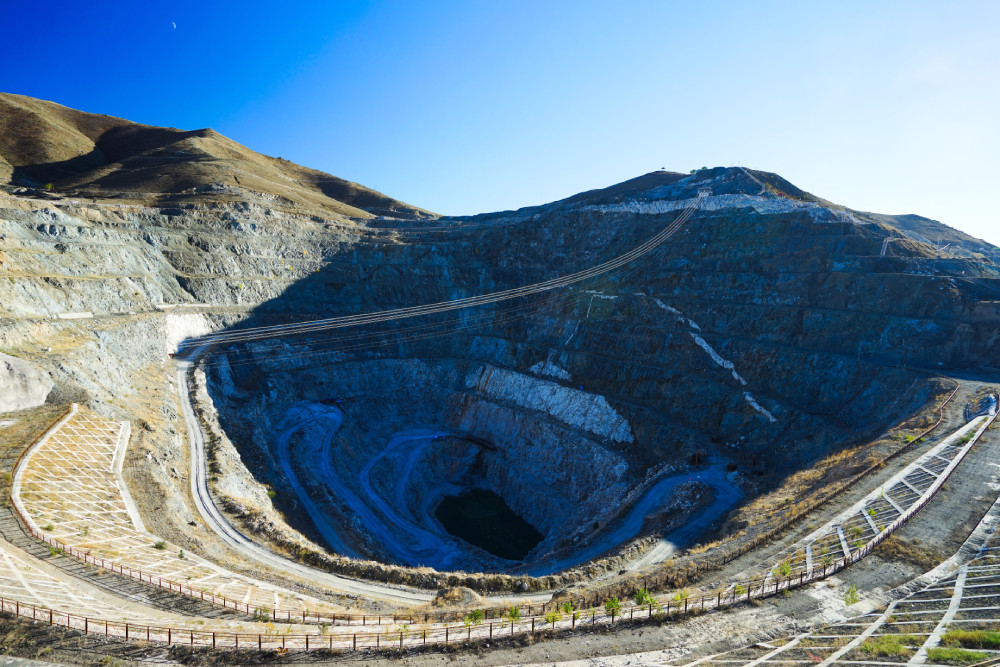
Trump's plan to take a stake in more US mineral companies next year should be a signal that shares of companies in the rare-earth sector are primed to soar in 2026.
Investors have to look no further than the performance of MP Materials (MP) this year to get a sense of what's in store.
The Nevada-based company, which was the first mineral company to get an investment from the US government, has seen its stock surge nearly 298% this year.
To put that in perspective, consider that at the beginning of the first day of trading for 2025, shares of MP were priced at $15.85. At the end of trading on Friday, they were priced at $63.33.
The stock began to surge in July, when the the Department of Defense (DoD) agreed to purchase $400 million of a newly-created series of the MP Material’s preferred stock, which is convertible into shares of the company’s common stock.
The investment makes the DoD the largest shareholder of MP Materials.
“This initiative marks a decisive action by the Trump administration to accelerate American supply chain independence,” MP Materials founder and CEO James Litinsky said in a statement at the time.
At the same time that the Trump administration made its investment in the company, MP Materials also entered into a $500-million long-term agreement with Apple (AAPL).
It calls for the company to supply Apple with magnets produced at its Fort Worth, Texas, facility—known as Independence—using recycled rare earth feedstock processed at MP’s Mountain Pass site in California.
While the agreement with the tech giant brings it a long-term revenue stream, it's the company's ties to the US government that has Wall Street especially bullish, driving four upgrades for its shares over the past month.
MP Material's "strategic value" is growing
The latest upgrade came on Friday when Morgan Stanley analysts, led by Carlos De Alba, moved its rating for MP shares to Overweight from Equalweight, while raising their price target to $71 from $68.50.
De Alba pointed to MP Materials' plans to begin commercial production of permanent magnets that are used in "the majority of electric vehicle motors, a growing number of offshore wind turbines and the long-term attractive humanoids market" by the end of this year.
But it's the role that the company will play in the White House's efforts to curb China's dominance in the manufacturing of rare earths where MP Materials can bring more than just commercial value.
"Geopolitical tensions, although temporarily subdued, continue to raise doubts about the supply of these critical components and elevate MP's strategic value, as evidenced by the historic deal with the Department of Defense this summer," De Alba wrote.
Deutsche Bank analysts, led by Corrine Blanchard upgraded MP Materials to Buy from Hold last month, while raising their price target to $71 from $68. Blanchard cited "unique strategic positioning and policy tailwinds driving long-term upside."
"We believe MP now represents a buying opportunity for investors wanting to have exposure to the thematic of critical minerals and Rare Earth on the medium to long-term," she wrote.
"MP is the oniy player in the West as a fully integrated Rare Earth company, which is also backed up by the US government."
MP Materials also got upgraded by both JPMorgan Chase and BMO Capital last month. The former raised it to Overweight from Neutral, while the latter upgraded to Outperform from Market Perform.
"Our new rating reflects our view that rare earths national security concerns are 'here to stay' despite China's reported one-year pause on export restrictions, with risks remaining, especially for military exposure," JPMorgan analyst Bill Peterson wrote.
"MP's unique mine-to-magnet vertical integration positions the company as the ex-China leader ready to begin addressing these concerns, although it will ultimately take multiple players over many years to sort out."
The Trump administration appears to agree that it will take multiple players to cut into China's dominance.
Jarrod Agen, executive director of the National Energy Dominance Council, who was speaking at a forum in Washington, D.C. last week, indicated that government deals with rare-earth companies are becoming increasingly necessary as it squares off against Beijing, as Bloomberg reported.
“I think they’re the norm from our perspective,” Agen said. “There is a broad scope of different companies who are coming to us. They’re making the right case.”