MP Materials’ CEO says US is in a new ‘Cold War’ with China

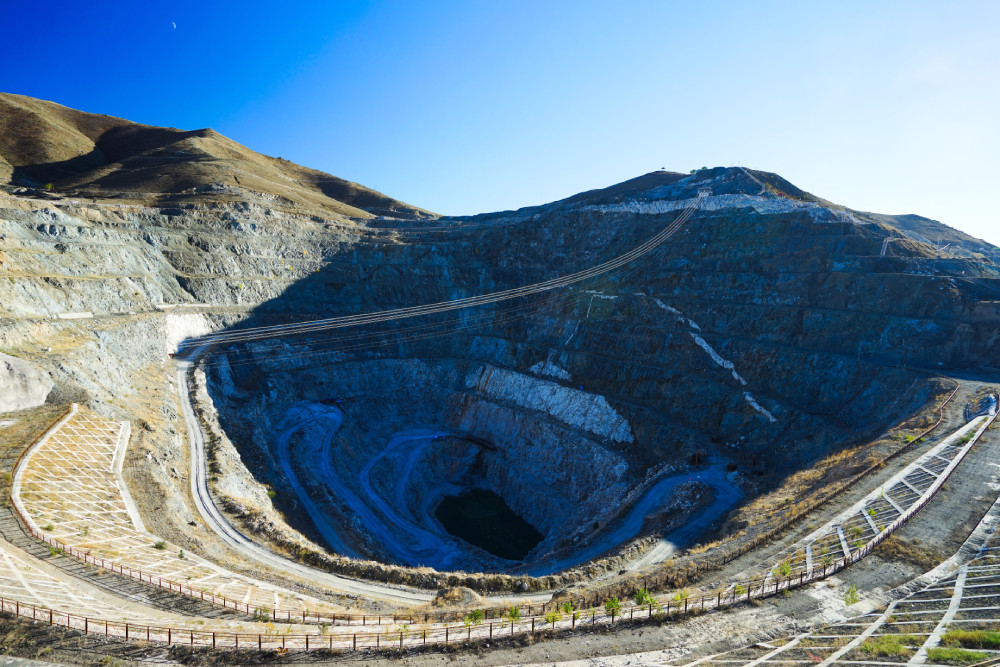
MP Materials’ (MP) CEO James Litinsky offered a sobering view of the rare earth industry in the company’s third-quarter earnings call, urging policymakers “to consider, with clear eyes, the complexity and scale required for success in this supply chain.”
Litinky’s message was essentially twofold. He was calling on Washington to continue offering government resources to support the industry, while also cautioning investors about the projects they decide to back.
On the latter point, he warned investors that the “vast majority of projects being promoted today simply will not work at virtually any price.”
The reason, according to Litinksy, is because “economic ore bodies are extremely rare,” a fact that he thinks is being “underappreciated.”
At the center of the challenges facing the industry is of course China, which controls about 90% of the global production of these critical minerals.
During a meeting in South Korea between President Trump and Xi Jinping in October, Beijing agreed to a one-year postponement of the country’s rare earth export controls.
“The reality is that this pause has only underscored the inextricable link between the world’s most advanced semiconductors that America produces and the rare earth supply chain that China dominates,” Litinsky said.
He noted that the standoff between the Trump administration and Beijing has shown why America, “like most nations, must move at a warp speed to de-risk from reliance on China for this supply chain.”
“We are now locked in a new kind of Cold War, a race of mutually assured economic destruction, fought not with weapons but with supply chains,” Litinsky added.
Supply chain problems can’t be solved my money alone
MP Materials entered into a 10-year public-private relationship with the Department of Defense (DoD) in July to accelerate rare earth mining in the US.
The multibillion dollar package will allow MP Materials to construct its second domestic magnet manufacturing facility – called the 10X Facility – at a soon-to-be-named location that will serve both defense and commercial customers.
The Trump administration is expected to make investments in other American rare earth companies in the near future.
MP Materials also entered into a $500-million long-term partnership agreement with Apple (AAPL) in July that calls for the company to supply the tech giant with magnets produced at its Fort Worth, Texas, facility—known as Independence—using recycled rare earth feedstock processed at MP’s Mountain Pass site in California.
Litinsky compared the rare earth industry to an oligopoly, with the market being dominated by just a small number of producers.
This means investors and governments are wrong to think that if they “throw a bunch of money at dozens of sites and businesses, we can form a supply chain."
“In today’s rush to localized supply chains, we have seen projects promoted that cannot yet perform grain boundary diffusion, the critical process that enables efficient use of heavy rare earths,” he said. “Others proclaim full vertical integration while depending on phantom feedstocks or technologies that remain unproven at scale.”
On the other hand, MP Materials has a “structural advantage because we’re fully vertically integrated,” Litinsky added. “We’re years and billions ahead of others.”
MP Materials gained 12.8% on Friday and has soared 275.6% for the year.