Intuitive Machines (LUNR) will have facility to simulate lunar landings

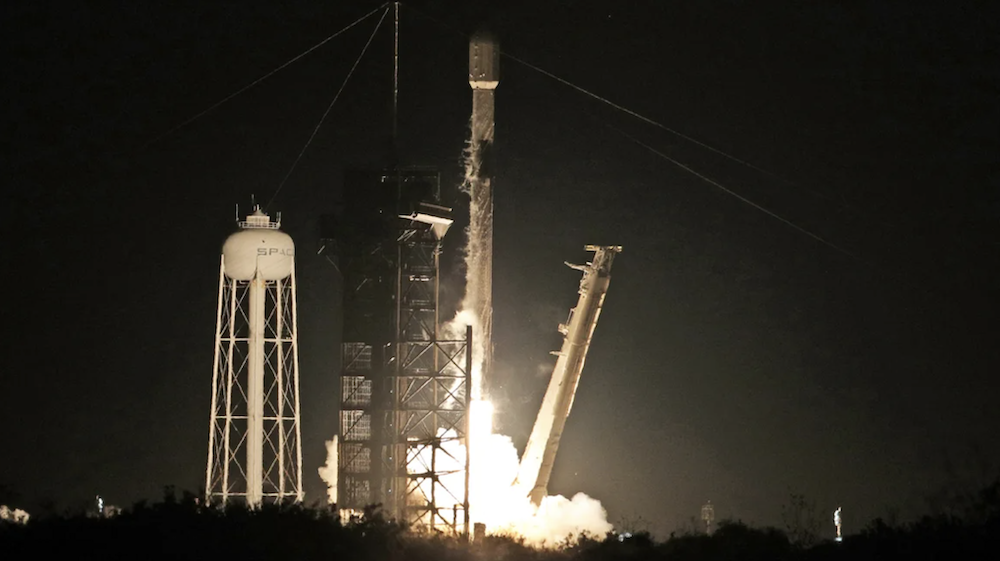
Back in February, Intuitive Machines (LUNR) launched its lunar lander Athena atop a SpaceX Falcon 9 rocket as part of NASA's Commercial Lunar Payload Services program.
The mission was a bit of a do-over for Intuitive Machine.
A year earlier, the company had sent up another lunar lander called Odysseus as part of the same NASA program, only to see it tip over on its side shortly after touching down on the moon's surface.
The mishap sent shares of LUNR down 30%.
Unfortunately for Intuitive Machines, the second trip to the moon did not go any better. Athena missed its target by 250 meters, tipped over, and ran out of battery the next day. Its stock plunged 42% over the next two days.
But Intuitive Machines might soon have a way to prevent these mishaps from happening in the future.
The company will now be operating out of the soon-to-be-launched Texas A&M University Space Institute near NASA's Johnson Space Center headquarters in Houston.
The massive facility is 400K square feet and will contain the only indoor lunar and Mars-scape, each covering 2.5 acres. The facility, which was funded by $200 million in state government support from Texas, is scheduled to open in the second half of 2026.
The goal of the facility is to allow for a much closer simulation of space travel than what has normally been possible.
"Rugged and highly variable terrain, shifting shadows, extreme light and dark, and low gravity are some of the factors that affect how vehicles move, grip, and wear, but these conditions are difficult to simulate with precision on Earth," the company noted in a press release.
The Space Institute will be able to shift hundreds of tons of synthetic regolith in order to reconfigure the terrain that allows researchers to evaluate how vehicles and other equipment will perform in 1/6th gravity environments.
There will also be advanced lighting systems in the facility that will "mimic the surface dynamics of the Moon, including shadows, light, and darkness."
In other words, Intuitive Machines will now have a much more accurate way to test its lunar landers before actually sending them to the moon.
“The Texas A&M University Space Institute is a proving ground for lunar operations, where we can simulate terrain, rehearse missions, and refine our vehicles before they ever leave Earth, which ultimately contributes to longer and more successful Moon missions.," Jack Fischer, senior vice president of operations at Intuitive Machines, said in a statement.
"We’re establishing a center of excellence that enriches the greater Houston community and the global space industry,” added Fischer.
His words carry a lot of weight because Fischer is a retired astronaut who spent 136 days in space during his career.
Intuitive Machines will be leasing a bay at the Space Institute to test and refine its Moon RACER (Reusable Autonomous Crewed Exploration Rover) lunar terrain vehicle.
The company said that this will allow its engineers to optimize the performance of the vehicles before deployment.