Did the White House just deem AI too big to fail?

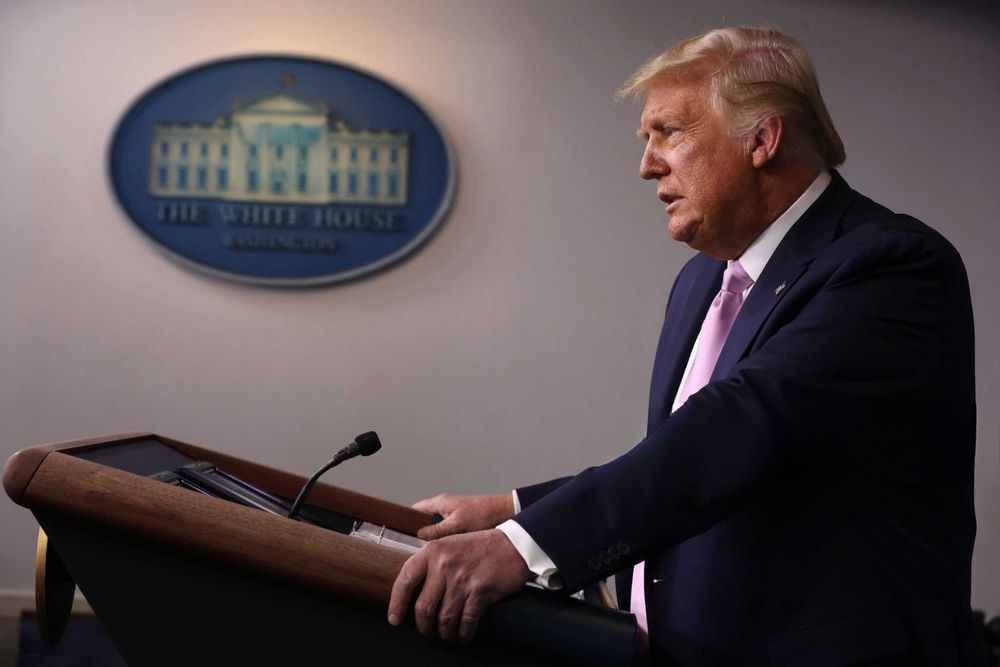
Earlier this week, President Trump signed the “Genesis Mission” executive order to accelerate U.S. artificial intelligence efforts, which he likened to the Manhattan Project that made the United States a nuclear superpower.
Analysts say it shows the White House views AI as too important to let fail, ensuring continued heavy investment.
“The Genesis Mission will dramatically accelerate scientific discovery, strengthen national security, secure energy dominance, enhance workforce productivity, and multiply the return on taxpayer investment into research and development,” Trump’s executive order stated.
Market commentator Geigor Capital framed the policy bluntly: “AI is now too big to fail.”
While the remark was partly tongue-in-cheek, it reflects a meaningful shift.
The government is now formally backing AI infrastructure development, with a particular focus on expanding the computing power needed to train and operate large language models. The initiative also lays the groundwork for deeper public-private partnerships across the AI ecosystem.
The order comes as the United States faces mounting pressure on its electrical grid due to soaring demand from data centers, with electricity prices jumping and utilities warning of capacity shortages.
Federal involvement is expected to help ease those strains, while also tempering fears that AI’s rapid expansion resembles an unsustainable bubble destined to burst like the dot-com boom.
However, not everyone is convinced.
Senator warns taxpayer dollars shouldn’t prop up AI companies
As the Trump administration outlined its AI strategy, including measures that push companies to invest in AI infrastructure, Massachusetts Senator Elizabeth Warren raised a different concern.
Warren argued that the White House should not “prop up” AI companies with taxpayer money at a time when valuations and demand expectations are flashing bubble-like signals.
Her warning comes amid reports that OpenAI, the maker of ChatGPT, has projected steep losses in the years ahead as it races to scale its models and computing needs.
“We have seen this before: take on enough debt, make enough risky bets, and then demand a taxpayer bailout when those bets go south so the economy does not crash,” Warren wrote in a letter to the administration.
As the debate over an AI bubble intensifies, its economic impact is becoming unmistakable. AI has played a major role in lifting U.S. GDP, with AI-driven investment likely accounting for roughly half of recent economic growth, according to The Wall Street Journal.
“It’s certainly plausible that the economy would already be in a recession” without AI investment, said Peter Berezin, chief global strategist at BCA Research.
There’s also growing evidence that companies are using AI to replace entry-level white-collar roles, widening the gap between AI-driven productivity gains and job growth.