CoreWeave gets $2B in additional funding from Nvidia

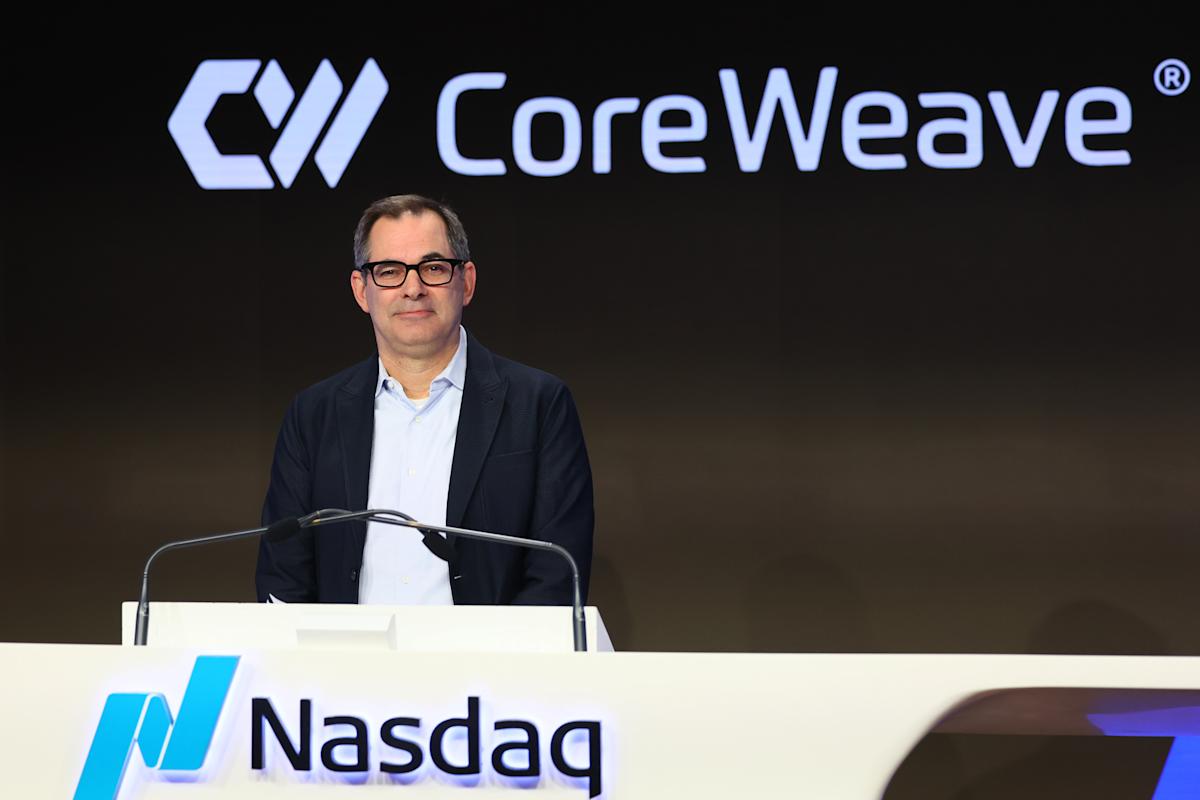
CoreWeave announced on Monday that it has received an additional $2 billion in funding from Nvidia (NVDA), expanding the longstanding partnership the neocloud company has had with the chip giant.
The investment is being made through CoreWeave Class A common stock at a purchase price of $87.20 per share.
CoreWeave said that the latest investment will help accelerate the buildout of more than 5 gigawatts of AI factories by 2030. As Bloomberg notes, 5 gigawatts is roughly the same amount of power delivered by five large nuclear reactors.
“From the very beginning, our collaboration has been guided by a simple conviction: AI succeeds when software, infrastructure, and operations are designed together,” Michael Intrator, co-founder and CEO of CoreWeave, said in a statement.
“NVIDIA is the leading and most requested computing platform at every phase of AI – from pre-training to post-training – and Blackwell provides the lowest cost architecture for inference.”
He added that the expanded partnership with Nvidia "underscores the strength of demand we are seeing across our customer base and the broader market signals as AI systems move into large-scale production.”
Nvidia, which is the second-largest shareholder in CoreWeave, had previously entered into a $6.3 billion contract to purchase cloud services from the company back in September. That contract runs through 2032.
As part of the latest deal, CoreWeave said it will "leverage Nvidia's financial strength" to help with the procurement of land, power and shell in order to build AI factories. The factories will be developed by CoreWeave and will utilize Nvidia's computing platform technology.
The two companies will also test and validate CoreWeave’s AI-native software and reference architecture, including SUNK and CoreWeave Mission Control, "to unlock deeper interoperability" within NVIDIA’s reference architectures for NVIDIA’s cloud partners and enterprise customers.
They will also be deploying multiple generations of NVIDIA infrastructure across CoreWeave’s platform through early adoption of NVIDIA computing architectures, including the Rubin platform, Vera CPUs and Bluefield storage systems.
Not everyone is sold on CoreWeave's business model
CoreWeave's stock gained 5.7% on news of the latest deal with Nvidia. It has rallied 37.3% to start the year.
“AI is entering its next frontier and driving the largest infrastructure buildout in human history,” Nvidia founder and CEO Jensen Huang said in a statement.
“CoreWeave’s deep AI factory expertise, platform software, and unmatched execution velocity are recognized across the industry. Together, we’re racing to meet extraordinary demand for NVIDIA AI factories—the foundation of the AI industrial revolution.”
Despite having one of the most hyped tech IPOs in years and reaching a market cap of nearly $50 billion, CoreWeave has become a somewhat controversial name in the AI boom.
The company's highly publicized acquisition attempt of Core Scientific (CORZ) fell apart in October when the latter's shareholders rejected the $9 billion all-stock transaction, deeming it too risky given the volatile nature of CoreWeave's stock.
The company has also come under increased scrutiny because of its substantial $14 billion debt load, becoming almost a poster child for people who see a looming AI bubble. In a client note earlier this month, DA Davidson analyst Gil Luria said that the value of CoreWeave's equity is "still seen as worthless long-term" because "the entire value of the enterprise is owned by debt holders."
Luria added that he sees "value destruction inherent in CRWV's business" because of its massive debt load.
CoreWeave's business model is essentially centered around taking out large amounts of debt to buy Nvidia chips and then renting out computing capacity to customers.
A CoreWeave spokesperson told Reuters that the latest infusion of cash is not being used to purchase additional Nvidia processors, but will instead be used toward other data center investments, research and development (R&D) and scaling its workforce.