Core Scientific shareholders were right to fear CoreWeave deal

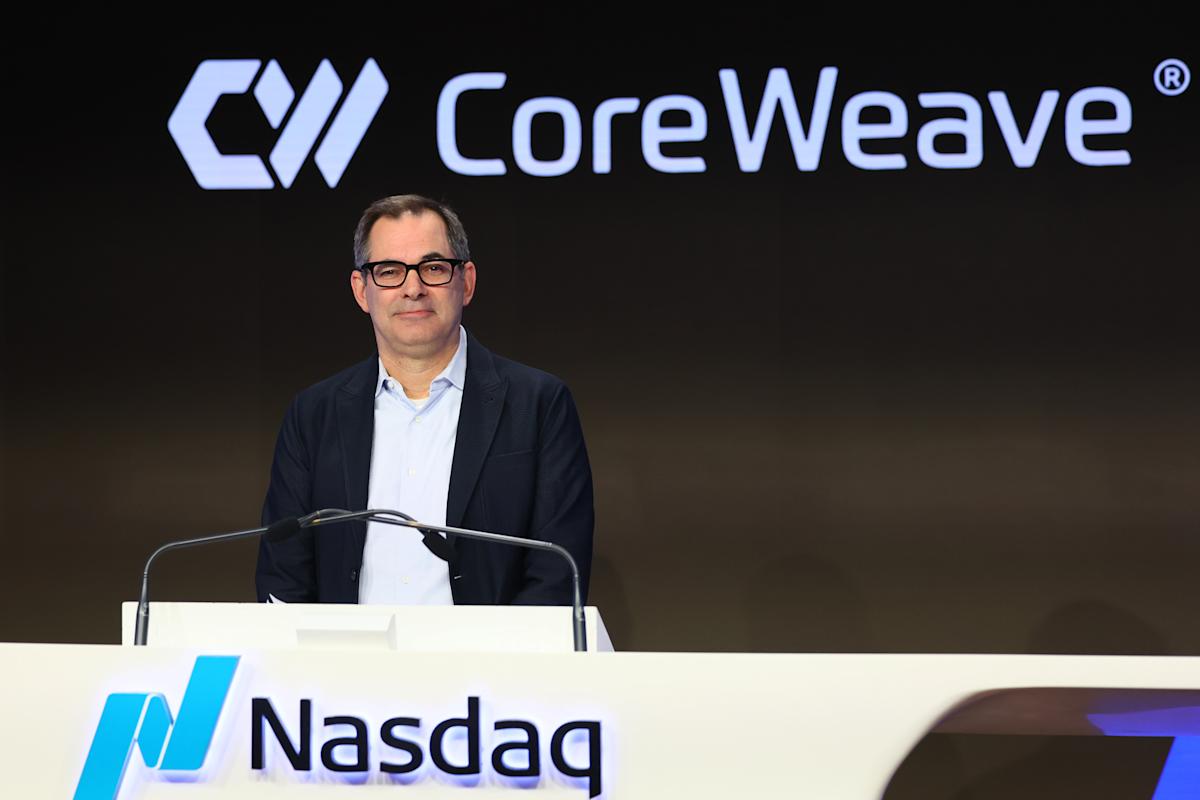
When Core Scientific's (CORZ) shareholders overwhelmingly rejected a $9 billion acquisition bid by CorweWeave (CRWV) in October, opposition to the deal overwhelmingly hinged on the all-stock nature of the transaction.
The parameters of the deal were seen by many shareholders as being too risky given that a potential drop in CoreWeave's stock would substantially erode the value for Core Scientific's stakeholders.
Two Seas Capital was the first Core Scientific stockholder to publicly announce its opposition to the deal, filing a proxy statement at the end of September calling on its fellow shareholders to reject the proposal.
Two Seas founder and CIO Sina Toussi said in the proxy statement that the all-stock nature of the transaction was being done at “an inadequate valuation.”
“The proposed all-stock, uncollared structure leaves Core Scientific shareholders exposed to the high volatility of CoreWeave's share price with no protections on the value they will receive at or following close,” Toussi said.
His concerns appear to have been justified.
The Wall Street Journal on Tuesday reported on the "staggering fall" of CoreWeave, noting that $33 billion of the company's value has been erased in just six weeks.
To put that into context: The AI "neocloud" provider has lost billions of dollars in value in roughly the time since Core Scientific's shareholders voted against the acquisition.
When Core Scientific's CEO said in a call with investors back in October that the company's shareholders had "decisively rejected" the deal, he insisted nonetheless that they "understood overwhelmingly the industrial logic" of the proposed merger.
“And while there was criticism around how the deal was structured, it was designed specifically to provide upside value potential for our shareholders with CoreWeave stock,” Sullivan added.
However, that upside potential is starting to look farther away. The Journal points out that CoreWeave has lost 46% of its share price during its six-week plunge.
And that drop became even steeper on Tuesday, when the company's stock fell nearly 4% more.
CoreWeave refused to restructure the deal despite signs that there was growing opposition to the all-stock transaction, with CoreWeave CEO Michael Intrator dismissing Two Seas Capital as “an event-driven hedge fund specializing in litigation” that had made “inaccurate and misleading statements” about the proposed acquisition.
Sullivan himself claimed that CoreWeave's refusal to amend the deal “confirms that our board negotiated the best deal possible for our shareholders.”
Core Scientific's board voted unanimously to accept the merger proposal.
CoreWeave's stock could face investor doom loop
Fair or not, CoreWeave is becoming the face of AI bubble concerns, as its heavily debt-fueled business strategy has investors sounding alarms, especially since profitability is likely years away.
The problem for CoreWeave is that as its stock plunges, it may not result in investors buying the dip, but rather reinforcing investor concerns that drive its share price down further and making it more difficult for it to leverage the capital markets to fuel its operations.
Prominent short-seller Jim Chanos, who is one of the most outspoken about an AI bubble, noted this potential doom loop in a new interview on Tuesday.
"If the stock prices of these entities start going down, you could also see the capital drying up," Chanos said. "As opposed to people wanting to invest more at lower prices, this is the kind of situation where they were investing more at higher prices. And the purse strings could literally close up if the stock prices in this area begin to decline."
Chanos, who rose to fame by shorting Enron before its massive collapse in 2001, made a bearish case against CoreWeave in a post on X back in August.
In his interview on Tuesday, Chanos argued that CoreWeave and Oracle (ORCL) are both overstating their future profitability projections because the lifespan of their GPUs are much shorter than they're stating. CoreWeave's business model is to use debt to buy Nvidia chips, and then rents out the computing capacity to customers.
Although data center operators like Oracle and neocloud providers like CoreWeave will on average depreciate these assets after six years, Chanos maintains the speed at which Nvidia is innovating and bringing out new chips renders them obsolete after about three years.
In other words, CoreWeave will have to pour money into the newer model Nvidia chips faster in order to attract customers, which would then dent its earnings.
“If the chips last for three years, you have to depreciate a third of what you spend,” Chanos explained. “That's the bet you have to make if you're a CoreWeave investor.”