AMC CEO addresses shareholder concerns over plummeting stock

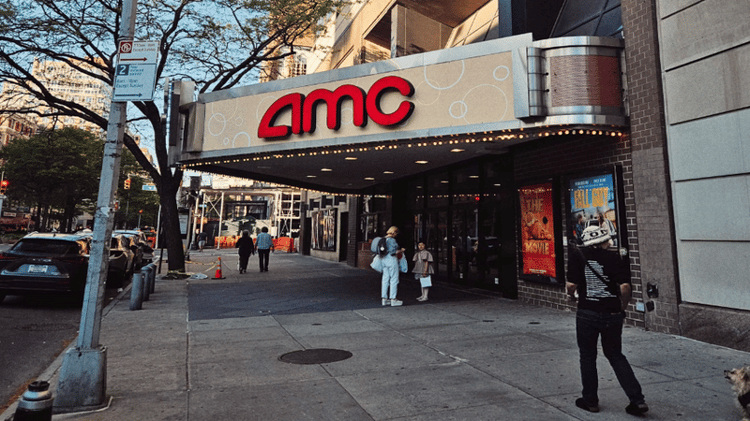
The best thing that can be said about 2025 for AMC Entertainment Holdings (AMC) is that it's finally over.
To say that it was a brutal year for the world's largest movie theater chain would be an understatement. For investors, one of the main focal points for the company's struggles is its cash flow-to-debt ratio which currently stands at about $4 billion in debt and a cash reserve of approximately $366 million.
And the company's struggles have been reflected in its stock, which not only closed down for 10 straight sessions at the end of the year, but hit a record low for six straight sessions in a row in December.
AMC's stock is currently trading at just above $1.50 a share.
The problem for the theater chain is that investors have soured so much on its stock that no amount of good news seems to be enough to move the needle. When the company announced on Dec.22 that it had enjoyed its biggest pre-Christmas holiday weekend since 2021, with 4 million moviegoers visiting its AMC and ODEON Cinemas across a four-day stretch, its shares closed slightly down.
In a post on X on Friday, AMC CEO Adam Aron addressed shareholder concerns about the stock, noting that he is the company's single largest shareholder and has not sold an AMC share since January 2022.
“I personally and profoundly have felt the pain of AMC's falling share price,” Aron said. “And from reading your many comments on X/Twitter, I know it is ever so distressing to so many of you as well.”
Aron said that he had not addressed the stock's performance because legal counsel advised him that it would not be appropriate for the chief executive of a publicly traded company to do so.
Nonetheless, Aron said that AMC has not "been sitting by idly doing nothing" while the stock has tanked. Instead, he said the company has been aggressive in "taking action after action after action to please our guests, to improve the appeal of our theatres, to increase our market share, to drive more revenues and to cut more costs."
A bad year for Hollywood is a bad year for AMC
But Aron pointed to the problems that are plaguing Hollywood as a whole, which has still not been able to reach the levels of business that it was doing before the Covid pandemic. He notes that the domestic box office "wound up hovering flat as a pancake" for the third straight year, totaling between $8.7 billion and $9 billion.
Aron said that 2025 "ended way below our own expectations and those of so many other industry observers, analysts and experts."
In fact, Grower Street, a film industry analytics firm, had projected the domestic box office in the US would grow 9% last year. It ended up growing by about only 1%.
The domestic admissions revenue remains around 20% below what it used to be before Covid, according to Aron.
"With our industry so troubled since 2020, its recovery glidepath has been long and gradual," he said. "But as we look to 2026, 2027 and beyond, we have every confidence in the long term viability of the movie theatre business."
Aron also noted that AMC has been taking steps to strengthen its cash reserves and balance. He claims that "AMC has decreased our debt or other deferred liabilities by around $2 billion," while also keeping "our cash reserves high enough that we shrewdly have avoided the crises to which many of our competitors succumbed."
AMC said last month that it had sold the majority of its equity investment in Hycroft Mining Holding Corporation (HYMC), which resulted in an aggregate net consideration of $24.1 million for the company.
Of course, 2025 was a difficult year for Aron for a more personal and serious reason as well. AMC revealed last month that he had suffered what it termed a "minor stroke" while on a business trip to London in November, but was fortunately not left with any loss of cognitive brain function.
Meanwhile, AMC said on Friday that a theatrical showing of Netflix's (NFLX) Stranger Things series finale attracted more than 753,000 attendees over two days in 231 theaters across the US. Although tickets were free, there was a mandatory $20-per person food and beverage credit, which resulted in $15 million in revenue for the theater chain over those two days.
Aron indicated that AMC is exploring future collaborations with Netflix, calling the Stranger Things event "an absolute triumph."