Forget air taxis — Archer’s (ACHR) airport grab hints at a far bigger power play

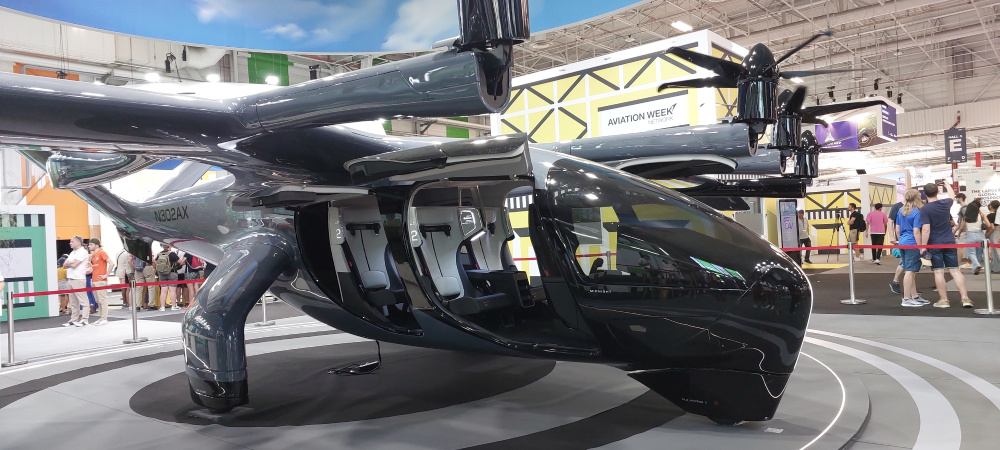
Archer Aviation (ACHR) made headlines earlier this month when it announced plans to acquire Los Angeles’ Hawthorne Municipal Airport for $126 million in cash. However, what’s flying under the radar is how Archer could utilize the site not just as an eVTOL testing ground, but also as a critical hub for ground-side infrastructure and operational technology.
In its announcement, Archer described the airport as a “test bed for the AI-powered aviation technologies” it’s developing, spanning air-traffic coordination, ground operations, and real-time systems integration.
The airport sits in one of the most complex transportation corridors in Los Angeles, near LAX and major commercial districts.
That geography brings heavy traffic, dense logistics networks, and significant energy and zoning considerations, all factors that could make Hawthorne an ideal proving ground for urban air-mobility infrastructure.
While Archer is best known for developing electric vertical-takeoff-and-landing (eVTOL) aircraft — battery-powered air taxis designed for short-range urban flights — the company’s ambitions extend far beyond simply moving passengers.
These eVTOL networks require extensive charging capacity, ground-handling services, data management systems, and synchronized flight operations technology. Controlling its own airport gives Archer the ability to tightly integrate these systems, from AI-driven traffic management to power grid interaction.
Having direct control over the airport, rather than just leasing a vertiport pad, gives Archer flexibility to integrate digital operations, AI surveillance, and energy grid interaction.
A new competitive moat
If Archer can successfully merge air and ground mobility operations, it could gain an advantage that goes beyond aircraft design, potentially creating a scalable model for urban aviation hubs. That would be particularly valuable as the company transitions from its current focus on Federal Aviation Administration certification to eventual commercial operations.
Financially, Archer still has a long way to go. The company remains deeply unprofitable, with revenue expected to be less than $19 million this year. Operating expenses rose to $176.1 million in the second quarter, and net losses reached $206 million.
Against that backdrop, the Hawthorne acquisition offers something Archer badly needs: a strategic asset that could accelerate its commercialization strategy and differentiate it from competitors reliant solely on third-party vertiports.
Archer stock’s disappointing performance
Ironically, the Hawthorne acquisition hasn’t provided any lift to Archer’s stock. Shares have declined by roughly 33% over the past month and are now down approximately 23% year-to-date.
That pullback has also trimmed the company’s 12-month gain to around 80%. While that still represents strong outperformance compared to the broader stock market, the recent slide suggests that investors are taking a closer look at the risks and execution challenges underlying Archer’s growth story.