Economist Robin Brooks blames Fed for stock market correction

There are plenty of theories about why the stock market is crashing.
Some blame overvalued AI stocks or the ongoing Iran war. Others point to the controversy surrounding Nvidia's Jensen Huang or the Democratic sweep of Congress and its potential impact on data center expansion.
But Brookings Institution senior fellow Robin Brooks blames the Federal Reserve.
The Fed is adding fuel to the fire
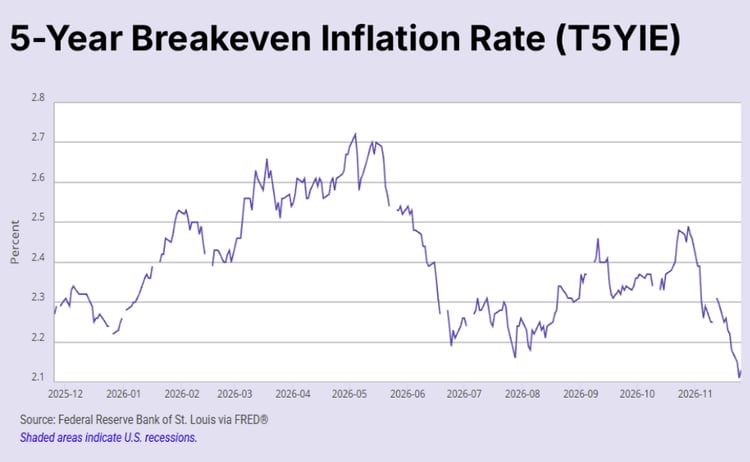
In a recent Substack post, Brooks argued that the Fed is worsening the market sell-off by signaling further rate hikes even as inflation expectations decline.
Fed Governor Chris Waller, for example, said a 50-basis-point rate hike may be warranted in December to bring inflation back toward the Fed's 2% target.
Meanwhile, data from Haver Analytics show that Brent crude prices and two-year inflation expectations have fallen, yet markets continue to expect higher interest rates.
The result is a rise in real interest rates (nominal interest rates minus expected inflation). In effect, borrowing has become more expensive in inflation-adjusted terms, even without another Fed rate hike.
"There's no doubt in my mind that the Fed is causing this meltdown," Brooks wrote.
Hike, pause, then cut
Even Wall Street's interest rate forecasts suggest the Fed may have to reverse course within a year.
For example, Citigroup argues that financial markets are already signaling that interest rates are "unusually high" and will eventually need to come down.
Citi expects just one more quarter-point rate hike in December, followed by a pause in early 2027 and cuts beginning in the second half of the year.
It's an unusual forecast for a central bank that's supposedly still fighting inflation.
The last time the Fed fought rising prices, it raised interest rates 11 times between March 2022 and July 2023, for a total increase of 5.25 percentage points.
📌 Bottom line: If Brooks is right, the Fed is making monetary policy more restrictive even before its next rate hike. And if Citi's forecast holds, investors may have to wait until the second half of 2027 for rate cuts.