SEC Chair Paul Atkins lays out his plans for modernizing regulation around crypto

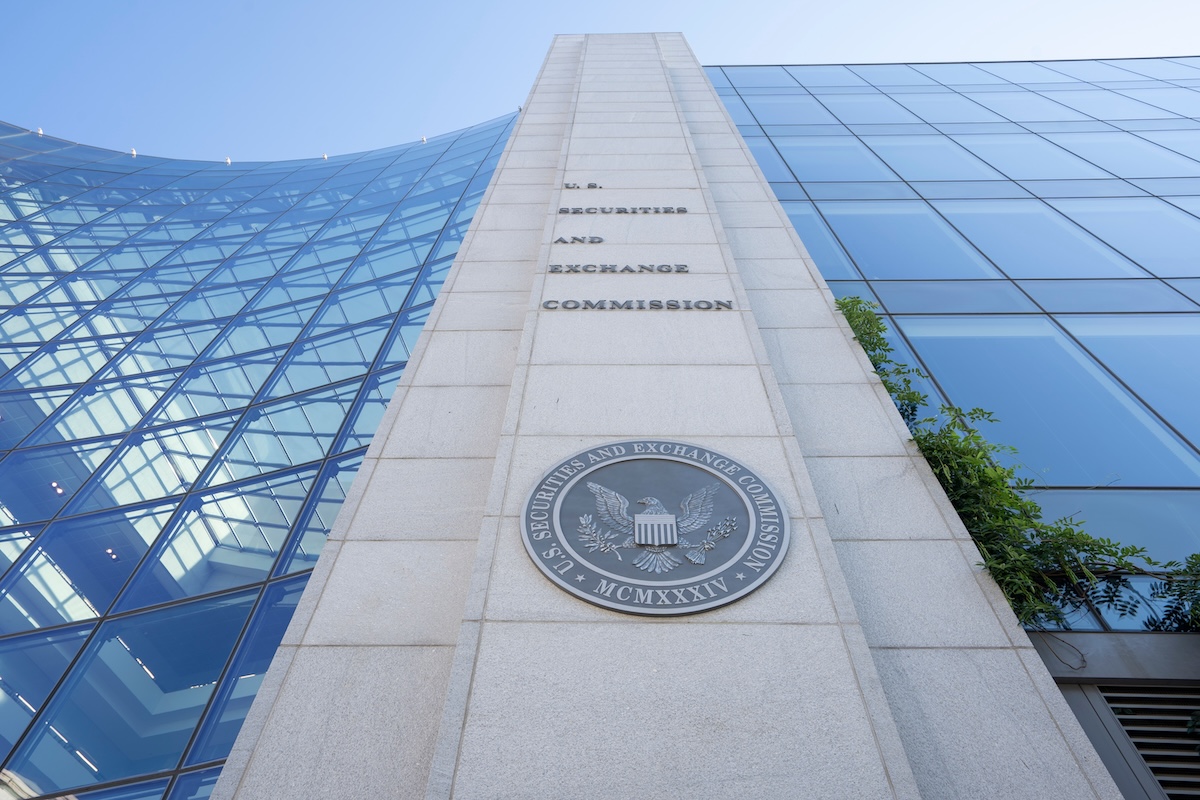
This past summer, Securities and Exchange Commission (SEC) Chairman Paul Atkins announced Project Crypto, an initiative aimed at modernizing securities regulations to allow for the inclusion of cryptocurrencies.
Atkins offered up a more detailed picture of how he thinks regulators should approach crypto during a speech at the Federal Reserve Bank of Philadelphia’s fintech conference last week.
His speech followed on the heels of the Senate Agriculture Committee last week releasing its bipartisan discussion draft for its portion of the sweeping legislative bill that will enforce how cryptocurrencies are regulated in the United States.
Central to Atkins’ views is what he calls “token taxonomy” in order to identify the cryptocurrencies that should be designated as securities.
“In the coming months, I anticipate that the Commission will consider establishing a token taxonomy that is anchored in the longstanding Howey investment contract securities analysis, recognizing that there are limiting principles to our laws and regulations,” Atkins said.
The Howey Test is based on a 1946 US Supreme Court case that determined when an asset qualifies as an investment contract and therefore should be designated as a security.
The court ruled that an investment contract exists “when there is the investment of money in a common enterprise with a reasonable expectation of profits to be derived from the efforts of others.”
According to Atkins, “digital commodities, “digital collectibles” and “digital tools,” which are crypto assets that “perform a practical function, such as a membership, ticket, credential, title instrument, or identity badge,” are not securities.
But “tokenized securities” will continue to be securities because they “represent the ownership of a financial instrument enumerated in the definition of ‘security’ that is maintained on a crypto network.”
SEC to use ‘economic reality’ when designating securities
Atkins reiterated what he has said on multiple occasions, which is that he believes “most crypto tokens trading today are not themselves securities.”
However, he also made it clear that “most” doesn’t mean all, and that some crypto tokens are in fact securities, saying that “economic reality trumps labels.”
“Calling something a ‘token’ or an ‘NFT’ does not exempt it from the current securities laws if it in substance represents a claim on the profits of an enterprise and is offered with the sorts of promises based on the essential efforts of others,” Atkins said.
“Conversely, the fact that a token was once a part of a capital-raising transaction does not magically convert that token into a stock of an operating company.”
Referencing a statement made by SEC Commissioner Hester Peirce, Atkins maintained that just because a token launch may at first represent an investment contract, “those promises may not remain forever.”
In effect, this is where regulating crypto assets can get more nuanced than regulating traditional securities.
“Networks mature. Code is shipped. Control disperses,” Atkins said. “The issuer’s role diminishes or disappears.”
This means that “purchasers are no longer relying on the issuer’s essential managerial efforts” and the tokens are being traded “without any reasonable expectation that a particular team is still at the helm.”
“In short, a token is no more a security because it was once part of an investment contract transaction than a golf course is a security because it used to be part of a citrus grove investment scheme,” Atkins said, referencing the original issue at the heart of the Supreme Court’s Howey case.
But despite the fact that Atkins is taking a much more supportive approach to the crypto industry than his predecessor Gary Gensler did, he was adamant that his framework was “not a promise of lax enforcement at the SEC.”
“While the SEC protects investors from securities fraud, the federal government has a host of other regulatory bodies well equipped to police and protect against illicit conduct,” he noted.
“That said, if you raise money by promising to build a network, and then take the proceeds and disappear, you will be hearing from us, and we will pursue you to the full extent of the law.”