Americans locked in low rates, Uncle Sam didn’t

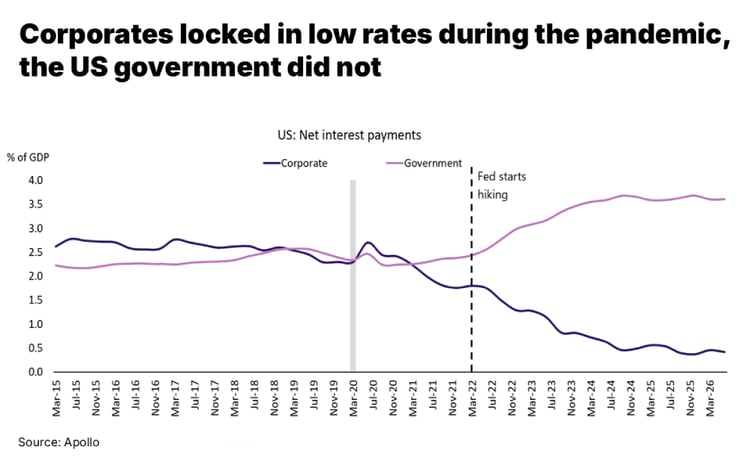
As economists and Fed officials warn that interest rates may need to go even higher, some borrowers are better prepared to handle the extra cost than others.
Washington missed the cheap money era
According to Apollo chief economist Torsten Slok, one of the biggest losers is Uncle Sam.
"Corporate America and households both locked in low rates during the pandemic," Slok wrote, referring to businesses that refinanced their debt and homeowners who secured low fixed-rate mortgages.
"Washington didn't," he said.
With Treasury yields climbing, annual interest expenses on U.S. government debt have ballooned from $500 billion in mid-2020 to $1.25 trillion today. That's more than the U.S. spends on defense each year.
Higher rates are making America's debt problem worse
Every time the Treasury refinances maturing debt or borrows to cover new deficits, it has to pay much higher interest rates than it did during the pandemic.
And now that Uncle Sam is issuing more and more short-term debt, that refinancing window is getting even shorter.
Goldman Sachs analysts have warned that higher rates will push up the government's debt-to-GDP ratio, meaning that "deficit reduction becomes necessary sooner to stabilize the debt."
Meanwhile, the ongoing sell-off in U.S. government bonds is making it even more expensive for Washington to borrow.
📌 Bottom line: Unlike homeowners with 30-year fixed-rate mortgages, Washington has to refinance large portions of its debt every year. So even if the Fed stops raising rates, the government's interest could keep growing.