What's going on with bonds?


Morning Observers,
Bond ETFs' share of all holdings has fallen to 16% and is now at its lowest level since 2015, when these investment products went mainstream.
So why are investors shying away from a textbook portfolio hedge during one of the most uncertain periods in history?
First, and most obviously, bonds are going through their worst crash in recent memory.
If you held a fund of 30-year Treasuries, you'd have lost roughly half your money since Covid (total return). This stretch alone would have erased all your earnings over the past 10 years.
If we took a more diversified approach and invested in all U.S. investment-grade bonds, we'd be down 6% over the same period (total return).
That doesn't look extreme on its own, but considering that stocks more than doubled during this period, the opportunity cost of sinking all that money into bonds is massive.
But wait, bonds aren't supposed to compete with stocks. They earn less when times are good, but make up for it when times are bad.
The problem is that they're not doing that as well anymore.
Since Covid, the market has largely been dealing with supply-driven shocks: pandemic bottlenecks, tariffs, and energy crises.
And in a supply shock-driven world, the Fed can't easily rescue the economy by cutting rates because doing so can aggravate inflation. That's why these crises create a negative stock–bond yield correlation.
Stocks fall because the economy is slowing, but yields rise (meaning bond prices fall) because supply-side inflation is getting worse and the Fed's hands are tied.
In fact, bond returns were negative in 17 of the 19 months when stocks fell at least 2% between 2020 and March 2026.
So investors are naturally looking for other ways to hedge. And that's one of the reasons we're seeing the rise of factor investing, gold, and other alternatives.
In fact, our survey earlier this year showed that factor investing is one of the most popular alternatives to bonds among Observers.
- Dan Runkevicius, Editor

📈 JPMorgan turns bullish on U.S. stocks
JPMorgan's trading desk has turned bullish on U.S. stocks after taking a more cautious stance in late August. Andrew Tyler, the bank's head of U.S. market intelligence, pointed to stronger-than-expected economic growth and corporate earnings, as well as signs that oil prices could come down. The shift comes ahead of Friday's jobs report, which is expected to show 84,000 new hires in September.
💰 Nvidia approves record $150 billion buyback
Nvidia has increased its share buyback program by $150 billion, topping Apple's previous record of $110 billion, set in 2024. The chipmaker now has $235 billion authorized for repurchases through fiscal 2028. It reported nearly $60 billion in net income in its latest quarter and returned roughly $26 billion to shareholders through buybacks and dividends.
📊 10-year Treasury yield hits 19-year high
The 10-year Treasury yield continued to climb Monday, reaching 5.27, its highest level since 2007. It's now up 135 basis points from its low six months ago, as surging oil prices and renewed inflation concerns push U.S. borrowing costs higher. The rise has continued even as the Treasury Department stepped up bond buybacks from $2 billion to $6 billion.
🤝 U.S. and China go "30-for-30"
The U.S. and China have released details of their new "30-for-30" trade agreement, with each side cutting tariffs on roughly $30 billion of goods. China's list covers 1,619 product categories, while the U.S. list includes 77. Together, the tariff relief covers about $60 billion in trade.
🏢 Paramount takes on $44 billion in debt for Warner Bros.
Paramount Skydance is selling more than $44 billion in bonds, denominated in U.S. dollars and euros, to finance its acquisition of Warner Bros. Discovery. The huge debt sale follows a months-long bidding war with Netflix that ended with Paramount taking control of Warner Bros. in a deal valued at roughly $110 billion.
The 150% crypto rally that started with big banks
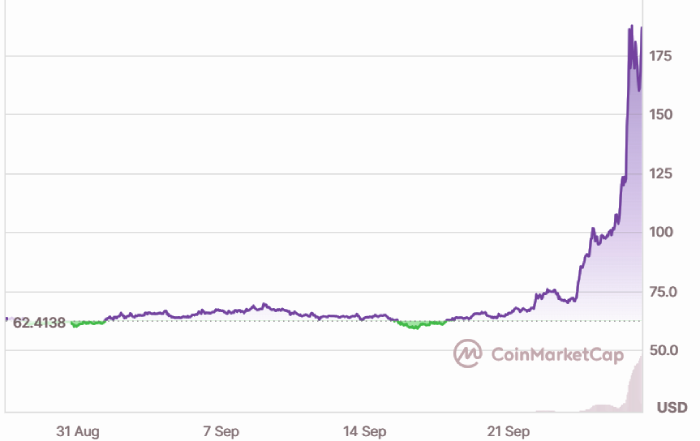
An obscure cryptocurrency called Quant (QNT) has surged more than 150% over the past week.
It looks like the kind of move crypto produces all the time, except this one was sparked by a deal involving banks that already move trillions of dollars through the U.S. financial system.
Banks are putting deposits onchain
The Clearing House, which is owned by 25 of America's largest financial institutions, selected Quant to provide the technology for its new On-Chain Money Initiative.
The network will let banks transfer and settle tokenized deposits while connecting with existing payment systems, including RTP and CHIPS.
Tokenized deposits are digital versions of the money customers already hold at commercial banks. Unlike stablecoins, they're still liabilities of the issuing bank.
But they can move around the clock and support programmable payments.
For Quant, the deal could put its technology at the center of how some of the largest U.S. banks manage tokenized deposits.
Tokenization is moving beyond Treasurys
The market for tokenized real-world assets has grown to more than $38 billion, up from less than $2 billion at the start of 2024. Much of that growth has come from tokenized Treasurys, private credit, and other financial assets.
Tokenized deposits bring bank money into the equation. Putting stocks, bonds, and funds on-chain is less useful if the cash needed to buy them still moves through conventional banking systems.
📌 Bottom line: Quant's rally is tied to a much bigger shift than another crypto trade. As more financial assets move on-chain, banks are starting to put the money used to settle those transactions there, too.
Beware of the "agentic bank run"
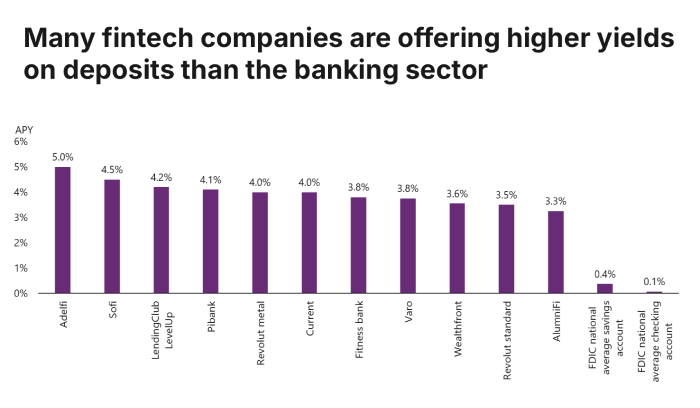
The AI boom has mostly been about how companies can use the technology to cut costs and boost productivity. Apollo chief economist Torsten Slok sees another use: helping households move money out of bank accounts that pay almost nothing.
Agentic AI could start moving your money
Slok argues that Muse and similar AI assistants could eventually move cash automatically into accounts offering better returns. Apollo calls the possibility an "agentic bank run."
Apollo's data show several fintechs offering between 3.3% and 5% on cash, compared with a national average of just 0.1% for checking accounts.
"If every household used AI agents to optimize the return on their cash balances, banks could lose a large share of the cheap deposits they rely on to make loans," Slok wrote.
Banks have fought this battle before
Banks have already pushed back against another challenge to low-paying deposits: stablecoins that offer rewards or interest.
NYU professor Austin Campbell, who previously worked in banking, has argued that the banking lobby is "panicking" over stablecoins that can offer customers higher returns. Banks make money by paying little interest on deposits and lending that money at higher rates. That gives them a reason to resist alternatives that offer customers more.
📌 Bottom line: Banks have long benefited from customers leaving cash in accounts that pay next to nothing. If AI starts moving that money automatically, financial institutions may have to pay more to keep it.