U.S. and Iran reached a deal

Morning Observers,
After weeks of leaks, anonymous “sources,” and diplomatic theater, the U.S. and Iran appear to have landed on a 60-day truce agreement, assuming Trump signs off.
Treasury Secretary Scott Bessent says both sides have the “makings of a deal,” with a gradual reopening of the Strait of Hormuz as the key condition.
The timing is critical because the global energy system is approaching a dangerous tipping point.
Rosemary Kelanic, a Middle East analyst at the Defense Priorities think tank, says 7 billion barrels is the level to watch. If global oil inventories fall below that, the energy system will start falling apart.
By her estimate, inventories have already dropped from more than 8 billion barrels in February to roughly 7.6 billion today.
Even in the best-case scenario, Kelanic believes the damage may already be done.
“If Trump doesn’t make concessions to reopen Hormuz imminently — and perhaps even if he does! — we’re looking at a global recession,” she said.
So far, GDP data suggest the global economy hasn’t reached that threshold. But growth is slowing much quicker than previously expected, with the economy’s last lifeline (the consumer) starting to throw in the towel.
Let’s break it down.
— Dan Runkevicius, Editor
Five things to know before opening bell
🔥 Inflation stays stuck near three-year highs
Inflation remained stubbornly high in April, with higher energy prices feeding through the economy. The Fed’s preferred inflation gauge, the PCE index, rose 3.8% from a year ago, its highest reading in nearly three years. Core PCE climbed 3.3%, the highest since October 2023.
🛫 Durable goods boom... with a catch
U.S. durable goods orders jumped 7.9% in April, beating expectations. But much of the surge came from aircraft bookings. Strip out transportation, and orders rose a more modest 1.1%. A key measure of business investment also unexpectedly fell, suggesting companies still aren’t rushing to spend.
📈 Stocks keep betting on de-escalation
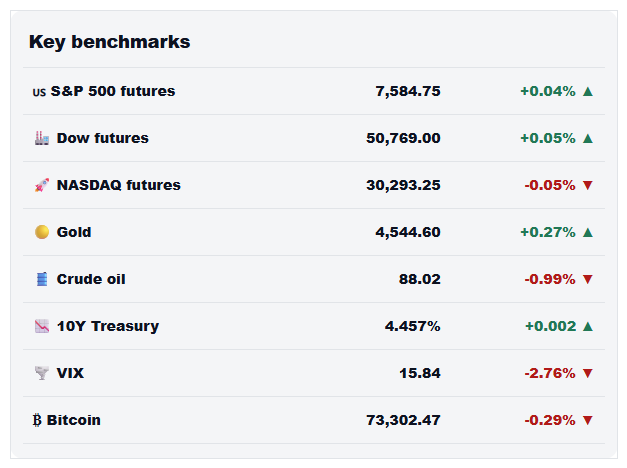
The S&P 500 hit another record Thursday as investors kept betting on progress in U.S.-Iran peace talks. The index rose 0.6%, led by tech and healthcare, while the Nasdaq climbed 0.9%. Gold also ended the day higher.
🛍️ Retail earnings calm consumer spending fears
Retail stocks rallied after several major chains topped earnings expectations. Kohl’s, Best Buy, and Dollar Tree all jumped at least 17% as executives pointed to resilient consumer spending despite higher energy costs. The catch is that those higher energy costs haven’t fully shown up in goods prices yet, meaning the real test may still be ahead.
🤖 Chip stocks add $5.7 trillion in value
Chipmakers are still punching above their weight. Semiconductor stocks have added roughly $5.7 trillion in market value during this year’s AI boom, and investors are still willing to pay up for anything tied to AI, even as inflation, war risk, and oil prices hang over the broader economy.
U.S. economy might be running on leftover cash
For months, economists warned that the American consumer would buckle under the weight of higher energy prices and inflation. Instead, households just kept spending.
The catch is that a lot of that spending came straight out of their savings.
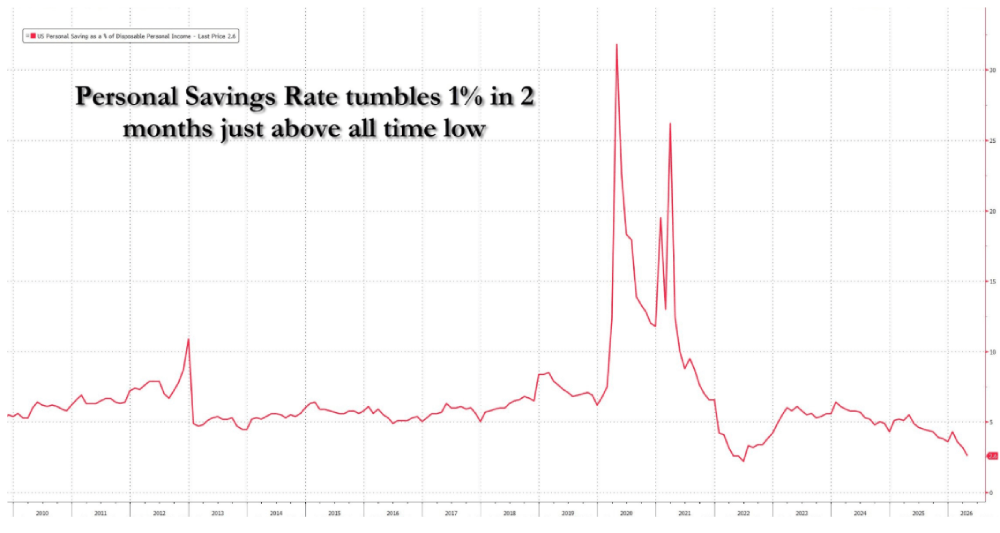
Personal savings rate plunges
Buried in Thursday’s economic data were a few warning signs about the consumer.
Personal spending rose 0.5% in April, but much of that increase simply reflected higher prices. In other words, Americans are paying more to buy roughly the same basket of goods.
The bigger red flag was savings. The personal savings rate dropped to 2.6%, one of the lowest readings in two decades and less than half the 5.5% level from a year ago.
Even the income data wasn’t especially comforting. Pre-tax incomes rose modestly, but inflation-adjusted after-tax income fell in April.
The drop “underscores how squeezed Americans are right now with higher prices and incomes not keeping up,” said Navy Federal chief economist Heather Long.
Consumers are carrying the economy on a thinner cushion
Recent economic data suggests the economy is becoming more vulnerable to a consumer pullback.
After U.S. GDP growth slowed to just 0.5% in the fourth quarter during the federal government shutdown, first-quarter growth was revised down again to 1.6% from 2%.
At the same time, the full effect of higher oil prices has yet to show up. RSM chief economist Joe Brusuelas expects inflation to peak in the coming months, putting even more pressure on consumer spending.
Meanwhile, Moody’s chief economist Mark Zandi warned that a recession becomes more likely if the Iran war isn’t resolved soon.
“The Iran war needs to end, and the Strait of Hormuz needs to be reopened soon, or recession will become more likely than not,” Zandi said.
That means consumers are losing their financial cushion at the exact moment the economy may need them most.
📌 Bottom line: The U.S. economy has held up against higher prices largely because households kept spending through them. But the savings rate suggests consumers are increasingly funding that spending from cash reserves.
The AI boom has an ROI problem
The AI boom is doing wonders for the economy right now.
Data center construction is surging, chip demand is exploding, and hyperscalers are spending money at a pace rarely seen outside of wartime.
There’s just one problem: the economics may not work.
Assessing the ROI
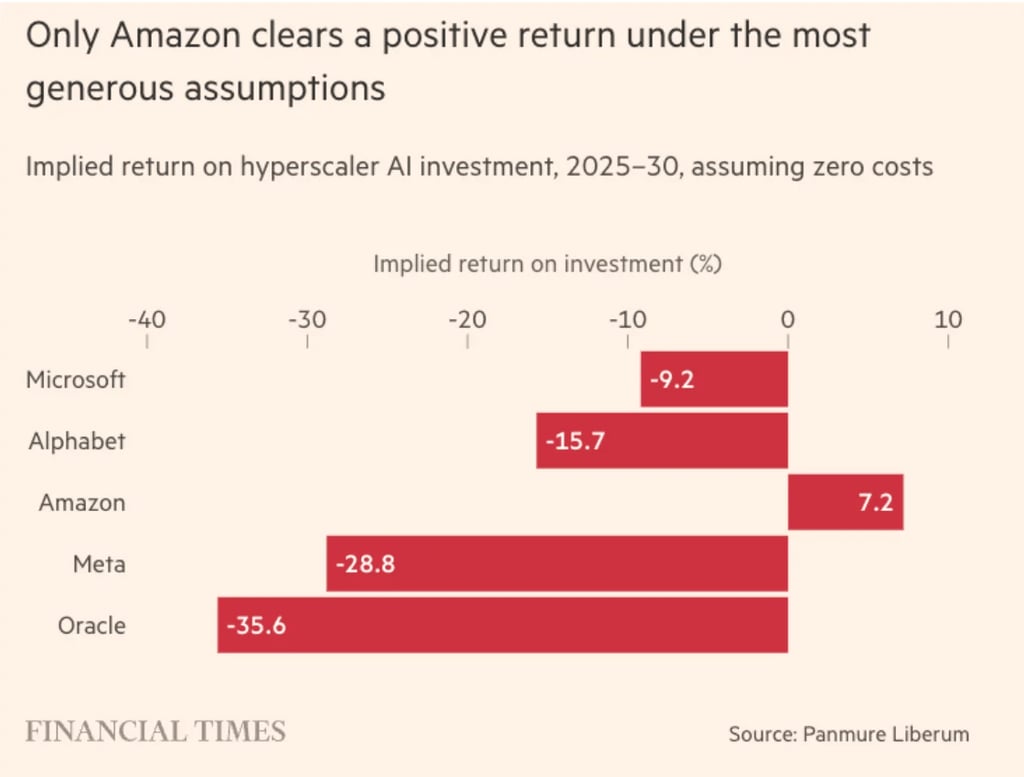
A recent analysis from Panmure Liberum, a British investment bank, suggests that among the five major hyperscalers, Amazon, Microsoft, Alphabet, Meta, and Oracle, only Amazon is expected to break even on its AI investments by 2030.
And even that depends on generous assumptions about future AI adoption and monetization.
The projected returns for the others look ugly:
- Oracle: -35.6% ROI
- Meta: -28.8%
- Alphabet: -15.7%
- Microsoft: -9.2%
“These numbers show that if the hyperscalers continue on the current trajectory, the AI boom will become a story of one of the largest destructions of shareholder value in history,” said Joachim Klement, a managing director at Panmure Liberum.
Spend first, ask questions later
The scale of AI spending is hard to overstate.
Some estimates suggest the Mag 7 could spend roughly $650 billion this year alone on AI infrastructure, including chips, servers, and data centers.
To justify that kind of spending, AI would need to generate trillions in future revenue. But right now, it’s still not clear where all that revenue comes from.
Even OpenAI is reportedly under pressure to grow fast enough to justify its massive computing costs. CFO Sarah Friar recently warned internally that revenue needs to keep pace with spending.
That’s starting to bring back uncomfortable comparisons to the dot-com era: transformative technology paired with terrible economics.
Even though the internet changed the world, many of the companies that built it didn't last long enough to reward shareholders.
📌 Bottom line: If this AI spending fails to generate meaningful returns, today’s boom could eventually turn into a balance-sheet problem. And with so much growth riding on AI, this is as much an economic problem as it is a market problem.