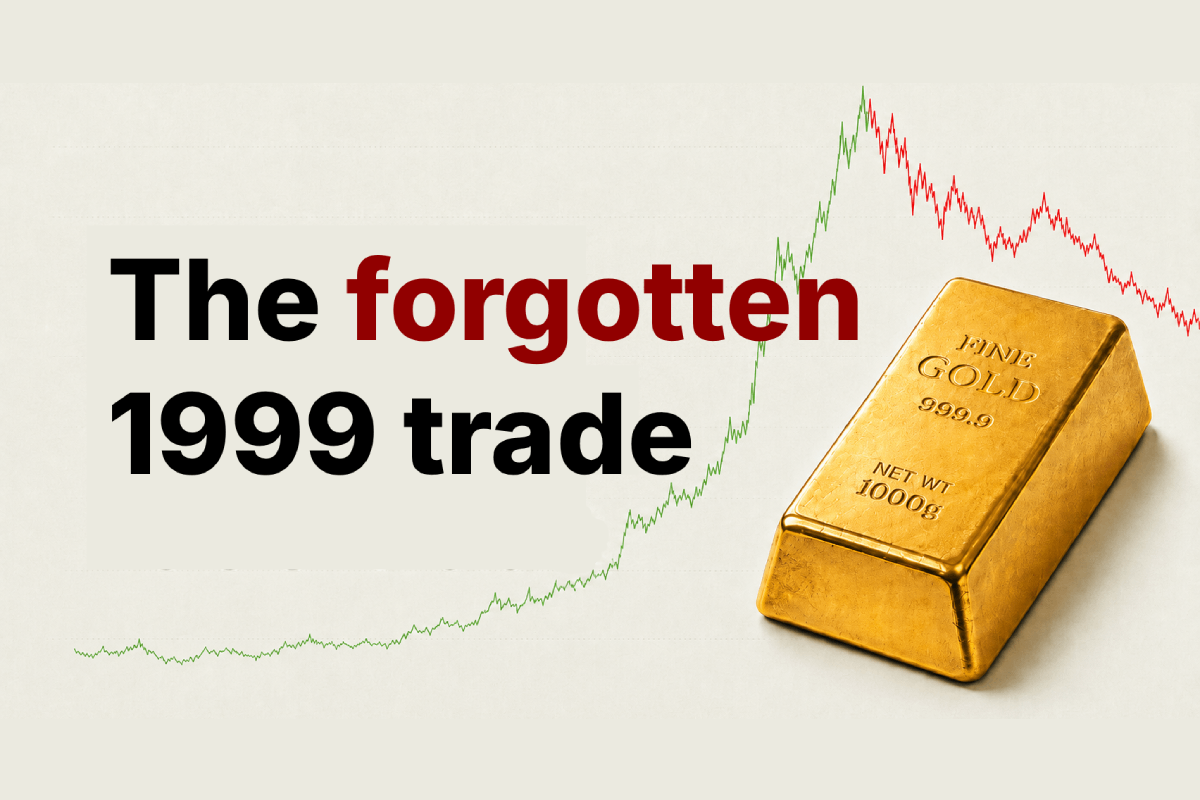
The forgotten 1999 trade

Morning Observers,
The jobs report did that thing where the headline looks fine until you actually open the hood.
The U.S. added just 57,000 jobs in June, which was well below expectations. But weirdly, the unemployment rate still fell to 4.2%. So what’s going on?
The answer is that much of the drop happened not because of strong hiring, but because a lot of people disappeared from the labor force altogether.
According to BLS data, the labor force shrank by 720,000, and the participation rate is now at its lowest level in five years.
In other words, the unemployment rate improved partly because fewer people were counted as looking for work.
And the stranger part is that this was not just retirees quietly leaving the workforce. Prime-age participation, those between ages 25 and 54, fell too.
Then there was leisure and hospitality.
This was supposed to be the sector getting a nice summer boost, especially with World Cup travel lifting hotels, restaurants, bars, airports, and stadium-adjacent everything.
Instead, leisure and hospitality lost 61,000 jobs.
So while the labor market is not collapsing, this looks less like a rebound and more like another confirmation for a “low-hire, low-fire” economy.
For markets, the read is that a July hike is even less likely.
Let’s dig in.
- Dan Runkevicius, Editor
|
Five things to know before opening bell
🇺🇸 U.S. hiring slows in June
The U.S. economy added just 57,000 jobs in June, well below expectations of 115,000, suggesting the recent hiring boost tied to hospitality was short-lived. April and May payrolls were also revised down by a combined 74,000 jobs. While the unemployment rate dipped to 4.2%, the decline was largely driven by more Americans leaving the labor force rather than stronger hiring.
💵 U.S. dollar sinks to two-week low
The disappointing jobs report sent the U.S. dollar to a two-week low against a basket of currencies. The U.S. Dollar Index (DXY) fell 0.6% to 100.77, while gold climbed 1.4% to nearly $4,140 per troy ounce. Despite Thursday’s decline, the dollar remains up nearly 3% since early May.
📈 Dow tops 53,000
A surge in blue-chip consumer stocks lifted the Dow Jones Industrial Average above 53,000 on Thursday before it closed just below the milestone, up 594 points and setting a new all-time high. The S&P 500 finished little changed, while the Nasdaq fell 0.8%. Despite the mixed session, all three major indexes posted solid gains for the holiday-shortened week, rising between 1.8% and 2.1%.
🤖 OpenAI reportedly discusses government stake
OpenAI has reportedly held preliminary discussions about giving the U.S. government a 5% stake in the ChatGPT maker. The talks come as Washington explores closer ties with leading AI companies, including Anthropic, over growing concerns about AI’s economic impact and calls for greater public participation in the industry’s rapid growth.
🚗 Tesla drops despite record quarterly sales
Tesla stock fell 7.5% Thursday even after the company reported a record 480,126 vehicle deliveries in the second quarter, up 25% from a year ago and well ahead of expectations. Despite the strong results, Tesla still trailed China’s BYD, which reclaimed the global EV sales lead after delivering 557,090 fully electric vehicles during the quarter.
Wall Street is turning the page on this 30-year trade
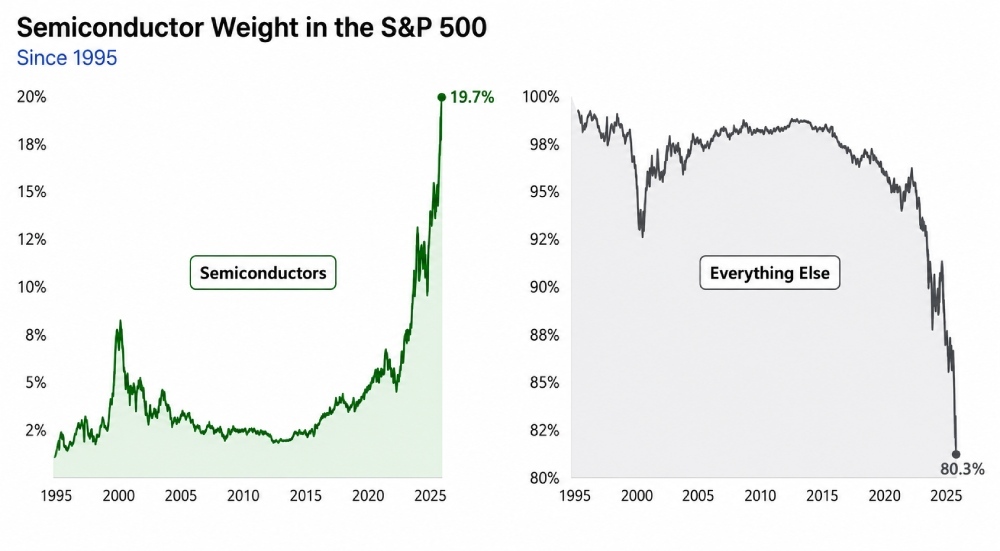
Every bull market has a defining trade. This one just happened to last three decades.
Since the mid-1990s, owning semiconductor stocks has been one of Wall Street’s simplest ways to outperform. The companies changed, from Intel to Nvidia, but the playbook never really did.
That era could be coming to an end.
The trade got too popular
Wall Street’s 30-year consensus trade may finally be losing its grip, according to Wellington Altus strategist James E. Thorne.
Semiconductor companies now account for nearly 20% of the S&P 500, their highest weighting ever. That underscores just how much of the market depends on one crowded AI-linked trade.
The irony is that the trade may have peaked only after the rally spread to the rest of corporate America.
The rotation has started
While the S&P 500 has gained roughly 9% this year, the Russell 2000 has climbed about 21%.
The equal-weight S&P 500, which gives every company the same weight rather than letting mega-caps dominate returns, has also outperformed the traditional index.
Meanwhile, first-quarter earnings grew 28.2% year over year, with gains becoming increasingly widespread across banks, manufacturers, industrial companies, and other sectors that spent the past two years in semiconductors’ shadow.
📌 Bottom line: Semiconductors helped build this bull market, but they are less likely to carry the next leg by themselves.
Will gold repeat its post-dot-com 500% rally?
The hardest investment decisions rarely feel difficult at the time.
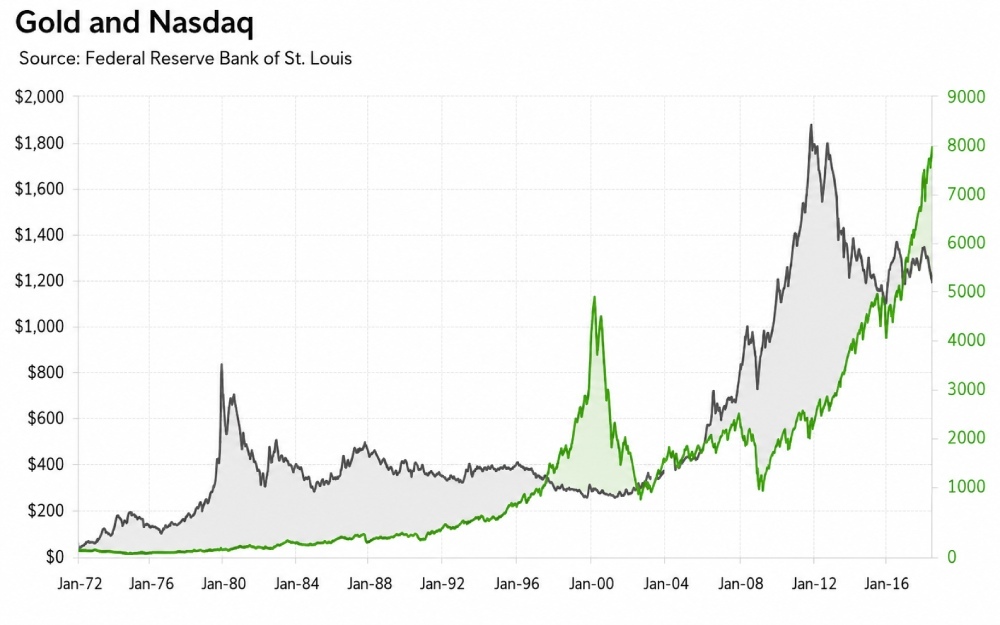
In the late 1990s, selling gold to buy technology stocks looked obvious. Today, with gold down more than 26% from its January peak and the S&P 500 hovering near record highs, swapping the yellow metal for AI stocks feels just as rational.
That’s exactly how the last great technology boom felt before it ended.
FOMO has a long shelf life
Market analyst Lukas Ekwueme says the current market setup looks eerily familiar to the one that preceded the 2000 dot-com crash.
The Philadelphia Semiconductor Index has surged roughly 78% this year and 127% over the past 12 months as investors continue piling into AI.
Between 1996 and 2000, the S&P 500 climbed about 230%, while gold fell roughly 30%. To many investors, gold looked like dead money while technology seemed unstoppable.
Then the script flipped.
From 2000 through 2011, the S&P 500 delivered virtually no return, giving rise to the “lost decade.” At the same time, gold surged about 500%.
The mistake was not necessarily buying technology stocks, but assuming the market’s hottest trade would stay the hottest indefinitely.
The difference this time
Today’s market isn’t the dot-com bubble, but it shares two defining features: record valuations and enormous spending on a transformative technology.
U.S. tech stocks are trading at their richest valuations since the late 1990s, while trillions of dollars are being committed to AI infrastructure in what’s becoming one of the largest capital spending cycles in history.
While gold has been trending lower lately, analysts at UBS don’t expect that weakness to last.
In a recent report, they predicted gold prices could surge 30% over the next year as inflation concerns, a weaker dollar, and continued central bank buying support prices.
📌 Bottom line: Investors who abandoned gold for technology in 2000 spent the next decade watching the opposite trade win. History suggests the most overlooked asset in one cycle often becomes one of the biggest surprises in the next.