The Fed's biggest dilemma

Morning Observers,
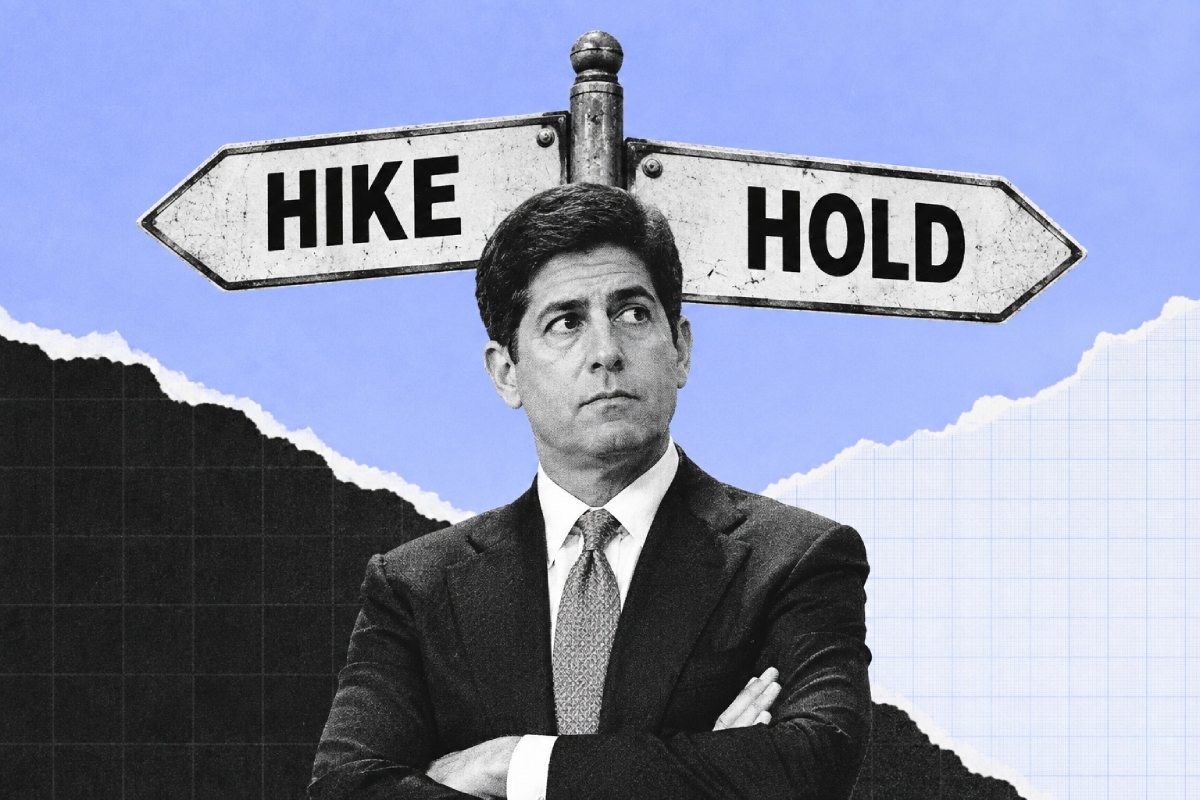
Trump finally got the Fed chair he wanted. Now he might get the rate hike he definitely doesn't.
When Kevin Warsh took over the Fed in May, Trump told his hand-picked chairman to be "totally independent" and "do your own thing."
That independence is about to face its first real stress test.
Friday's hotter-than-expected inflation report has pushed the odds of a rate hike this week above 85%, with Goldman Sachs and JPMorgan now joining the rate-hike camp.
There's just one problem: Trump wants the exact opposite.
Just weeks before the midterms, the rising cost of living becoming a major political headache. And not surprisingly, he spent the weekend arguing that U.S. rates should be the lowest in the world.
So Warsh is stuck with a pretty lousy choice: hike and risk Trump's fury, or hold and risk convincing markets that the new Fed chair is already bending to the White House.
And with the 10-year Treasury already flirting with 5%, markets may not give him much room to get cute.
Welcome to Fed week. Let's get into it.
- Dan Runkevicius, Editor

🛢️ Saudi pipeline shutdown rattles oil
U.S. crude prices climbed back above $100 a barrel Friday after Saudi Arabia shut down its East-West oil pipeline following "multiple attacks." The pipeline can move roughly 7 million barrels per day and provides a crucial alternative to the Strait of Hormuz, making its closure another potential choke point for Middle Eastern oil supplies.
📈 Stocks rally, even as September rate hike looks locked in
U.S. stocks rallied Friday, with the S&P 500 snapping a four-day losing streak after annual CPI came in at 3.4%, matching expectations. But accelerating core inflation makes a rate hike this week "a done deal," according to Wells Fargo. "Oil is a bigger story," the bank added, warning of further upside to inflation.
🤖 Oracle's AI bet starts paying off, but there's a catch
Oracle's cloud revenue jumped 62% to $11.6 billion last quarter, while cloud infrastructure revenue more than doubled to $7.4 billion, thanks to strong demand for AI computing. On the other hand, gross margins are narrowing as Oracle spends heavily on the data centers and equipment needed to meet that demand.
💰 Passive investors remain locked in
ETFs attracted more than $180 billion in August, the sixth-largest monthly inflow on record, according to Baird Strategas data. Despite a looming rate hike, stock ETFs accounted for more than $100 billion of those inflows.
⚠️ 10-year Treasury yield flirts with 5%
The benchmark 10-year Treasury yield briefly reached 4.99% Friday, its highest level since late 2023. On Thursday, the Treasury bought back $5.2 billion of longer-term bonds, short of the $6 billion it was prepared to buy. But the operation did little to rein in concerns about inflation, deficits, and heavy debt issuance.
What Trump's $5,000 dividend would mean for the economy
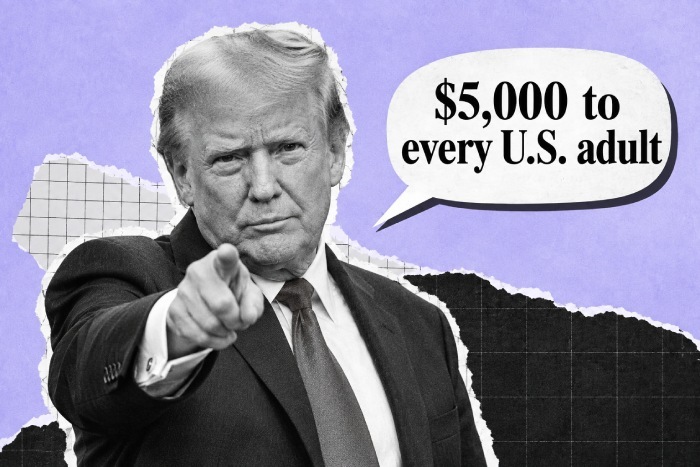
Trump is promising every U.S. adult a $5,000 "Trump Dividend" if Republicans win the midterms. The catch is that it could come with a hefty dose of inflation at a time when policymakers are struggling to contain it.
The $1.35 trillion catch
While Trump hasn't specified exactly who would qualify, economist Kent Smetters, faculty director of the Penn Wharton Budget Model, estimates that paying $5,000 to every U.S. adult would cost between $1.15 trillion and $1.35 trillion.
More important is what happens when the checks arrive.
Smetters estimates households could spend roughly $400 billion within the first two quarters. His modeling suggests the demand surge could add 0.3 to 0.5 percentage points to headline and core inflation over the following four quarters.
That's a sizable move when consumer prices rose 3.4% in August, marking the 66th consecutive month above the Fed's 2% target.
The bill doesn't disappear
The Trump administration has suggested tariffs and foreign investment could fund the dividend. Economist Peter Schiff isn't buying it, arguing that the "Fed will have to print the money" to make the plan work.
Technically, the Treasury would first borrow any unfunded portion by issuing more debt. If the Fed then bought Treasurys with newly created reserves, it would increase the amount of money in the financial system.
The U.S. is already running a deficit approaching $2 trillion through the first 11 months of fiscal 2026, according to the latest CBO figures.
That means a trillion-dollar paycheck to Americans would require a trillion dollars in new revenue, spending cuts elsewhere, or even more borrowing.
📌 Bottom line: A $5,000 dividend could force Americans to exchange short-term gain for long-term pain. The check would arrive once, but the higher prices it creates could stick around for years.
Gold's $17.9 billion buy signal
One of the biggest commodity stories this year has been central banks' relentless demand putting a floor under gold prices. But new ETF data suggests investors are piling in too.
ETF demand is surging
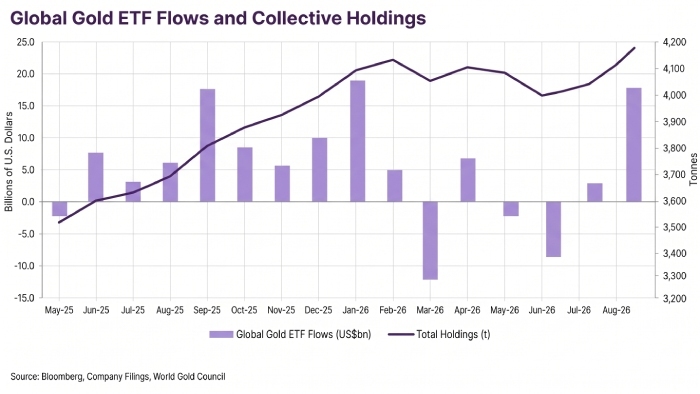
According to the World Gold Council, global physically backed gold ETFs attracted $17.9 billion in August, the second-largest monthly inflow on record.
The buying pushed ETF holdings to a record 4,189 tonnes, while total assets under management jumped 16% to $615 billion, the highest since February.
The timing is significant. Gold remains roughly 22% below its January high after a difficult six-month stretch, yet investors are aggressively buying the dip.
Investors want the physical metal
The fact that these ETFs are physically backed suggests investors aren't just speculating on gold through futures markets but are investing in actual bullion.
This could be another sign that the "debasement trade" is picking up.
In addition to worries about inflation and enormous U.S. deficits, the Treasury's buyback announcement last month has given fiat-conscious investors another reason to be wary.
📌 Bottom line: Central banks helped support gold following the January selloff, but private investors are now piling back in.