The denominator is broken


Morning Observers,
2026 is making a mockery of textbook economics.
War has failed to derail stocks. Aggressive Treasury buybacks have failed to contain long-term yields. And expectations for higher rates — normally kryptonite for commodities — haven’t stopped hard assets from surging.
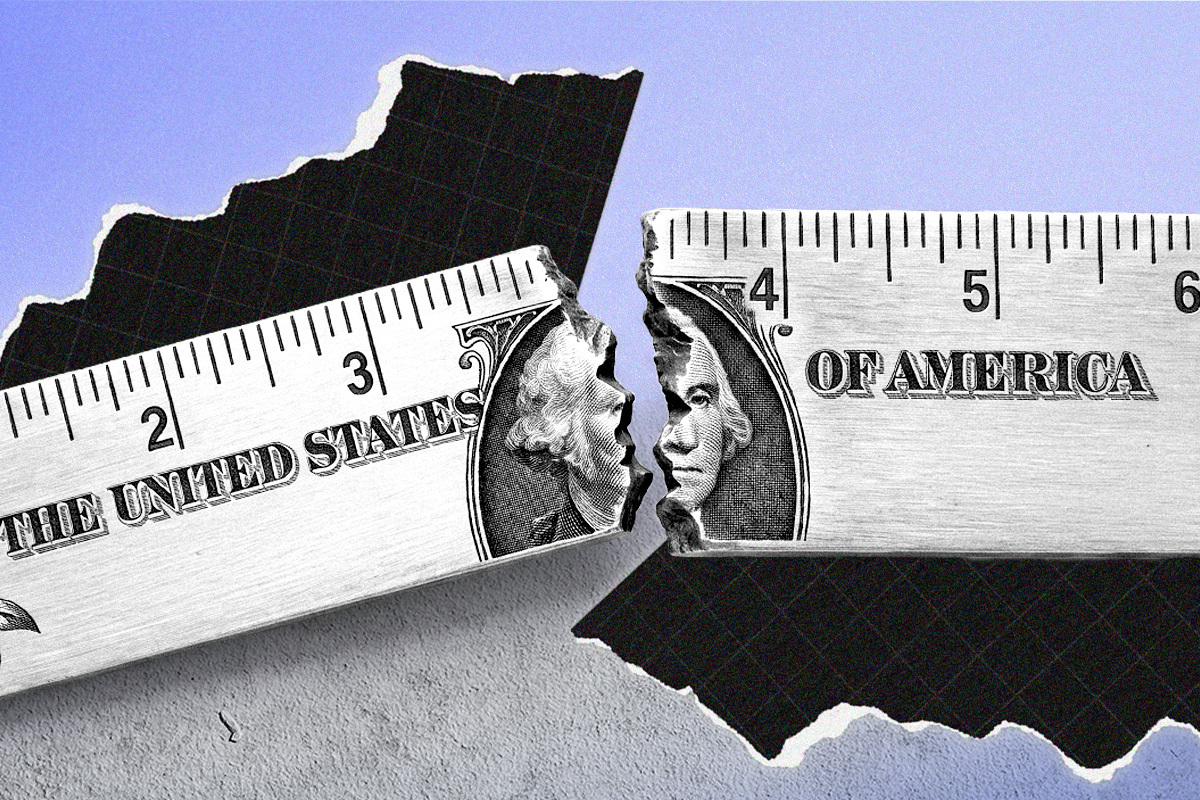
The common thread is the denominator: the U.S. dollar.
Thursday delivered an everything rally, with precious metals, commodities, and Bitcoin climbing even as inflation and rate-hike fears remained elevated. Inflation has now exceeded the Federal Reserve’s 2% target for 65 consecutive months.
“Prices are not just rising,” The Kobeissi Letter wrote. “The currency they are priced in is losing value.”
The dollar’s recent decline is only part of the story. Investors are increasingly exchanging financial promises for assets that governments cannot print, dilute, or easily manipulate.
Currency debasement no longer requires clipping coins or reducing their precious-metal content. As Charles Schwab noted, its modern form is driven by excessive government debt, relentless money creation, and declining confidence in national currencies and the institutions behind them.
The result is the return of the debasement trade… and the United States is sitting at its center.
Goldman Sachs strategist Brian Garrett recently warned that gold’s rally could lose momentum. But he also argued that debasement is a defining market theme that isn’t going away anytime soon.
If the dollar is the broken measuring stick, asset prices may keep rising even when the economic backdrop says they shouldn’t.
Buckle up,
- Sam Bourgi, Interim Editor

📉 Broadcom’s AI forecast falls flat
Broadcom stock fell by as much as 5% Thursday after the chipmaker’s results and outlook failed to live up to lofty expectations. Revenue and adjusted earnings topped estimates, and the company predicted booming demand for its artificial-intelligence chips over the next two years. But its two-year AI sales forecast wasn’t enough to satisfy investors, highlighting the increasingly high bar facing companies at the center of the AI trade.
💰 Nvidia makes a $12.9 billion bet on Hugging Face
Nvidia has agreed to acquire open-source AI platform Hugging Face for $12.93 billion, a major push to expand its influence beyond chips and deeper into the AI developer ecosystem. Hugging Face has become a key hub for developers to share and showcase AI models, and the deal would give Nvidia control of one of the industry’s most important open-source AI platforms while broadening CEO Jensen Huang’s reach across the AI market.
🏦 Fed’s Waller leans toward holding rates steady
Fed Governor Christopher Waller said Thursday he’s leaning toward keeping interest rates unchanged at the central bank’s Sept. 15-16 meeting, provided upcoming inflation data doesn’t deliver any surprises. The remarks struck a more confident tone on inflation than recent comments from Fed Chair Kevin Warsh, and traders reduced their expectations for a September rate hike following Waller’s comments.
🪙 Gold’s $1 trillion move
Gold surged more than $100 a troy ounce on Thursday, adding more than $1 trillion in market value as investors grappled with elevated inflation expectations and rapidly rising oil prices. Spot gold climbed back above $4,500 after falling sharply earlier in the week, another sign that markets remain uneasy about persistent price pressures.
🛢️ Oil surges as Trump weighs an end to the Iran war
Brent crude briefly climbed above $97 a barrel as the Iran war entered its 190th day, even as The Wall Street Journal reported that President Trump was considering declaring the conflict “over” ahead of the U.S. midterm elections. The competing moves underscore what markets are watching. Any path toward de-escalation could ease pressure on oil and bond yields, but disruptions around the Strait of Hormuz remain a major inflation risk.
The bond market has a correlation problem
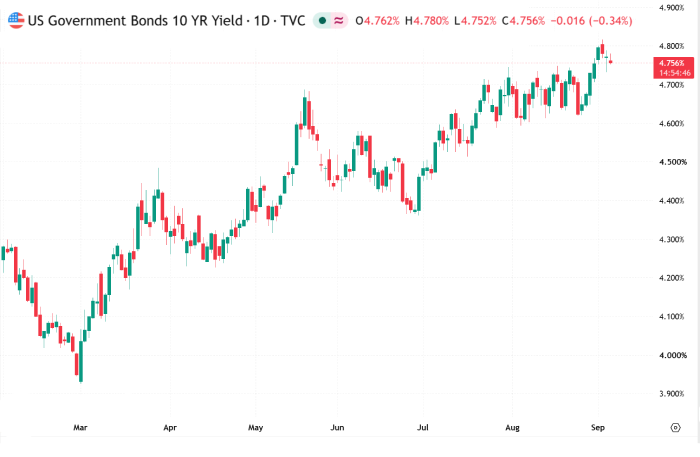
For decades, investors accepted relatively low returns on government bonds partly because they came with something valuable: insurance against a stock market crash.
But that insurance may be disappearing… just as Washington needs bond buyers more than ever.
Bonds are losing their hedge
BCA Research points to a major shift in the relationship between stocks and Treasurys.
Its rolling five-year correlation between daily U.S. stock returns and changes in the 10-year Treasury yield has fallen from roughly +0.4-0.5 in the mid-2010s to slightly negative today.
While this change may appear technical, it has huge implications.
Historically, when stocks fell, Treasury yields tended to fall too — meaning bond prices rose and cushioned losses elsewhere in a portfolio.
Now stocks can fall while yields rise, leaving investors with losses on both sides.
Investors want more to hold Treasurys
If Treasurys provide less protection, investors have less reason to own long-term bonds unless they’re paid more.
BCA’s data suggests that the shift is already happening. The extra return investors demand to own long-term Treasurys has risen sharply from its post-pandemic lows.
Treasury expanded its bond buyback program in August to help keep the bond market running smoothly. But buybacks can’t restore the bigger thing investors have lost — a reason to own long-term debt at lower yields.
📌 Bottom line: Washington can make the Treasury market run more smoothly, but it can’t bring back the stock-bond relationship investors relied on for decades. If that relationship has structurally changed, higher long-term borrowing costs may be the price.
Wall Street is shorting September. What could go wrong?
September may be dangerous for stocks, but the bigger risk could be assuming everyone already knows what comes next.
Investors have spent much of the year preparing for a sustained selloff that refuses to arrive. Now, with bearish positioning approaching crisis-era levels, betting against the market is starting to look less contrarian and more crowded.
The short trade is getting crowded
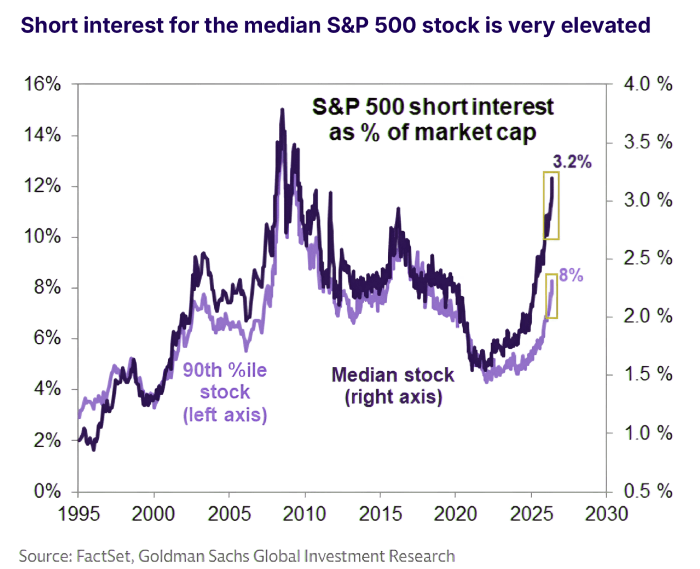
Short interest in the median S&P 500 stock has risen to 3.2% of market capitalization, according to FactSet data analyzed by Goldman Sachs. That’s the highest level since 2009 and is approaching the 2008 financial crisis peak of roughly 3.8%.
For comparison, short interest reached only about 1.7% during the 2022 bear market.
The positioning is even more extreme beneath the surface. Among the most heavily shorted 10% of S&P 500 companies, short interest has climbed to 8% of market cap, the highest level in eight years.
That doesn’t mean investors are wrong. But when bearish trades become this crowded, even a modest rally can force short sellers to buy shares to close their positions, adding more fuel to the rebound.
September has a reputation problem
The timing helps explain the pessimism. September has produced a decline 55% of the time since 1928, according to Charles Schwab, making it the weakest month historically for U.S. stocks.
But markets have spent much of this year defying similarly convincing reasons to fall. The S&P 500 has returned to record highs despite war, persistent inflation, and surging bond yields.
While September’s history may justify caution, it doesn’t guarantee that one of Wall Street’s most widely anticipated selloffs will actually arrive.
📌 Bottom line: A bad September is still possible, but elevated short interest makes joining the bearish trade increasingly expensive. Any upside surprise could turn the market’s biggest hedge into fuel for another leg higher.