Stocks rise 71% of the time in midterms

Morning Observers,
AI companies are committing to more compute spending than they can pay for upfront, and chipmakers are bending over backwards to help them cover the bill.
The latest example is Broadcom's $60 billion financing package for Anthropic and other companies.
According to people familiar with the matter, banks are preparing to syndicate $42 billion in debt to help AI companies pay for Broadcom chips. Blackstone is leading a separate $18 billion round, committing $9 billion itself.
This financing scheme is not new. Earlier this year, Apollo and Blackstone arranged $35 billion to help Anthropic buy more compute (see diagram below).
A special-purpose vehicle bought chips and leased them to Anthropic. The lease payments are used to repay investors, and Broadcom backstops most of the senior debt if Anthropic stops paying and the chips can't be sold for enough to cover the shortfall.
Nvidia is building a much bigger version of the financing scheme.
Earlier this year, it partnered with six major Wall Street banks to mobilize more than $500 billion of third-party capital for AI infrastructure over time.
This raises the question of how much of today's chip demand is coming from customers who can pay for it themselves and how much depends on financing from the companies selling them the chips.
- Dan Runkevicius, Editor

🏠 Mortgage rates post their biggest weekly surge in four years
Surging Treasury yields are pushing mortgage rates higher. The average 30-year mortgage rate jumped 25 basis points to 7.28% this week, its biggest weekly increase in four years and its highest level in nearly three years, according to Freddie Mac. Mortgage applications fell 6% last week, marking a fourth straight week of declines.
🏦 Bank stocks are starting to feel the effects of higher rates
Turmoil in the bond market is spilling over into bank stocks, with investors weighing what higher borrowing costs could mean for the economy and bank lending. The KBW Bank Index, a widely followed gauge of major U.S. banks, fell as much as 2.4% on Thursday, reaching its lowest intraday level since late May. Citigroup, one of the index's biggest constituents, fell nearly 2%.
🔄 Citadel sees a chance to "reload" in October
Retail investors are poised to return to U.S. stocks in October after pulling back in September, according to Citadel Securities' Scott Rubner. He said October could offer investors a chance to "reload," with earnings season and corporate buybacks also set to return, suggesting the recent market correction could be short-lived.
🤖 AI demand is fueling the U.S. trade deficit
America's goods trade deficit widened 11.5% in August to $132.6 billion, its highest level since March 2025, as imports jumped by $17.4 billion. Petroleum and other industrial supplies accounted for much of the increase, but imports of capital goods also rose 4%, reflecting continued spending on computers, semiconductors, and other AI-related equipment. The wider deficit suggests trade could weigh negatively on Q3 GDP.
🇬🇧 U.K. borrowing costs cross 6%
The yield on Britain's 30-year government bond climbed above 6% on Thursday, reaching its highest level since January 1998. U.K. yields have been hit by the same inflation and interest-rate concerns driving Treasury yields higher, but Britain also faces its own worries over government finances and higher energy costs. The 30-year yield has now risen roughly 5.6 percentage points from its 2020 low.
Bill Ackman's Howard Hughes is not the next Berkshire Hathaway
After Warren Buffett stepped down as chairman of Berkshire Hathaway, Bill Ackman has doubled down on his plan to turn real estate company Howard Hughes into a modern version of Buffett's famed company.
But there's one big difference. Ackman wants to rely heavily on outside investors, making part of his plan look more like Blackstone or Brookfield than Berkshire.
Ackman's plan breaks from Buffett's
Berkshire generated enormous amounts of cash from its own businesses, particularly insurance, giving Buffett a pool of money he could invest without having to raise it from outside investors.
Ackman has taken a page from Buffett by adding insurer Vantage to Howard Hughes, but the similarities largely end there.
In a recent interview, Ackman said he wants outside investors to fund as much as 80% of Howard Hughes' real estate investments. Howard Hughes would put up less of its own money while continuing to invest in and manage the properties.
Howard Hughes missed the bull market
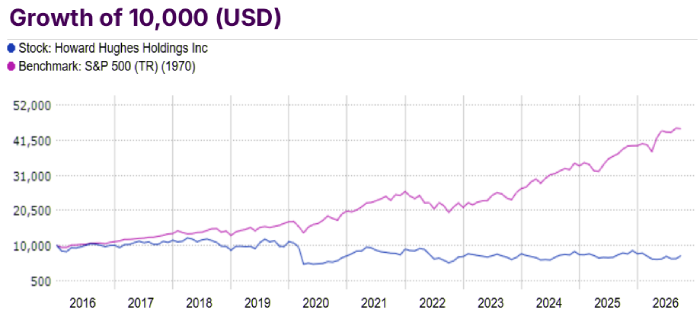
There's a reason Ackman is trying to spin this company. Howard Hughes stock has gone virtually nowhere over the past five years, while the S&P 500 has surged to record highs.
Part of the problem is how Howard Hughes makes money. The company builds massive communities that can take years to develop, requiring a lot of cash long before the projects fully pay off.
Ackman's makeover aims to move beyond that model, but Howard Hughes is still a long way from being another Berkshire Hathaway.
📌 Bottom line: Howard Hughes has never lacked valuable real estate. The problem is turning that value into returns for shareholders, and Ackman's overhaul will come down to whether it can do that.
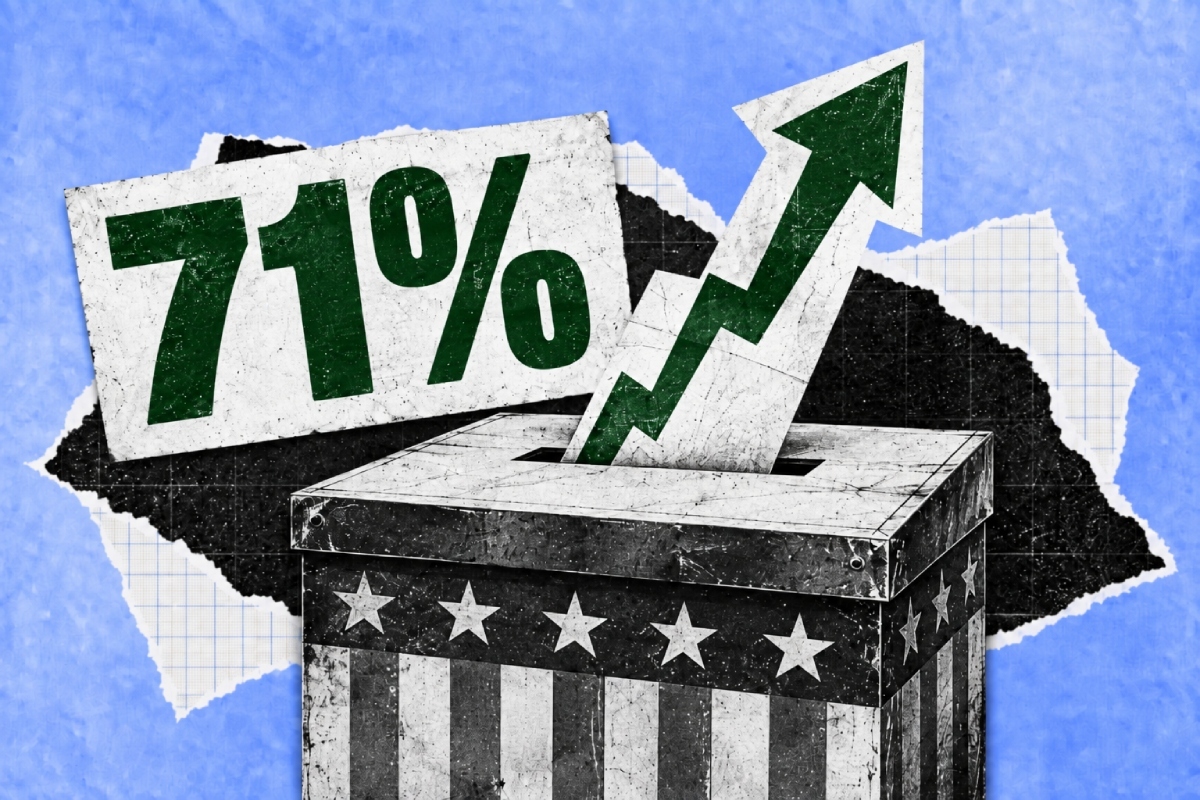
Stocks rise 71% of the time in this midterm window
Midterm elections usually bring months of political uncertainty. But for stocks, the weeks before voters head to the polls have historically been some of the strongest of the year.
Stocks are entering that stretch after mostly avoiding the kind of ugly selloff that tends to make September the market's worst month.
The pre-election rally
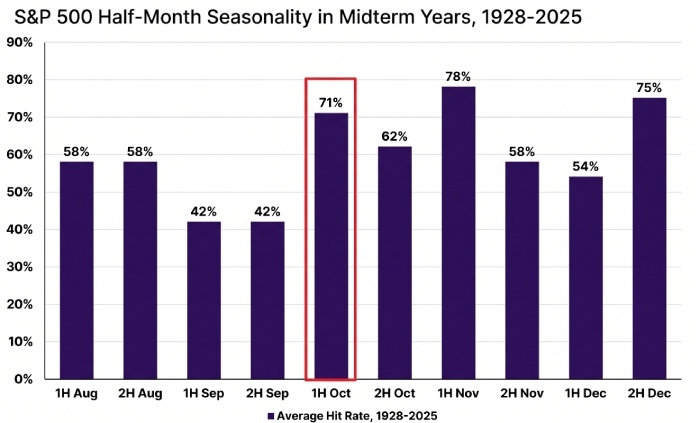
According to Citadel Securities, the S&P 500 has gained an average of 2.1% in the first half of October during midterm election years since 1928. Stocks finished higher 71% of the time.
Returns have usually cooled in the second half of October, averaging 0.3%, before picking up again in early November. In the first half of November, stocks have gained an average of 1.7% and finished higher 79% of the time.
Is Congress about to flip?
There's no shortage of uncertainty around this year's election. Polymarket bettors currently give Democrats a 64% chance of winning both chambers of Congress. Another 29% expect Democrats to take the House while Republicans hold on to the Senate.
A Democratic sweep would come with Republicans presiding over record stock prices and surging AI valuations. But stock gains offer little help for those dealing with higher prices and interest rates.
📌 Bottom line: In midterm years, the Q4 rally has often started well before Election Day. If you wait until Nov. 3 to see how the election turns out, you could miss some of the quarter's strongest weeks.