SpaceX IPO day!

Morning Observers,
Markets are suddenly back in “peace deal” mode.
Trump says he called off another round of strikes on Iran and claims a deal with Tehran is close, with a signing time and place coming “shortly.”
In response, the S&P 500 posted its biggest one-day gain since April, the Nasdaq jumped 2.5%, and crude oil retreated to under $90 a barrel.
Iran is not exactly popping champagne yet. Tehran says a draft is under review, but there are still red lines and plenty of suspicion about U.S. intentions. Now we just need the actual deal to show up.
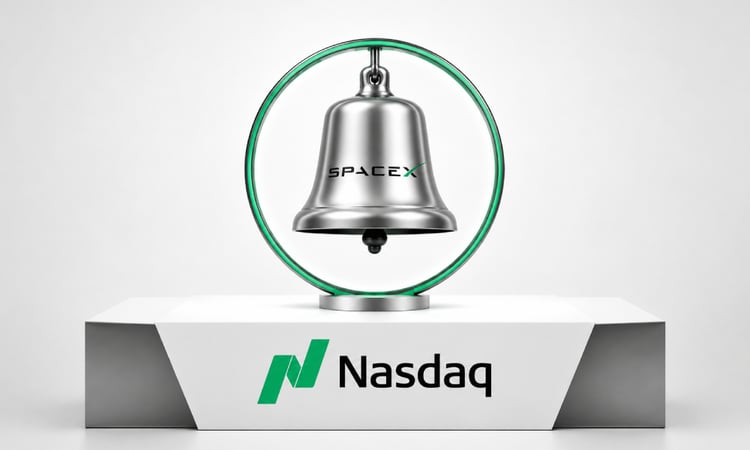
Meanwhile, SpaceX is set to make history with the largest IPO ever. The price is officially set at $135, in line with the original plan.
Expect the “pop,” which, as we discussed yesterday, is very common in IPOs because of how they are structured. But it’s not necessarily an indication of success.
Let’s dig in!
- Dan Runkevicius, Editor
|
Five things to know before opening bell
🔥 U.S. wholesale inflation heats up
The U.S. inflation picture continued to worsen in May, with wholesale prices posting their biggest monthly increase since November 2022. The Producer Price Index (PPI) rose 1.1% from April and 6.5% over the past year as higher energy costs continued to work their way through the economy. Because PPI measures prices businesses pay before goods reach consumers, the report suggests companies may soon pass more of those costs on.
🏦 Energy shock forces ECB rate hike
The European Central Bank became the first major central bank to respond to the recent energy shock, raising its key interest rates by 25 basis points on Thursday. The move lifts the deposit facility rate to 2.25%, the refinancing rate to 2.40%, and the marginal lending facility rate to 2.65%, as policymakers attempt to contain inflation pressures linked to the ongoing Iran conflict.
🚀 SpaceX demand goes parabolic
Investor demand for SpaceX’s highly anticipated IPO has exceeded expectations, with retail orders alone topping $70 billion, according to Bloomberg. Combined institutional and retail demand has surpassed $250 billion, making the offering nearly four times oversubscribed, Reuters reported. Shares are priced at $135, but the overwhelming interest suggests trading could be especially turbulent once the stock begins trading on the Nasdaq.
🤖 Oracle stock plunges as AI spending spooks investors
Oracle’s stock fell more than 11% over concerns about the growing costs of the company’s AI expansion. The cloud software giant spent $55.7 billion on capital expenditures during the last fiscal year, roughly $5 billion more than analysts expected, while debt levels continued to rise. Even so, Oracle reaffirmed its long-term targets and forecast fiscal 2027 earnings of $8.05 per share, signaling confidence that its AI investments will pay off.
💸 Wall Street cashes out after record month
Investors pulled $13.9 billion from U.S. stocks last week as many chose to lock in gains following the S&P 500’s record rally, according to new data from Bank of America. Single stocks accounted for $14.2 billion in outflows, the largest weekly withdrawal since 2008, while technology stocks led the selling with $10.8 billion in outflows. After months of strong gains, many investors are becoming more cautious heading into the second half of the year.
The AI price war is here
OpenAI pioneered user-friendly LLMs and, for some time, was the only chatbot in town. That helped its flagship product, ChatGPT, acquire more than 1 billion users in just a few years.
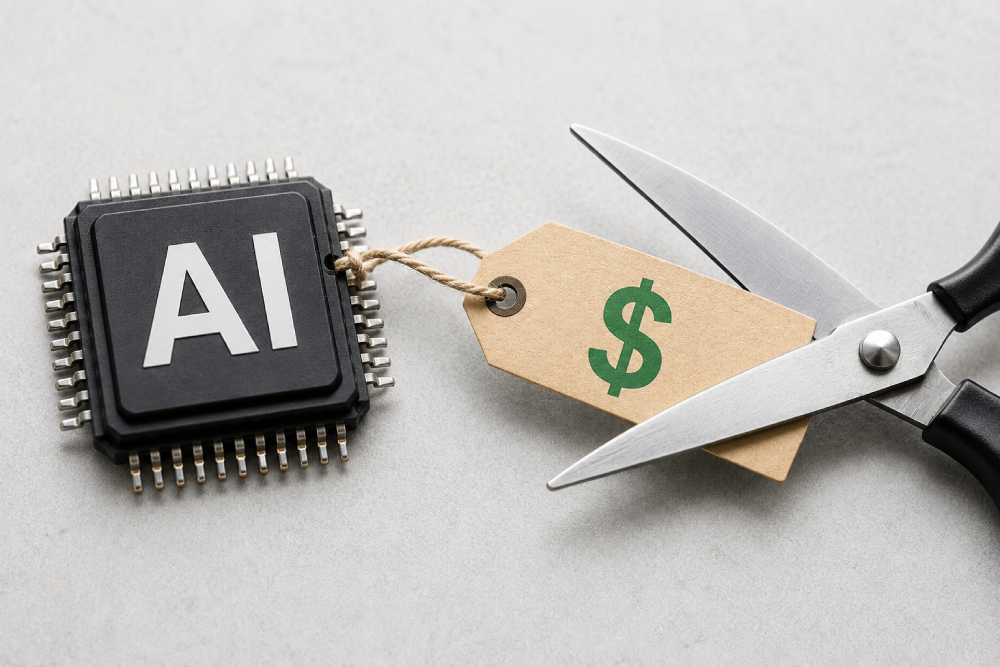
Those days are over. OpenAI is reportedly considering cutting the price of AI tokens... not because demand is weak, but because rivals are becoming impossible to ignore.
That’s a remarkable shift for a company that was supposed to enjoy an unbeatable first-mover advantage. Instead, AI is starting to resemble the progression of cloud computing: enormous upfront costs, thin margins, and stiff competition.
OpenAI executives have already admitted they missed internal revenue and usage targets, while CEO Sam Altman recently described operating costs as “a huge issue.”
Anthropic remains much smaller, with roughly 33 million monthly active users compared with ChatGPT’s more than 1 billion. But Claude’s website generates nearly 900 million monthly visits, suggesting developer attention is building faster than user numbers imply.
Wall Street may pick a different winner
The competition is also moving into capital markets.
OpenAI and Anthropic are both preparing for public listings, with OpenAI targeting a valuation near $1 trillion and Anthropic valued at roughly $965 billion in pre-IPO markets.
The irony is that, while Anthropic has a fraction of ChatGPT’s users, it has arguably built a stronger business model around enterprise contracts rather than consumer subscriptions.
It doesn’t have to rely on persuading hundreds of millions of users to pay every month.
That leaves Sam Altman with a difficult pitch. OpenAI has raised more than $180 billion while continuing to burn cash, making future profitability just as important as future growth.
📌 Bottom line: User growth got AI companies to trillion-dollar valuations. The next phase will be decided by who can keep costs under control in what looks like a brewing price war.
Is Nvidia more creditworthy than the U.S. government?
Most companies are compared with competitors. Nvidia is now being compared with governments.
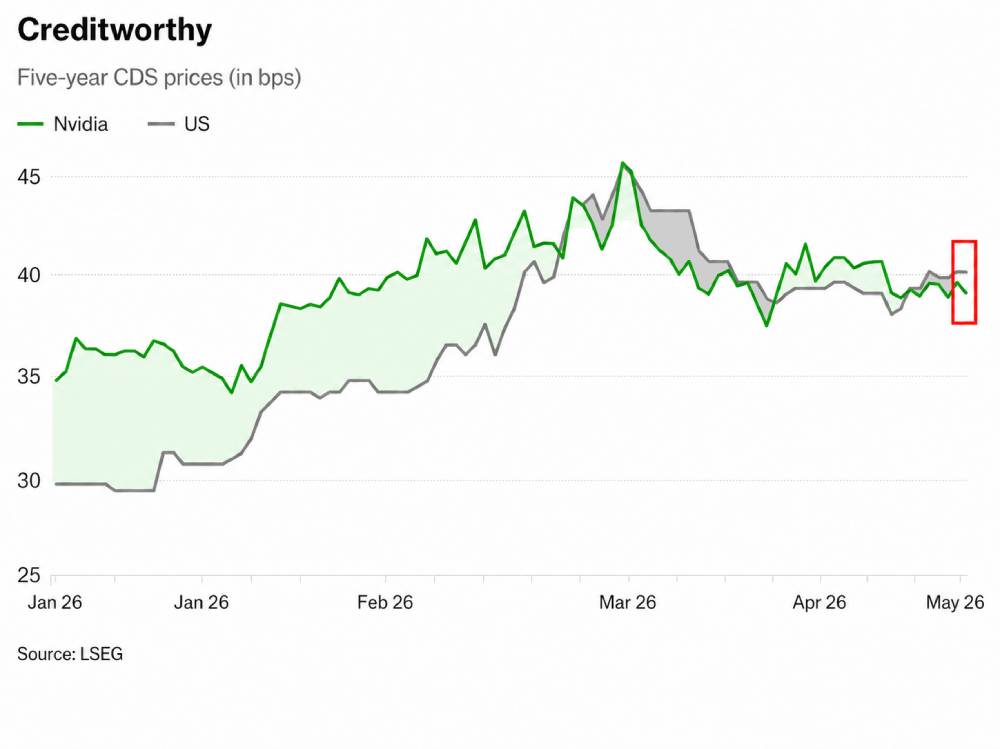
At the end of May, credit markets priced Nvidia as a slightly safer borrower than the U.S. government.
The comparison comes from a relatively obscure corner of Wall Street: credit default swaps (CDS), which are essentially insurance against default.
Five-year CDS on Nvidia traded at roughly 38 basis points, slightly below the 40 basis points for U.S. sovereign debt.
In other words, investors were pricing in a lower risk of Nvidia missing its obligations than the federal government.
The numbers explain why. Nvidia holds $10.6 billion in cash against just $8.5 billion of debt and generated nearly $100 billion in free cash flow last fiscal year.
Even a 90% collapse in earnings would still leave it among the world’s most profitable companies.
By comparison, the U.S. government is running annual deficits in the trillions of dollars and carries more than $36 trillion in outstanding debt, requiring constant refinancing while investors demand higher yields to keep lending.
So the U.S. government is adding debt, while Nvidia is adding cash.
Nvidia is becoming infrastructure
Back in March, Nvidia CEO Jensen Huang said compute is the new economy, arguing that computing power is becoming as essential as electricity.
That helps explain Nvidia’s extraordinary position.
AI models, cloud providers, and hyperscalers all depend on Nvidia’s chips. That dependence has translated into trailing 12-month revenue growth of more than 800% since ChatGPT launched in late 2022.
The relationship has become so strategic that the U.S. government negotiated a 15% cut of revenue from certain AI chip exports to China in exchange for export licenses.
It’s an unusual arrangement that gives Washington a share of certain Nvidia revenues without owning a single share of stock.
📌 Bottom line: Credit markets are usually boring but brutally honest. Right now, they’re putting Nvidia in a category normally reserved for sovereign nations.