Should you fear the midterms?

Morning Observers,
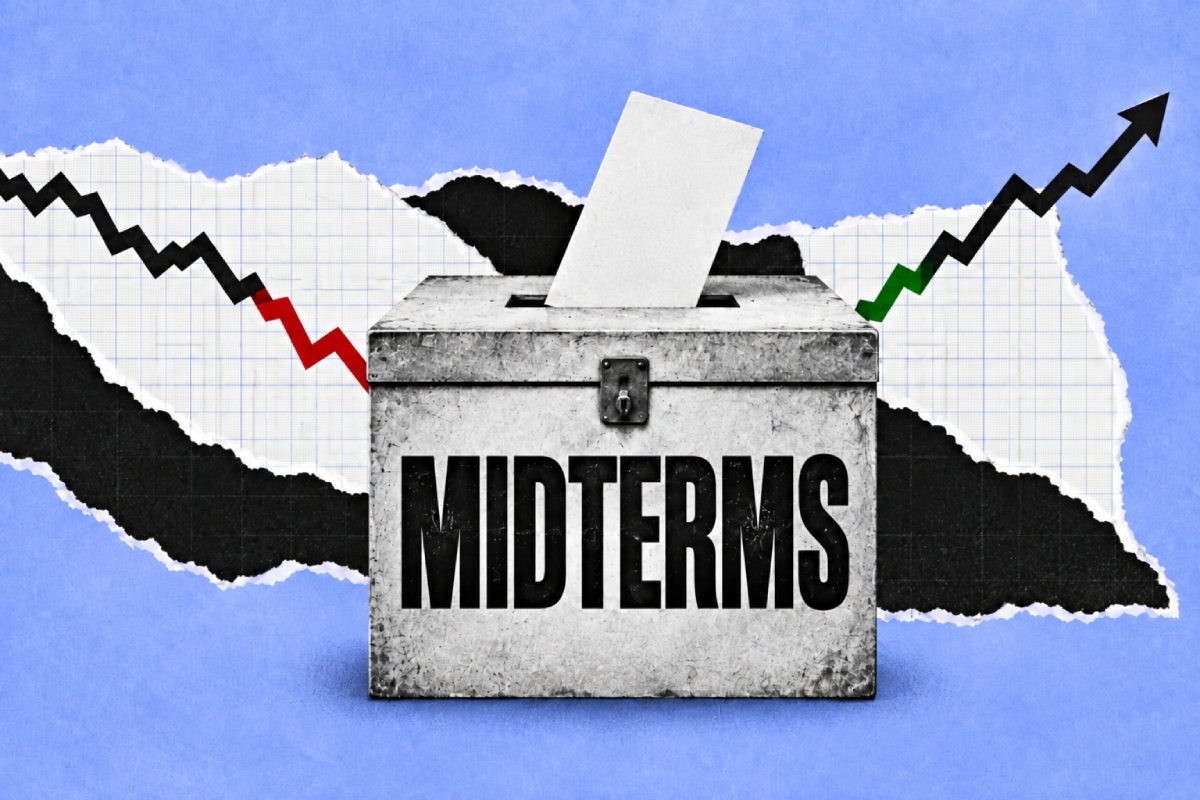
Historically, midterms have had very little net effect on investors. In the lead-up to the election, markets underperform due to uncertainty, then make up for it over the next year.
So far, U.S. stocks are largely sticking to the script.
The S&P 500 has returned half as much this year as it averaged over the past three years. And if this were a statistically average election, stocks should be 16.3% higher a year from now.
But whatever your assumptions or political views, this is no average election. So let's look at what's at stake.
There are three factors that have the biggest negative effect on stocks this year: inflation, yields, and any second thoughts about AI.
Inflation is chipping away at Americans' purchasing power, and domestic consumption is one of the biggest drivers of the U.S. economy. Yields make borrowing more expensive and stocks less attractive.
AI plays a double role: AI investments are boosting the economy, while expectations of AI-driven productivity growth are justifying higher valuations (at least for now).
The question is how much power America's legislative branch has to disrupt any of this.
I just got a note from UBS's Ulrike Hoffmann-Burchardi and Kurt Reiman, and their base case is a Democratic sweep. Can Democrats in Congress do anything about AI, yields, and inflation? Probably not much.
As much as they may want to regulate the hell out of Big Tech, Trump is likely to veto whatever they pass, even if Democrats win a slight majority in both chambers.
The president is also commander in chief, which means he calls the shots on Iran. Marco Rubio recently stressed this to Iran's leaders who are reportedly buying time until the midterms.
Yields? The Fed is an independent body, and even it's losing control of the long end of the curve to the market.
So, barring something unprecedented, this might as well be an average election for investors.
- Dan Runkevicius, Editor
|
|

📊 S&P 500's historic bull-bear divide
The S&P 500 is within 1% of its all-time high. But underneath that headline, 206 of its components are down more than 30%. The Kobeissi Letter calls it a "bear-bull market paradox": the index looks strong, while a big chunk of its members are deep in bear-market territory. AI stocks are doing a lot of the heavy lifting.
🏦 Warsh keeps markets guessing on rates
Fed Chair Kevin Warsh gave markets little to go on at the IMF's annual meetings. "I don't prejudge meetings," he said, dodging the question of whether he'd support another rate hike this year. Traders quickly walked back their October hike bets, with the odds dropping to around 15%.
📉 Chip stocks suffer longest losing streak since 2008
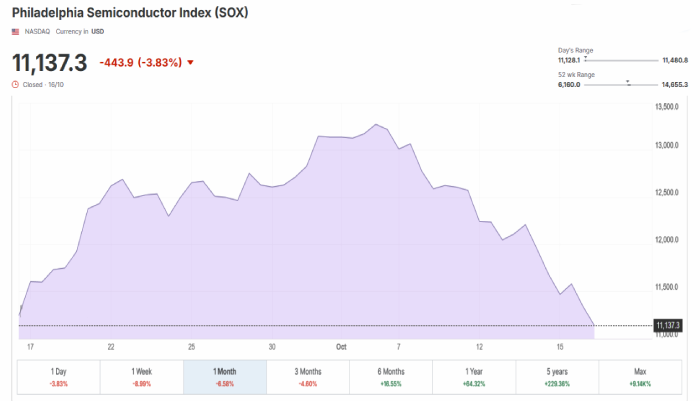
The semiconductor selloff keeps grinding on. Chip stocks fell for an eighth straight session on Friday, their longest losing streak since 2008. The Philadelphia Semiconductor Index dropped another 3.8%, bringing its losses over the eight sessions to 16%.
₿ Strategy faces potential removal from MSCI indexes
New MSCI rules could kick Michael Saylor's Strategy out of major global stock indexes, potentially forcing index-tracking funds to sell billions of dollars' worth of shares. Strategy has piled up nearly 850,000 bitcoin, largely by raising capital from investors. Losing its index membership could make that financing strategy harder to sustain as the company keeps adding to its BTC holdings.
🛢️ Exxon's refining profits surge as oil tops $100
ExxonMobil expects a major jump in third-quarter refining profits because conflicts in the Persian Gulf and involving Russia disrupt fuel production and push prices higher. Higher refining margins added roughly $4.5 billion to its quarterly results, according to a preliminary earnings statement released on Friday.
Did the AI crash spoil the Fed's plans?
Last week's inflation data gave the Fed a pretty strong case for another rate hike. Then AI stocks took a beating, giving policymakers a reason to wait, at least for now.
The Fed catches a break from AI
Economist Robin Brooks thinks fears of an AI market collapse may be giving the Fed cover to hold off on further rate hikes, even with inflation still running hot.
He points to Fed Chair Kevin Warsh's appearance at the IMF's annual meetings, where Warsh gave no sign that another hike was imminent. Brooks thinks an October hike is now effectively off the table.
"What's helping the Fed is fears of an AI blow-up, which is making markets more receptive to a dovish message," he wrote.
The Philadelphia Semiconductor Index, a closely watched measure of chip stocks, has fallen roughly 26% from its June highs.
Inflation says hike, jobs say wait
The shift in expectations has been striking.
Just last week, the odds of an October hike surged past 70% after September's Producer Price Index rose 6.3% from a year earlier, its biggest annual increase since 2022.
But inflation isn't the only thing the Fed has to weigh.
Some economists warn that further hikes could be premature because the job market shows early signs of cracking. According to the BLS, employers added just 29,000 jobs in September, far below the 89,000 expected.
📌 Bottom line: The AI sell-off may have bought the Fed some breathing room, but it hasn't resolved the tug-of-war between rising prices and a weakening job market.
Elon Musk wants a piece of Amazon
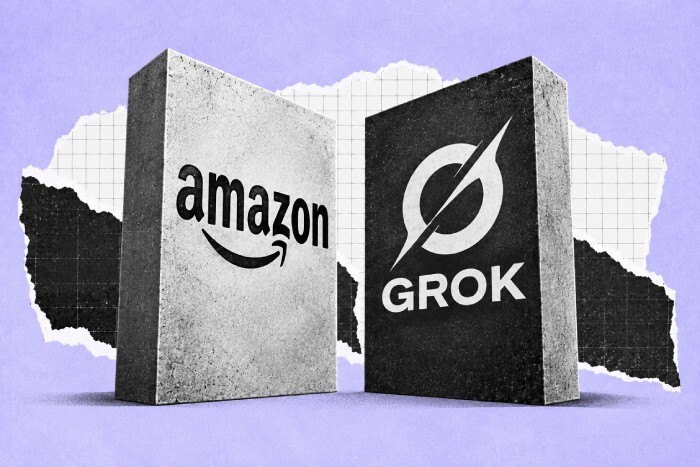
Elon Musk and Jeff Bezos already compete in space. Now Amazon's decision to block outside AI shopping assistants could give Musk an opening into Bezos' online retail empire.
Amazon may have picked the wrong fight
"Maybe we should start a competitor to Amazon," Musk wrote on X last week after reports that Amazon had blocked some Grok bots from placing orders.
Y Combinator co-founder Paul Graham thinks Amazon could be creating an opening for its rivals.
He recently argued that banning AI shopping assistants could create the first serious opportunity for a new Amazon competitor since the company was founded.
The idea is simple: shoppers may increasingly ask independent AI assistants to compare prices and place orders across retailers, instead of starting their search on Amazon.
Musk's shortcut into a $68 billion business
Musk wouldn't have to build Amazon's vast network of warehouses. A shopping service built around Grok could send customers to other retailers and let them handle inventory and delivery.
Amazon brought in $68.6 billion in advertising revenue and $172.2 billion from third-party seller services in 2025. Musk wouldn't need to capture much of that business for it to become a multibillion-dollar opportunity.
📌 Bottom line: Musk could use Grok to take a cut of shopping commissions and ad dollars without spending billions on warehouses and delivery networks. The hard part would be convincing shoppers to trust Grok with their purchases.