Nvidia’s $300 billion affair

Morning Observers,
Even by Wall Street standards, this weekend’s developments were extraordinary.
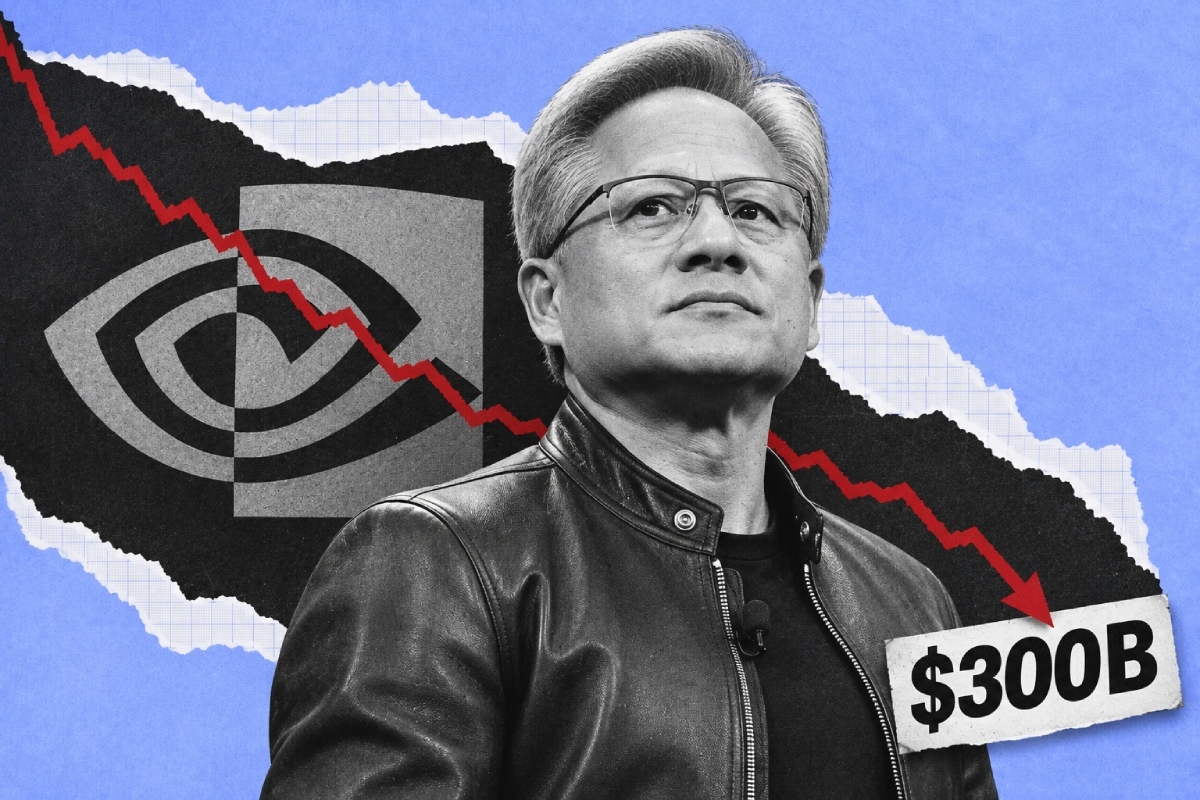
Nvidia CEO Jensen Huang admitted to having an affair with a woman suspected of working for Chinese intelligence. The company’s board has since opened an investigation and hired outside lawyers to help.
The market reaction was just as remarkable. Nvidia shed $300 billion in market value on Monday, even as the Nasdaq 100 surged more than 3% and the S&P 500 Technology Index gained 2.9%.
Consider the contradiction. Nvidia accounts for nearly 8% of the S&P 500 Index and has become the face of the AI boom. Yet investors were buying technology stocks aggressively even as the industry’s biggest name suffered a massive selloff.
China has denied the espionage allegations, while Nvidia says it has no reason to believe company secrets or U.S. national security were compromised.
Under Huang’s leadership, Nvidia has grown from a company worth less than $2 billion in 2002 to a $4 trillion giant at the center of the AI growth story.
As Bernstein analyst Stacy Rasgon warned, the allegations call into question Huang’s judgment and his stewardship of one of America’s most important companies.
Let’s break it down,
- Sam Bourgi, Interim Editor

📉 Hedge funds dump tech stocks at near-record pace
Hedge funds dumped tech stocks last week at nearly the fastest pace in a decade, according to Goldman Sachs data. The selling came amid a semiconductor slump and growing concerns about data center construction following the Nov. 3 midterm elections. Net selling of individual stocks was the highest in four months, approaching levels last seen during the “Liberation Day” tariff selloff in April 2025.
✅ Edward Jones still favors stocks
Despite last week’s sharp selloff, Edward Jones analysts still favor stocks over bonds, citing expectations for continued corporate earnings growth. Wall Street analysts expect S&P 500 earnings to rise more than 28% in the fourth quarter, according to FactSet.
🤖 Anthropic prepares to market IPO
Claude developer Anthropic could begin pitching its IPO to investors as early as Tuesday, with ambitions to match or surpass SpaceX’s record-setting June debut, according to Bloomberg. The timing comes as investors grow increasingly wary of sky-high AI valuations.
💰 Tesla to refund Cybertruck deposits
Tesla will refund Cybertruck deposits for some customers after announcing plans to end production by mid-2027. CEO Elon Musk said the company has more orders than it can fulfill before production ends. Tesla stock rose more than 5% on Monday.
📈 Fed’s Barkin makes case for higher rates
Richmond Fed President Tom Barkin sees a case for further rate hikes as policymakers look to rein in inflation. “The risk lies on the inflation side of our dual mandate,” he said Monday, adding that “it is wise to move policy with care.” Barkin also described corporate earnings as “remarkable,” citing 31% growth in S&P 500 profits in the September quarter.
The world’s highest government bond yields come with a huge trade-off
Recent turmoil in Nvidia and other AI stocks is making the relative safety of government bonds attractive again. But not all government debt is as “risk-off” as it seems, especially in countries offering the highest yields.
The government bond trade-off
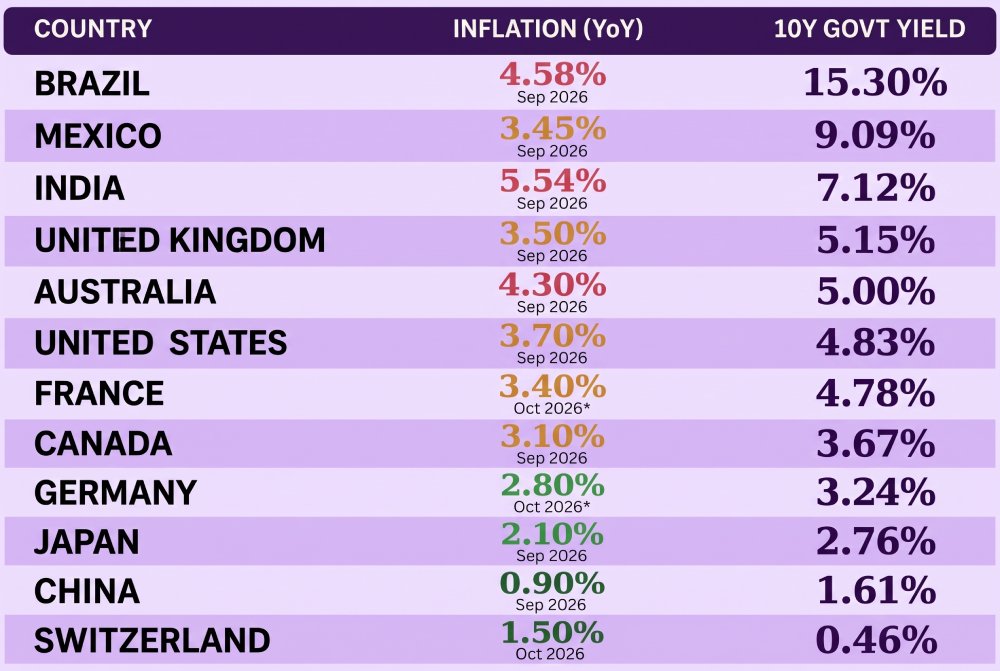
By early November, Brazil’s 10-year government bond yield of 15.3% was more than three times the U.S. Treasury yield of 4.83%, according to data from TreasuryBonds.com. Mexico offered 9.09%, while Japan paid just 2.76%. Switzerland was at the bottom of the list at 0.46%.
Brazil’s inflation rate of 4.58% leaves a 10.7-percentage-point gap between inflation and its bond yield. But that gap isn’t a guaranteed return. Higher inflation, a weaker Brazilian real, or concerns about government debt could all hurt investors.
Switzerland presents the opposite trade-off. Its paltry 0.46% yield is below its 1.5% inflation rate. Investors accepting such low returns may care more about protecting their money than earning substantial interest.
Are U.S. Treasurys still worth the premium?
U.S. Treasurys have long been considered among the world’s safest investments, helped by the dollar’s status as the global reserve currency and the enormous size of the Treasury market.
But that advantage has been tested this year, as investors have grown increasingly concerned about persistent inflation and mounting federal deficits. The national debt also surpassed $40 trillion, raising further questions about the government’s finances.
📌 Bottom line: Brazil’s 15% yield may be tempting, but a sharp decline in the real could wipe out the extra interest an American investor earns.
Americans voted against data centers in midterms
For the past three years, the AI industry has spent trillions of dollars on data centers. But the 2026 midterms exposed a growing obstacle: voters across the country delivered a stunning rebuke to plans for more construction.
Voters turn against data centers
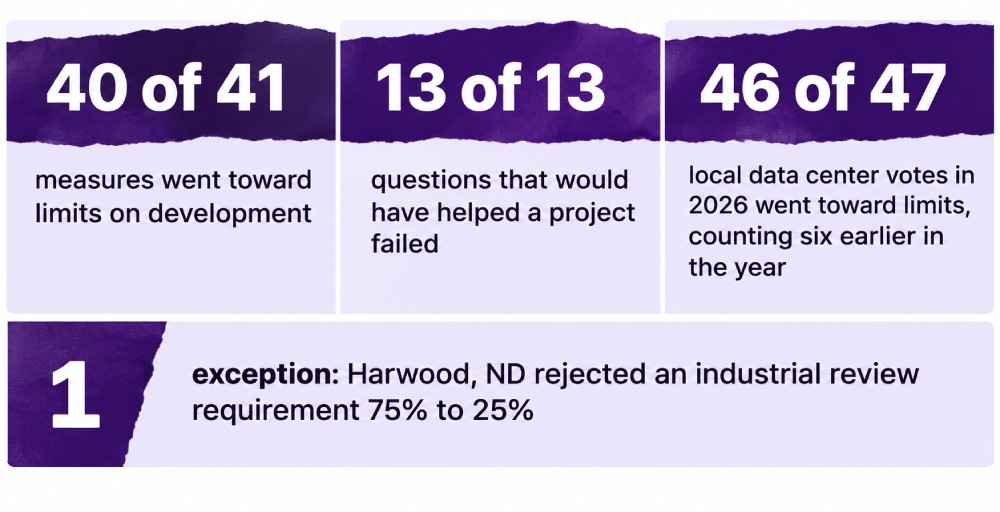
In the Nov. 3 midterms, voters favored restrictions on data center development in 40 of 41 local ballot measures across 10 states, according to Ballotpedia. All 21 measures in Ohio went against development, with Harwood, North Dakota, the lone exception.
The measures ranged from outright bans and temporary moratoriums to zoning restrictions and rules requiring residents to vote on projects before they can proceed.
The opposition was decisive. According to The GridSight, the median vote in favor of restrictions was 77%.
What it means for AI stocks
The election results triggered a historic selloff in AI stocks. The Philadelphia Semiconductor Index plunged 15% over two sessions, as investors weighed the possibility of data center restrictions alongside concerns about the industry’s enormous spending plans.
Local opposition could delay construction and limit where new facilities can be built. UBS estimates that 30% of planned U.S. data center capacity additions for 2028 could be at risk.
Bottom line: The election results have introduced another risk for AI investors. If data center projects are delayed or canceled, chipmakers and equipment suppliers could lose billions in anticipated orders.