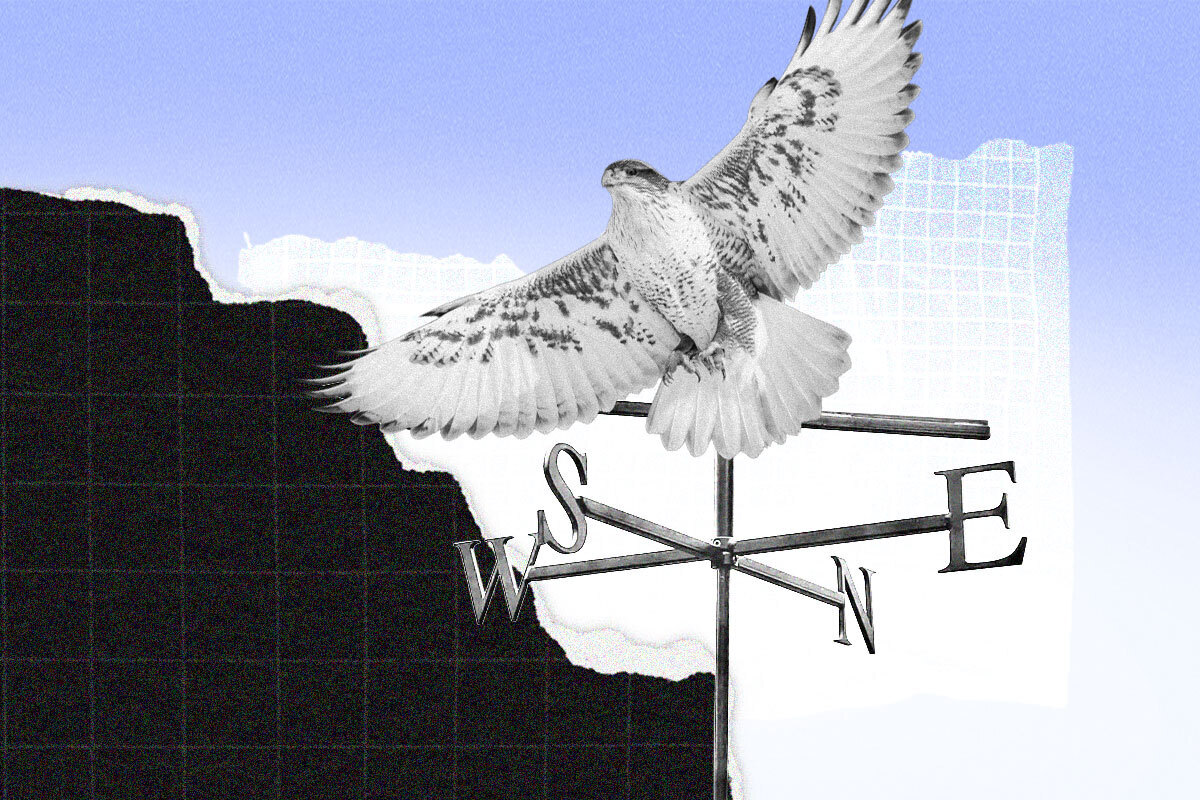
Is Warsh "weathervane"?

Morning Observers,
After Jackson Hole, the market almost unanimously agreed that the new Fed chair might be more hawkish than previously thought:
- Futures market odds of a September hike rose from about 35% to 60%
- The two-year yield rose 12 basis points, its biggest one-day increase since March
- The dollar rose, while gold fell
- Tech stocks fell
- A number of sell-side analysts reversed their no-hikes-this-year calls
Most important, the long end remained flat and even fell halfway through Warsh’s speech.
This session was effectively a reversal of the debasement trade, and on paper, it makes a lot of sense.
Warsh made it clear during his speech that inflation is his top priority and effectively addressed all the speculation about how he might find excuses to do otherwise:
- Measurement escape: He confirmed that PCE remains the Fed’s official inflation gauge and the target remains 2%
- Timing escape: He said the Fed should focus on inflation “right now”
- Long-term trend escape: He said that recent inflation readings have not improved the underlying trend
- Energy shock escape: He showed that inflation remains broad-based, with 54% of PCE components rising by more than 3%
- Jobs priority escape: He said the labor market is at full employment
- Treasury Accord 2.0 escape: He doubled down on short-term interest rates being the Fed’s primary policy tool
In other words, Warsh said everything hard-money conservatives wanted to hear without leaving much room for critics of the Fed’s credibility to poke holes in his case.
Now the trillion-dollar question is whether this was merely a credibility fix or an actual commitment.
Wall Street is still split, and political commentators keep banging the drum that Warsh is neither a dove nor a hawk.
As Krugman said earlier, he is a political “weathervane,” advocating tight money under Democrats but easy money under Republicans.
PCE inflation is still 1.5 percentage points above the target, price increases are broadly distributed, and we are just one inflation reading away from the next FOMC decision.
“Weathervane” or not, we’ll soon find out.
- Dan Runkevicius, Editor

🦅 Warsh takes aim at inflation
Fed Chair Kevin Warsh used his first major speech since taking the helm to warn that inflation still isn't slowing enough, pledging to bring it back to the central bank's 2% target. The message strengthened bets on a rate hike this year, sending the 2-year Treasury yield about six basis points higher to 4.29%, while the 30-year yield fell.
💳 PayPal's $53 billion deal is dead
Advent International and Stripe have abandoned their pursuit of PayPal, ending what could have been one of the biggest leveraged buyouts on record. The consortium offered $60.50 a share in July, valuing the payments company at more than $53 billion. But PayPal reportedly considered the bid too low, while financing and regulatory hurdles further complicated the deal.
💉 Eli Lilly scores another Mounjaro win
Eli Lilly's blockbuster diabetes drug Mounjaro won FDA approval to reduce the risk of heart attack and stroke in adults with type 2 diabetes at high cardiovascular risk. The expanded label gives Lilly another tool in its GLP-1 battle with Novo Nordisk, extending Mounjaro's appeal beyond blood sugar control as the two drugmakers compete for a larger share of the metabolic disease market.
🛢️ OPEC's Venezuela problem
OPEC could be about to lose another major member. Venezuela, one of the cartel's five founders, is considering an exit just months after the UAE left to escape production constraints. Iraq has also voiced frustration over its output limits, raising questions about how much longer the Saudi-led group can keep producers aligned and how much influence it can retain over global oil prices.
📉 U.S. job market was even weaker than expected
The U.S. added 79,000 fewer jobs in the 12 months through March than previously estimated, according to the Bureau of Labor Statistics' preliminary revision. Private payrolls were revised down by an even larger 178,000, suggesting the labor market entered 2026 with slightly less momentum than official figures indicated. That adds another wrinkle for a Fed already wrestling with stubborn inflation.
Energy eyes a Venezuela boost
Investors have spent much of the year focused on tech, but one of the market's oldest industries has taken the lead.
Energy is the S&P 500's best-performing sector this year, helped by an oil shock that handed producers huge windfalls. Now Venezuela could give the rally another source of fuel.
Energy is beating tech
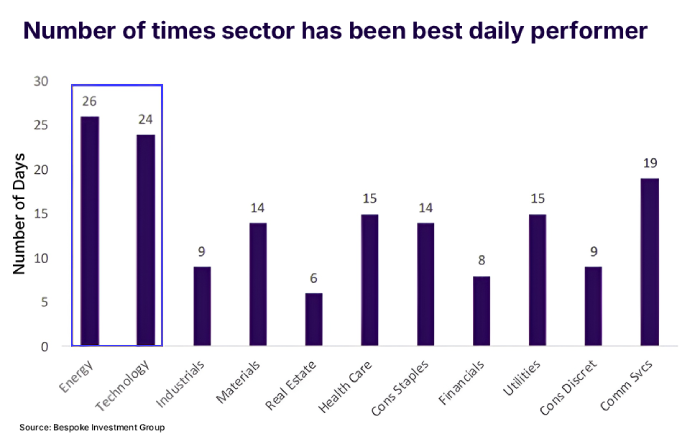
Energy has been the S&P 500's best-performing sector on 26 trading days this year, according to Bespoke Investment Group. That is the most among all 11 sectors and puts it ahead of technology's 24 days.
Energy stocks are also up 42.8% year to date, well ahead of every other sector.
Much of that rally came from higher oil prices during the Iran war. In the second quarter alone, major global oil companies reported nearly $93 billion in profits. ExxonMobil's earnings doubled, while Chevron's quadrupled.
Venezuela offers a second catalyst
Venezuela is considering leaving OPEC, which could open its vast oil industry to more American investment.
The country sits on the world's largest proven crude oil reserves, at roughly 300 billion barrels, but years of underinvestment and sanctions have left production far below its potential.
U.S. oil companies are preparing to invest billions of dollars in Venezuelan fields. And after the latest quarter's profit haul, finding the money won't be the problem.
📌 Bottom line: High oil prices have powered the energy rally so far, but Venezuela offers something different: more production. Billions in new investment could help U.S. producers turn this year's windfall into years of future output.
The next IPO reality check
SpaceX gave investors one of the biggest lessons in IPO investing: getting into a hot offering doesn't mean getting in at a good price.
The company briefly approached a $3 trillion valuation after its June IPO, only for the stock to crash 50% from its peak and fall below its IPO price within weeks.
Is Anthropic next?
Anthropic is already priced for a huge debut
Anthropic is expected to go public around Labor Day, though it has yet to set an IPO price. That hasn't stopped traders from speculating about its potential valuation.
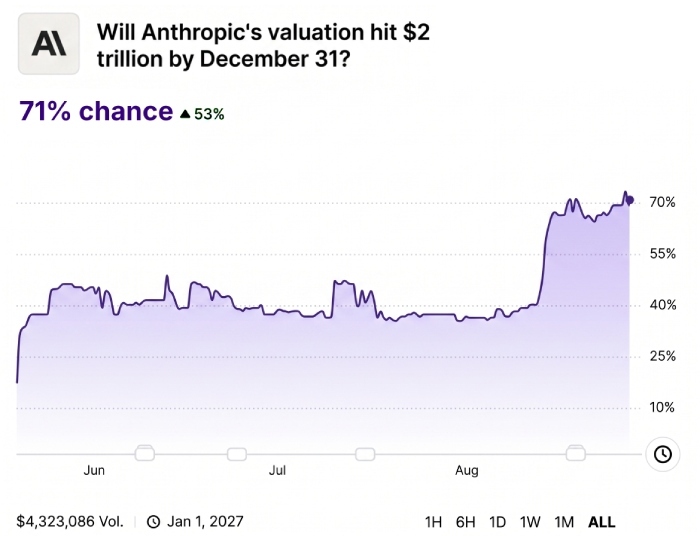
Polymarket currently puts the odds of Anthropic reaching a $2 trillion market cap this year at 71%, with a 47% chance of hitting $2.5 trillion.
The hype isn't entirely unfounded. Anthropic reported preliminary second-quarter revenue of more than $11.5 billion ahead of its expected IPO. That gives bulls a real number to point to.
But it also shows just how much growth could already be priced into the stock before retail investors even get a chance to buy it.
On the other hand, SpaceX reached a $3 trillion market cap while generating much less revenue than Anthropic. That could make Anthropic's rumored valuation easier to justify.
📌 Bottom line: Anthropic's $11.5 billion in quarterly revenue gives investors more substance than the typical speculative IPO. But a $2 trillion valuation would still equal roughly 43 times annualized revenue. At $2.5 trillion, that rises to about 54 times. At either price, Claude has almost no room to disappoint.