How a former crypto miner revived the AI trade

Morning Observers,
When most investors think of AI stocks, they think of chipmakers like Nvidia and hyperscalers like Amazon, Microsoft, and Meta.
But on Wednesday, a former cryptocurrency mining company stole the show.
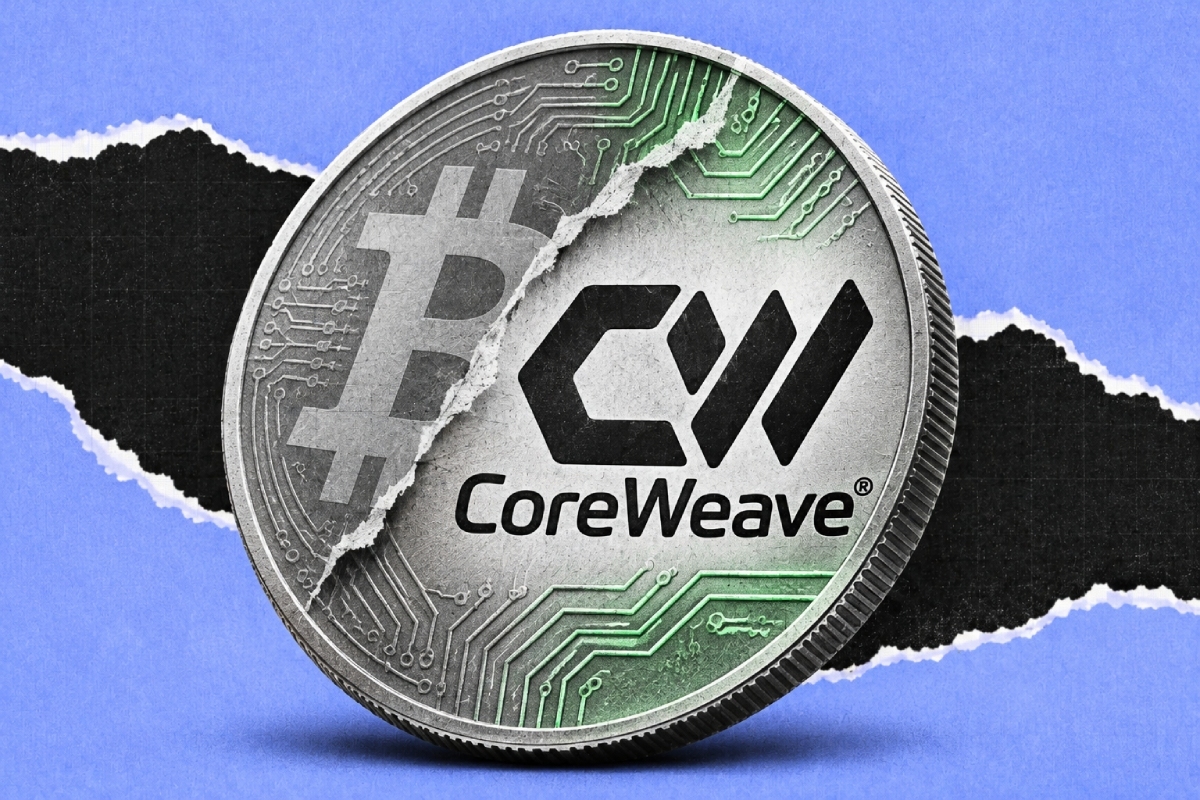
CoreWeave stock surged as much as 25% after the company reported quarterly earnings and raised its forecasts. The bigger news was how CoreWeave plans to pay for its expansion.
CoreWeave had been at the center of the industry’s debt problem. Its rapid growth has required enormous borrowing, and investors have grown wary of how much money AI companies need to fund their growth. Billionaire investor Ray Dalio and others have warned that rising borrowing costs and mounting debt could eventually burst the AI bubble.
But CoreWeave may have finally found a way to borrow less.
CEO Michael Intrator said CoreWeave expects to collect $9 billion in customer prepayments and deposits over the next three months. Some of that money comes from customers renewing contracts for AI chips they have already paid for, allowing CoreWeave to earn more without buying additional equipment.
CoreWeave also ended September with $132.5 billion in revenue backlog, up from $104 billion three months earlier.
Still, the company expects to spend up to $39 billion this year, and its borrowing costs remain steep. CoreWeave also reported a $709 million quarterly net loss, while its stock is trading at less than half its May peak.
Wednesday’s rally suggests investors are willing to give CoreWeave some credit for finding ways to fund its expansion without borrowing quite so much.
Let’s dive in.
- Sam Bourgi, Interim Editor

✈️ United Airlines bans personal AI assistants from booking flights
United Airlines is blocking personal AI assistants from booking tickets through its systems. Some travelers had reportedly used the tools to find cheaper fares, but United says the restriction is intended to protect customer data. Travel agents will still be able to view United’s flights and prices, but won’t be allowed to complete bookings through its website.
📈 Dip buying, short squeeze send tech stocks soaring
Technology stocks rallied Wednesday as investors returned to the sector following last week’s selloff. The S&P 500 climbed back above 7,600, putting it within 3% of its record high. The Nasdaq 100 jumped more than 2%, with short covering fueling the rally, Bloomberg said. The index is now up 8% from last week’s low.
🏦 Goldman Sachs and Deutsche Bank expect three Fed rate hikes
Goldman Sachs and Deutsche Bank now expect the Federal Reserve to raise interest rates three times by March as inflation remains a top concern. Goldman warned of “larger start-of-the-year price increases” beginning in January as higher energy costs work their way through the economy.
📉 Fed’s Bowman warns of stock market correction
Federal Reserve Governor Michelle Bowman warned Wednesday that uncertainty over returns on AI investments could trigger “a large correction in equity valuations.” A sharp drop in stock prices could hurt consumer spending and dampen the broader economy, she said.
📊 Asia-Pacific bond markets brace for Fed rate hikes
Expectations for multiple Federal Reserve rate hikes spilled over into Asian bond markets, with government bond yields in Japan, Australia, and New Zealand climbing sharply on Wednesday. Japan’s 10-year yield rose 10 basis points to 2.792%, while Australia’s 10-year yield increased 5.4 basis points and New Zealand’s 10-year rose 6.2 basis points.
Iran war adds to America’s trucking crisis
America’s trucking industry was already suffering its worst wave of bankruptcies in more than two decades. Then the Iran war sent diesel prices soaring, putting even more strain on smaller operators.
Trucking bankruptcies surge
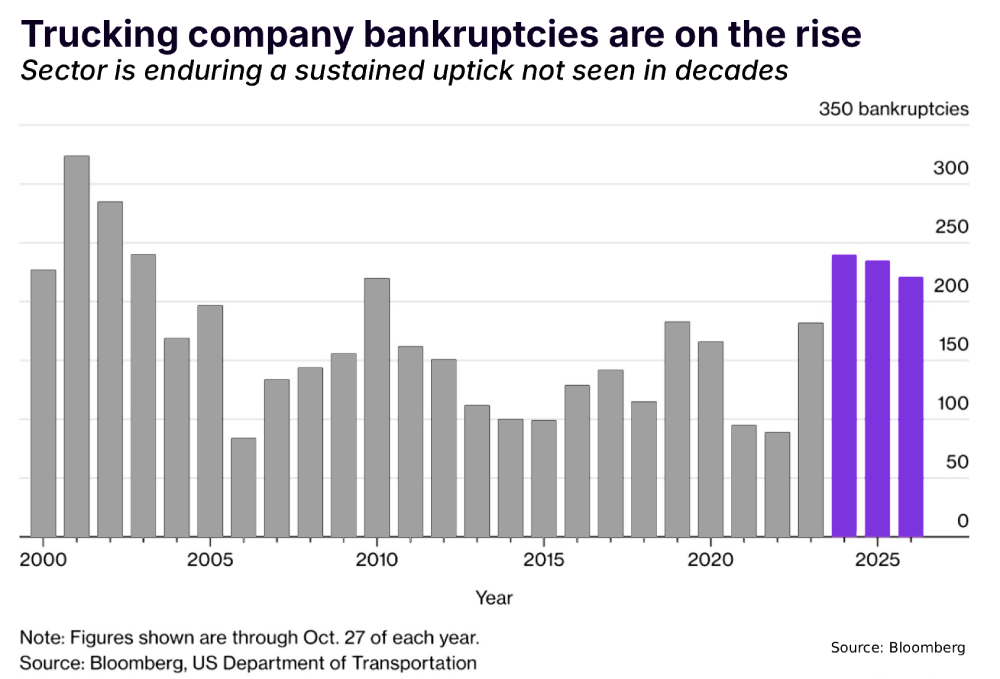
According to U.S. Department of Transportation data cited by Bloomberg, 221 trucking companies filed for bankruptcy in the year through Oct. 27. It’s the third consecutive year of elevated filings, with 2026 on track to record the highest annual total in 23 years.
Bankruptcies were higher in individual years, particularly 2001 and 2002, but the current three-year stretch is highly unusual.
A survey by Truckstop found that 66% of small trucking companies reported flat or declining revenue. Nearly 40% said they expected to leave the industry or weren’t sure whether they would still be operating six months from now.
Diesel prices add to the pain
Since the Iran war began on Feb. 28, U.S. diesel prices have climbed 65%, from $3.81 to $6.29 per gallon, according to EIA data.
For a truck consuming 20,000 gallons annually, that works out to nearly $50,000 in additional fuel costs per year, assuming prices remain at current levels.
Smaller trucking companies are especially vulnerable. Many lack the fuel discounts available to larger fleets and have less room to absorb rising insurance premiums and loan payments.
📌 Bottom line: Trucking bankruptcies could eventually mean higher shipping costs for American businesses and consumers, especially if enough smaller carriers disappear and competition shrinks.
Berkshire Hathaway’s stunning comeback is a nod to Warren Buffett’s old-school strategy
Berkshire Hathaway spent much of this year trailing the S&P 500. Now, as technology stocks show signs of struggling, Warren Buffett’s old-fashioned investment approach is making a remarkable comeback… even with Buffett no longer running the company.
Berkshire vs. S&P 500
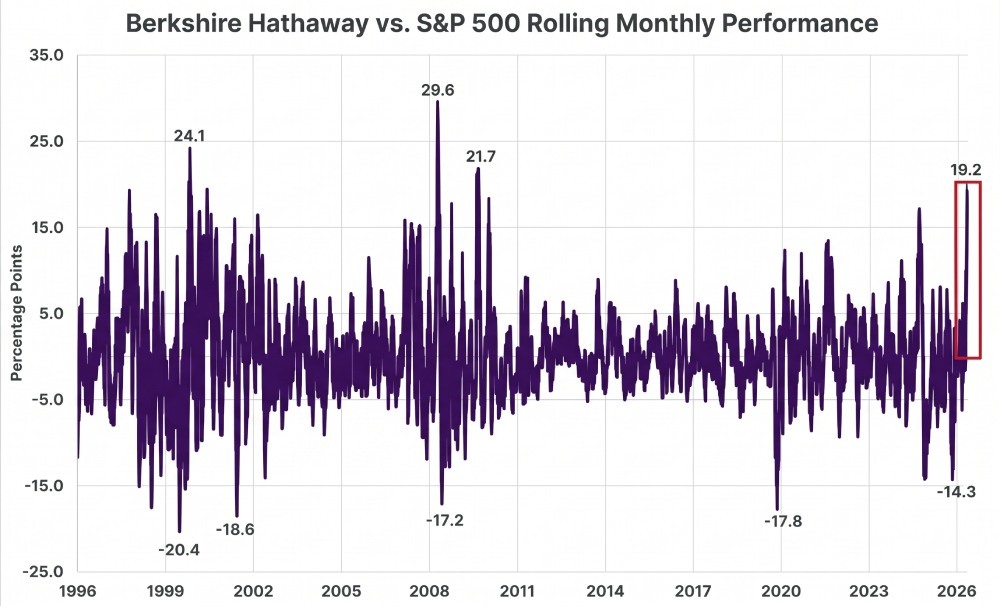
Berkshire outperformed the S&P 500 by 19.2 percentage points over a rolling one-month period ending last Thursday, its biggest lead since 2010 and fourth-largest in 30 years, according to TradingView data analyzed by The Kobeissi Letter.
Berkshire’s Class B stock has surged 13.2% over the past month, reaching a record high, while the S&P 500 has fallen 3.7%.
Just six months ago, Berkshire was trailing the S&P 500 by 14.3 percentage points.
Buffett’s playbook is paying off
Berkshire’s mix of businesses, enormous cash reserves, and relatively limited exposure to AI could help explain its appeal as technology stocks struggle.
Its holdings span insurance, railroads, utilities, manufacturing, and consumer goods, offering investors diversification that many technology-heavy portfolios lack.
The rally is also an early vote of confidence in Berkshire’s leadership transition, with Greg Abel now running the company.
📌 Bottom line: Berkshire is making a comeback as investors reconsider their reliance on Big Tech. For ordinary investors, Berkshire’s Class B stock offers a more affordable way to invest in the company than its famously expensive Class A share.