China’s biggest bank boost since 2008

Morning Observers,
Beijing has just borrowed another $45 billion, extending its biggest bank recapitalization since 2008.
Here's the scheme: Beijing sells special-purpose government bonds, then uses that cash to buy newly issued shares in banks and insurers.
In the West, governments normally buy bank equity during emergencies. China also bailed out its banks this way in 1998.
But this time, all of the banks receiving the money look healthy and remain comfortably above their capital requirements.
One explanation is that this is simply the second half of a broader program. Beijing recapitalized four other megabanks in 2025 with roughly $70 billion raised through special government bonds.
That injection wasn't followed by a bad loan cleanup or any meaningful increase in lending.
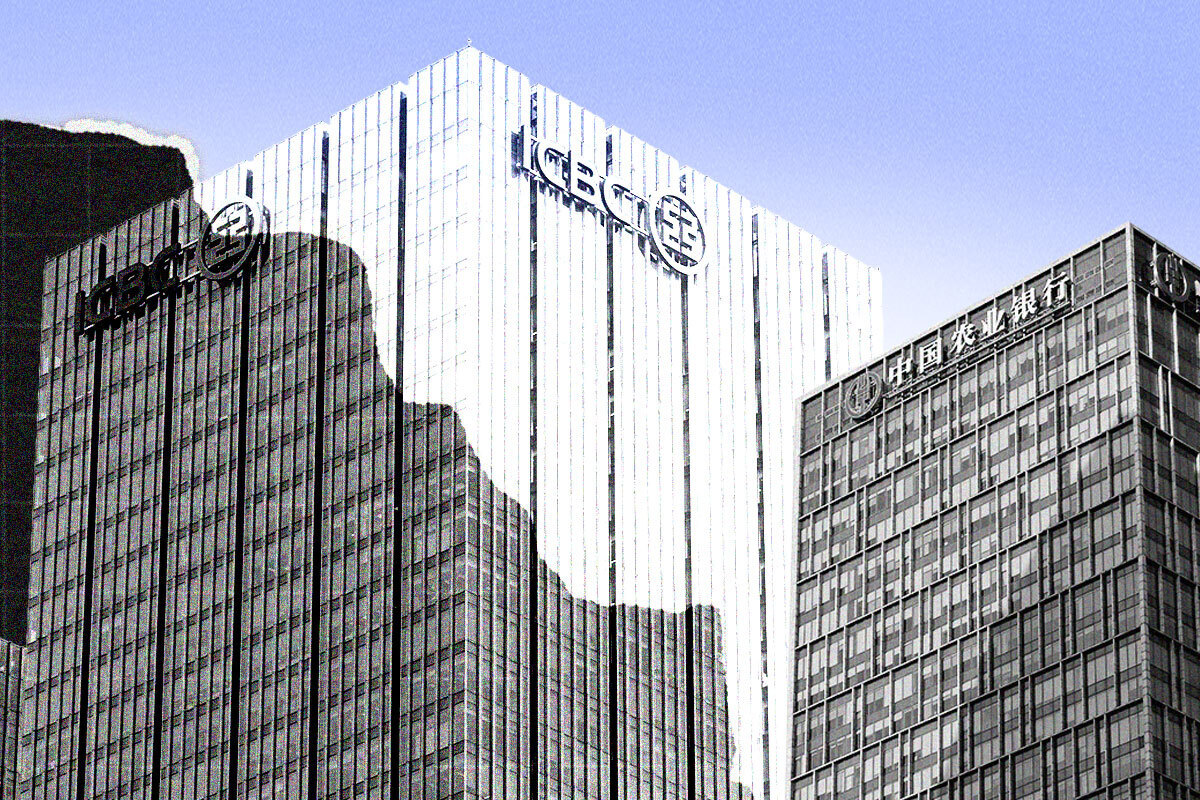
Now the two biggest recipients are ICBC and Agricultural Bank, which are the only members of China's Big Six still waiting for their turn.
So their selection doesn't mean Beijing is targeting specific industries. The money also has no special lending mandate and will simply land on their general balance sheets.
That doesn't mean it won't give Beijing more ammo. But this looks less like targeted stimulus and more like Beijing padding the entire state banking system before asking it to take another round of policy risk.
After all, China's big banks are the main executors of its economic policy.
Whether they like it or not, that sometimes means lending to troubled borrowers and serving as a financial backstop in situations a normal commercial bank would avoid.
- Dan Runkevicius, Editor

💼 Good jobs are bad news again
The U.S. added 162,000 jobs in August, nearly triple expectations, but stocks fell as investors raised the odds of a Fed rate hike this month. President Trump questioned the reaction, writing, "How crazy is this?" and arguing that markets are operating under a "false reality" where stronger growth is treated as inflationary.
🏦 Cleveland Fed says it's time to act
Cleveland Fed President Beth Hammack said Friday that "it's time to act" against inflation, arguing that interest rates are not weighing heavily enough on the economy. Hammack, one of three policymakers who dissented from the Fed's decision to hold rates steady in July, said both economic data and reports from businesses in her district suggest current policy is not restrictive enough.
🇨🇳 DeepSeek goes all-in on Huawei
DeepSeek plans to install at least 160,000 of Huawei's high-end accelerators at a massive data center under construction in Inner Mongolia, potentially creating one of the largest known clusters of Huawei chips. The project would mark another step in China's push to replace Nvidia hardware with homegrown alternatives.
🇰🇷 South Korea's chip boom gets bigger
South Korea's exports surged 68.7% year over year in August, extending their growth streak to 15 months, while semiconductor exports more than tripled to a record $46.65 billion. Chips accounted for nearly half of the country's $98.25 billion in exports, showing how dramatically global technology spending is changing one of Asia's largest economies.
⛽ Diesel breaks its 2022 record
U.S. diesel prices hit a record $5.85 a gallon, surpassing the previous peak set in 2022 as the Iran war disrupts global fuel supplies. Diesel powers much of America's trucking, farming, and industrial economy, meaning the increase can feed into transportation and production costs far beyond the gas station.
Claude's biggest flex may be its biggest existential threat
The biggest threat to Anthropic's workplace ambitions may come from companies that use Claude themselves.
Glean, a workplace search startup used by companies including Intuit, Booking.com, and Zillow, has spent years helping employees find information scattered across their companies.
Now it's using Claude to automate that work too, raising an awkward question for Anthropic: what if the companies building on Claude are better at selling it to businesses than Anthropic is?
Glean says it can make Claude cheaper
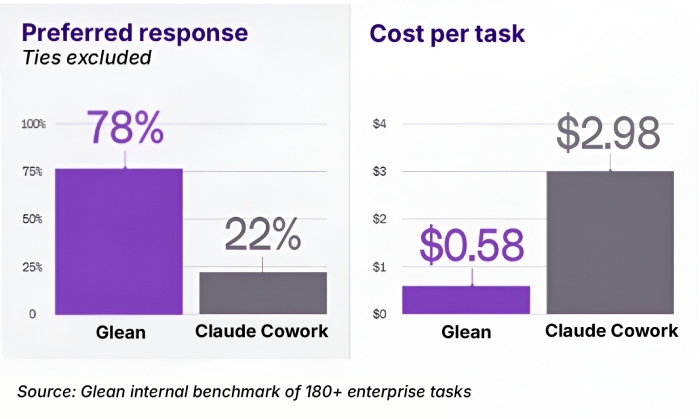
In internal tests across more than 180 business tasks, Glean said its assistant used 70% fewer tokens than Anthropic's Claude Cowork and cost customers 81% less per task.
According to Glean, the difference comes from years spent organizing companies' internal information, from documents and Slack messages to databases and employee permissions.
That gives its software a shortcut to the information it needs, rather than searching for it from scratch. And it managed those savings while using Anthropic's own Claude Opus 4.8.
Anthropic's dilemma
That puts Anthropic in an unusual position. A company buying its technology claims it can turn Claude into a cheaper workplace product than Anthropic can.
If that holds up, Anthropic could end up supplying the engine while companies like Glean capture more of the money made on top of it. Glean already has more than $300 million in annual recurring revenue and was last valued at $7.2 billion.
📌 Bottom line: An eventual Anthropic IPO may hinge on more than demand for Claude. Investors will also want to know whether Anthropic can keep the most valuable part of the business for itself.
Sept. 16 just became a trade deadline
The next Fed meeting was already shaping up to be unusually consequential. And now Trump has added global trade to the list of things at stake.
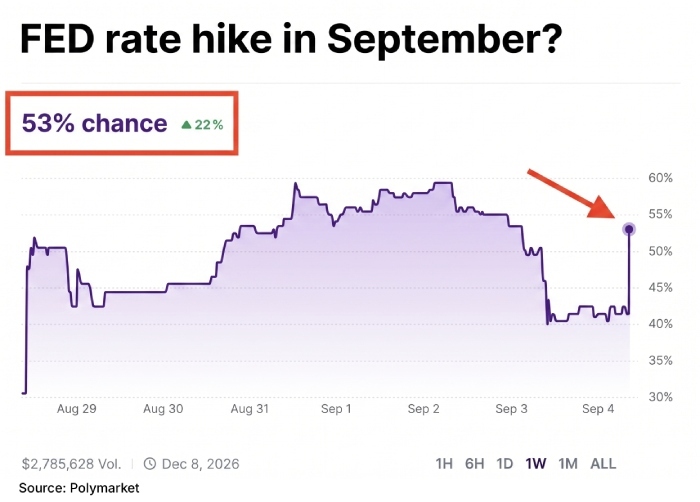
Trump has threatened to "stop trading" with countries where the U.S. runs a trade deficit unless the Fed cuts rates. The problem is that markets now see a more than 50% chance of a rate hike on Sept. 16.
The Fed and Trump are heading in opposite directions
Trump's threat potentially reaches some of America's biggest trading partners, including China, Mexico, Taiwan, Germany, Japan, South Korea, Canada, and India.
That's roughly $300 billion worth of trade hanging in the balance. He also says the Supreme Court has given him an "absolute right" to stop that trade, although that is Trump's interpretation of the ruling.
America needs those imports
The even bigger problem is that much of the recent increase in the trade deficit came from Asian technology imports critical to America's AI buildout.
The U.S. trade deficit jumped 24.4% to $88.6 billion in July, the widest since early 2025.
The increase came as businesses imported $14.4 billion more in capital goods, including an additional $6.9 billion in computers, $6.6 billion in computer accessories, and $1.2 billion in semiconductors.
📌 Bottom line: A September rate decision now has much more riding on it. A hike could force Trump to decide whether to follow through on a trade threat covering some of America's biggest suppliers.