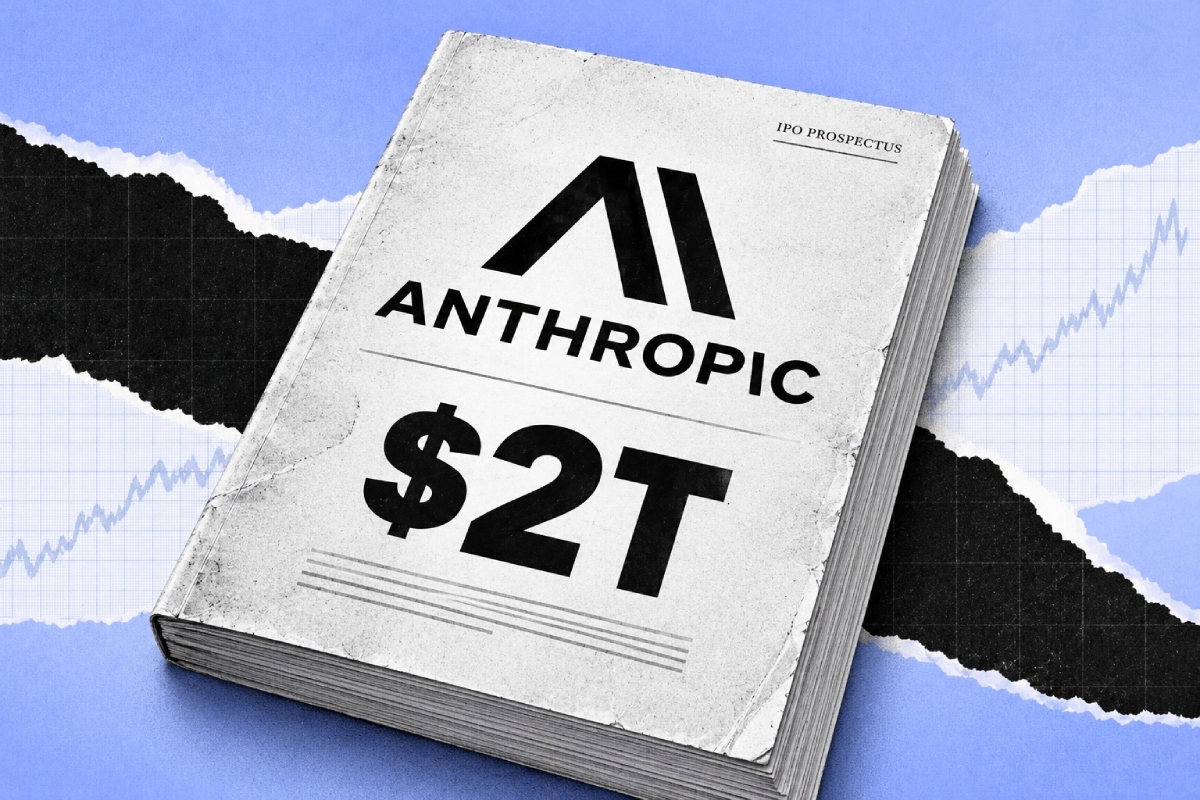
Anthropic's IPO prospectus

Morning Observers,
The AI trade hangs on a procurement chain that's ultimately funded by demand from AI labs like Anthropic. If they can't keep spending for any reason, AI companies will lower-guidance themselves into oblivion.
So let's skip all the yada yada about AI's potential and go straight to what matters: Can Anthropic make it work?
Here's what we know now, starting from the top line.
Anthropic is scaling unlike almost any company in history. Its revenue rose 1,368% from a year ago, more than doubling in each of the last two quarters.
(The catch here is that a meaningful share of revenue still comes from big clients, many of whom aren't locked into long-term contracts.)
Dario Amodei also showed that Anthropic can already turn a profit at an operating level. And that AI models technically could have SaaS-like margins. Anthropic keeps roughly 85 cents on the dollar in gross profit after customer inference costs.
(The catch, again, is that gross profit ignores the highest cost of all: AI training. While those expenses could level off along the adoption curve, that's not happening anytime soon.)
Even if Amodei wanted to dial back on spending, Anthropic has already signed more than $600 billion worth of compute, much of which is non-cancelable.
(We know at least $159 billion of commitments are through 2033 and $110 billion through April, but the actual year-by-year schedule is blanked out.)
So what we have is a high-growth company that sells AI inference largely on demand while buying years' worth of compute in advance.
That's the kind of leverage that keeps investors up at night, but here's one thing that I believe is quite overlooked.
Most of Anthropic's obligations aren't debt. They're long-term compute commitments to companies that are suppliers, investors, partners, and in some cases, competitors.
This systemic risk doesn't mean these counterparties will save Anthropic at any cost. But it does mean they have something to lose if Anthropic fails.
So there's a big difference between being overleveraged with creditors who just want their money back and being overleveraged through counterparties who are financially exposed to you.
- Dan Runkevicius, Editor
|
|

📉 Brazil stocks plunge after Lula's surprise victory
Brazilian stocks plunged up to 30%, wiping more than $200 billion off the market, after President Luiz Inácio Lula da Silva unexpectedly defeated Jair Bolsonaro in a runoff election. The Brazilian real also fell 10% as investors reacted to the defeat of Bolsonaro and his pro-business reform agenda.
🤖 Microsoft offers buyouts to 60,000 employees
Microsoft has proposed buyout offers to 60,000 employees as it looks to cut costs while expanding its use of AI. The offers cover roughly 27% of its workforce, making the initiative one of the largest potential corporate workforce reductions tied to AI. Microsoft stock hardly budged after the report.
🇰🇷 Goldman slashes South Korea's stock market target by 25%
In perhaps the first major sign that the semiconductor boom has peaked for now, Goldman Sachs has cut its 12-month target for South Korea's KOSPI by a whopping 25%. Despite the downgrade, Goldman still sees "attractive risk/reward" at current levels, indicating that it expects opportunities for investors even after lowering its outlook.
💰 SpaceX and Meta seek $135 billion for AI ambitions
The AI spending boom is producing some extraordinary financing deals. SpaceX has signed a $40 billion lease with Apollo Global Management to fund chip purchases, while Meta Platforms is seeking to raise up to $95 billion through common and preferred stock sales. Meta's proposed offering would rank among the largest equity raises in history.
🪙 The debasement trade is losing this year
Bitcoin and gold, two assets often touted as protection against currency debasement, are both down more than 7% this year, an unusually poor showing for the pair. The main culprit is higher real yields and a stronger dollar, which raise the opportunity cost of holding assets that produce no income and make them less attractive relative to cash and bonds.
Will the midterms bring checks and balances to the stock market too?
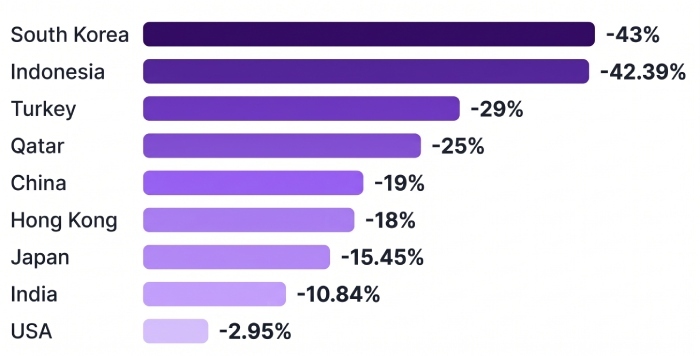
Global stocks have shed roughly $10 trillion in market value from their peak earlier this year. But the midterms could usher in an even more dangerous phase.
Peter Schiff warned that the global stock market is at risk from a combination of historically expensive stocks, rising inflation, higher bond yields, and a weakening economy.
The fact that Democrats are gaining ground ahead of the elections isn't helping either.
That's because a Democratic shift could change expectations for taxes, spending, and business regulation, adding a political dimension to Wall Street's recent anxieties.
An October Washington Post-ABC News-Ipsos poll showed Democrats leading Republicans by eight points in congressional voting preferences.
Meanwhile, a Harvard forecasting model gave Democrats a 94% chance of winning the House and a 72% chance of flipping the Senate as of Oct. 23.
Wall Street's history with divided governments
Retirement Researcher, a retirement education and financial research platform, examined S&P 500 returns under different combinations of presidential and congressional control between 1926 and 2023.
Over the 34 years when a Republican occupied the White House and Congress was divided, the S&P 500 returned an average of 7.33% per year.
By comparison, returns averaged 14.52% under unified Republican control and 14.01% under unified Democratic control.
📌 Bottom line: While a divided Congress doesn't guarantee lower stock market returns, the historical precedent isn't encouraging.
Anthropic's IPO prospectus by the numbers
After months of speculation, Anthropic finally released its IPO prospectus on Monday. The company could raise more than $100 billion at a valuation approaching $2 trillion, though neither figure is confirmed.
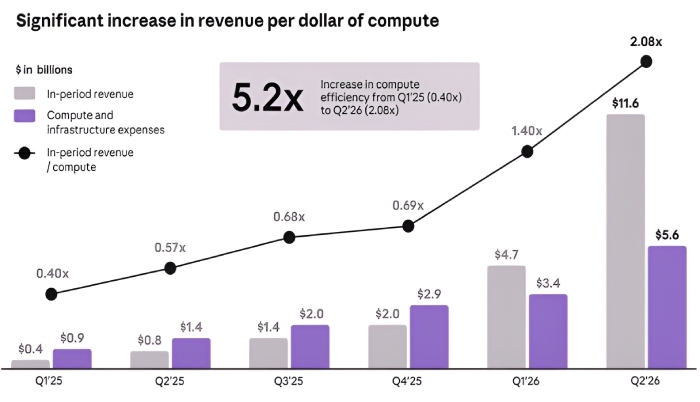
But buried in the filing is another number that tells us a lot about whether Anthropic can actually make the economics of AI inference work.
The key numbers behind Anthropic's IPO
Anthropic generated $2.08 in revenue for every dollar spent on compute and infrastructure in Q2 2026, up from just $0.40 in Q1 2025.
Over those five quarters, revenue surged nearly 29-fold to $11.6 billion, while compute and infrastructure expenses increased roughly sixfold to $5.6 billion.
That's different from the roughly 85% gross margin on customer inference I mentioned above. This broader compute number also includes spending on research, model development, and internal workloads.
The trend is promising, nonetheless. Revenue is growing much faster than Anthropic's overall compute bill, suggesting the company is beginning to benefit from economies of scale.
Products like Claude Code are helping Anthropic squeeze much more revenue out of the infrastructure it has already committed to.
What Anthropic's IPO means for investors
If SpaceX's blockbuster IPO is anything to go by, Anthropic's debut could be massive. But attracting investors and building a sustainably profitable business are two very different things.
Anthropic remains deep in the red on a net income basis. The company reported an $80.7 billion net loss in the first half of 2026, though much of that reflected accounting adjustments tied to its rising valuation.
Operationally, the picture looks much better. Anthropic lost $693 million at the operating level in the first half, but actually generated nearly $1 billion in operating profit in Q2 alone.
That means Anthropic is getting dramatically more efficient at turning compute into revenue, but it has also locked itself into hundreds of billions of dollars of future compute commitments.
📌 Bottom line: The trillion-dollar question is whether Anthropic can keep scaling fast enough to cover the enormous amount of compute it has committed to buying.