🇨🇦 All-out trade war with Canada



Morning Observers,
Canadian PM Mark Carney has spent much of his time in office trying almost everything you are supposed to do in a negotiation with Trump.
He removed many of Canada’s retaliatory tariffs, scrapped its digital-services tax before the first payment came due, and offered further concessions.
The payoff arrived Saturday. Washington imposed 50% tariffs on $20 billion worth of Canadian goods after talks broke down over last-minute demands from Washington.
Carney said these demands would impair Canada’s auto industry and restrict its ability to negotiate independent trade deals.
It appears he has concluded that economic diplomacy will not move Trump and that the only remaining option is to go on the offensive with “dollar-for-dollar” retaliation.
Starting September 8, Ottawa will impose duties of up to 50% on roughly $20 billion worth of American steel, dairy products, appliances, agricultural equipment, and electronics.
On paper, that amounts to just 6% of US exports to Canada. But the list is not random.
The largest shares of the affected goods by value come from Ohio, Illinois, Pennsylvania, Michigan, and California. Two of those states are major midterm battlegrounds.
Canada is also the biggest export market for 27 US states, buying 39% of Michigan’s exports, 31% of Wisconsin’s, and 41% of Maine’s.
Canada did the same during Trump’s first term, targeting politically sensitive products such as Kentucky bourbon and Wisconsin yogurt.
With the midterm elections just ten weeks away, the timing is now on Canada’s side.
By no means can Canada win a prolonged trade war against an economy nearly 13 times its size. But Carney does not need to overpower the entire US economy.
He only needs to make escalation painful enough in the right states. That’s what makes this retaliation far more dangerous than the $20 billion headline number implies.
- Dan Runkevicius, Editor

🤖 OpenAI’s homegrown chip takes aim at Nvidia
OpenAI said its new Jalapeno chips outperformed Nvidia’s current lineup in testing, marking a significant milestone in the company’s push to develop AI processors in-house. The tests measured how much AI work the chips could handle per unit of power, as well as how quickly they returned responses, suggesting OpenAI is stepping up its challenge to Nvidia as it builds more of its own computing infrastructure.
📉 Treasury yields retreat
Treasury yields fell on Tuesday following the Treasury’s plans to buy back long-dated government bonds. The benchmark 10-year Treasury yield dropped more than 5 basis points to 4.65%, while the 30-year yield fell more than 3 basis points to 5.192%.
🥊 Druckenmiller takes aim at Bessent’s bond plan
Hedge fund veteran Stanley Druckenmiller criticized Treasury Secretary Scott Bessent, his longtime protégé, over plans to intervene in the government bond market. In a Wall Street Journal op-ed, Druckenmiller argued that spending $4 billion or more to buy back long-dated Treasury bonds would be a “mistake” because it wouldn’t address the fundamental forces driving up borrowing costs.
🇨🇦 Canada escalates trade fight with new U.S. tariffs
Canada escalated its trade dispute with the U.S., announcing new tariffs ranging from 15% to 50% on about $20 billion worth of American goods, or roughly 7% of total U.S. imports. The duties are set to take effect Sept. 8 and will target products including U.S. steel, aluminum, motorcycles, washers and dryers, processed cheese, clams, and frozen octopus.
🏦 Fed’s Collins says there’s no rush to cut rates
Boston Fed President Susan Collins said she supports keeping interest rates steady for now, while emphasizing the need for more progress in bringing inflation toward the central bank’s 2% target. Her remarks reinforced the recent U-turn in expectations for additional rate hikes.
Nvidia’s “AI-flation” gamble
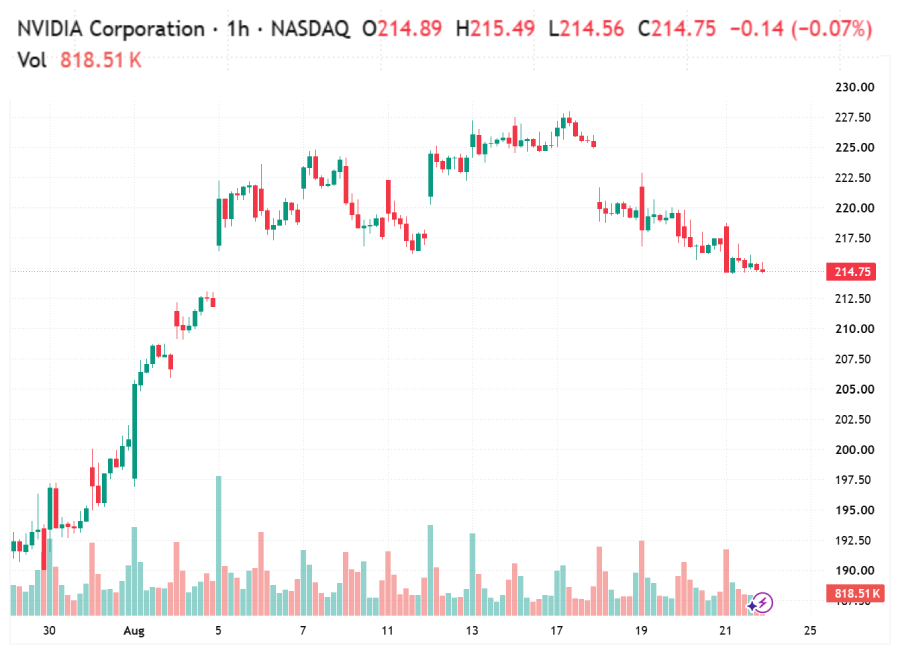
Some of Nvidia’s biggest customers have reportedly been told that AI servers will cost 15% more starting early next year due to soaring memory prices.
That may be good news for Nvidia and bad news for everybody else.
AI’s expensive memory problem
Memory now accounts for a much larger share of the cost of Nvidia’s newest AI systems. According to Morgan Stanley estimates, it could cost roughly $2 million in a $7.8 million Vera Rubin rack, or about a quarter of the total.
That creates an unusual setup for Nvidia. The same spending boom driving up its component costs is also giving its customers huge budgets to absorb those increases.
The largest U.S. tech companies are expected to spend more than $650 billion on data centers and related infrastructure this year alone.
Nvidia’s inflation test
Nvidia’s gross margin topped 74% last quarter. Now it gets to find out how much of the higher memory bill its customers will absorb.
The risk is that Nvidia is losing some leverage with its own suppliers. Memory makers, including Samsung, SK Hynix, and Micron, are raising prices in response to tight supply.
Apple and Qualcomm have also warned that chip shortages are pushing up their costs.
But Nvidia has something most hardware companies don’t: enough pricing power of its own to push those costs further down the chain. If its customers accept higher prices, Nvidia can protect its margins while selling more expensive systems.
📌 Bottom line: For Nvidia, the key question is whether higher server prices lift gross profit without slowing orders. If they do, chipflation could add to earnings instead of eating into them.
Who’s making a fortune on cheap oil?
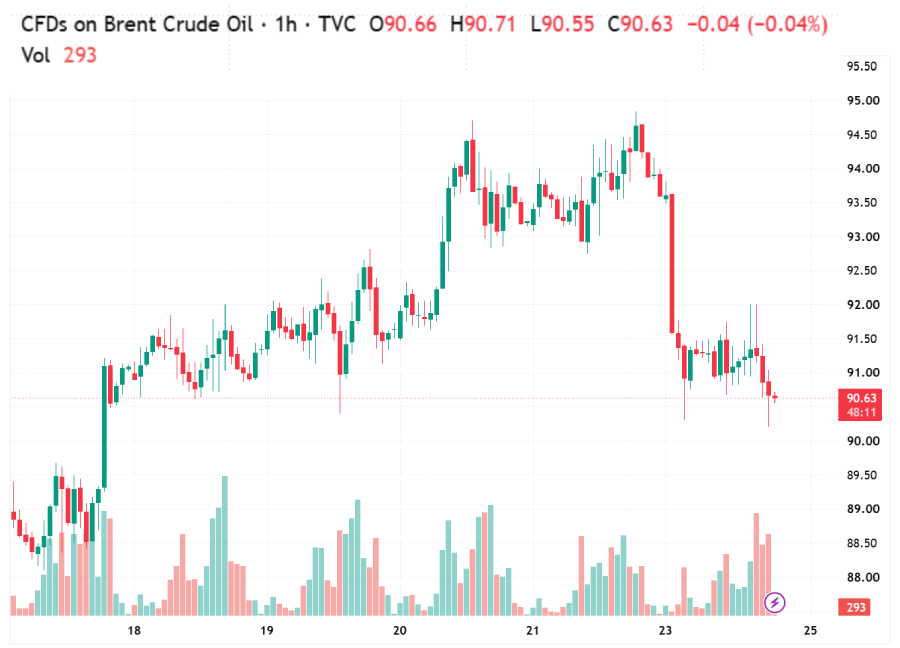
The Strait of Hormuz crisis has created an unusual problem: oil can be cheap and expensive at the same time.
Those best positioned to profit aren’t necessarily producers, but traders and shipowners that can move oil from where it’s stranded to where it’s scarce.
The $20 million toll
Inside the Persian Gulf, producers desperate to get their barrels to market are selling crude for just $50 to $60 a barrel, according to TotalEnergies CEO Patrick Pouyanné.
Outside the Gulf, Brent crude is trading above $90. The catch is getting the discounted oil there.
Pouyanné says shipping a cargo through Hormuz on a supertanker now costs about $20 million, or roughly $10 a barrel. Even after that enormous shipping bill, the price difference can still leave room to make money.
TotalEnergies is among those moving discounted barrels out of the region. The French energy giant is a major trader of Iraqi and Qatari oil, which has continued flowing through Hormuz despite the conflict.
Those shipments are also helping keep crude below $100 a barrel. But the savings aren’t necessarily reaching consumers.
Cheap crude, expensive gasoline
Normally, cheaper crude should eventually mean cheaper fuel, but that’s not the case today.
Pouyanné says more oil flowing through Hormuz is helping keep crude prices in check. Gasoline and diesel remain expensive, however, because Ukrainian attacks on Russian refineries have reduced supplies of finished fuels.
That means cheap crude inside the Gulf doesn’t automatically translate into cheaper gasoline at home.
📌 Bottom line: Consumers shouldn’t assume that a drop in oil prices will bring the same savings at the pump. As long as refinery outages keep supplies of finished fuels tight, gasoline and diesel prices aren’t coming down.