$60 billion in window dressing

Morning Observers,
The U.S. and China just released product lists for their summit tariff deal, confirming it's more symbolism than real progress.
Washington and Beijing have agreed on tariff reductions for roughly $30 billion worth of each other's imports.
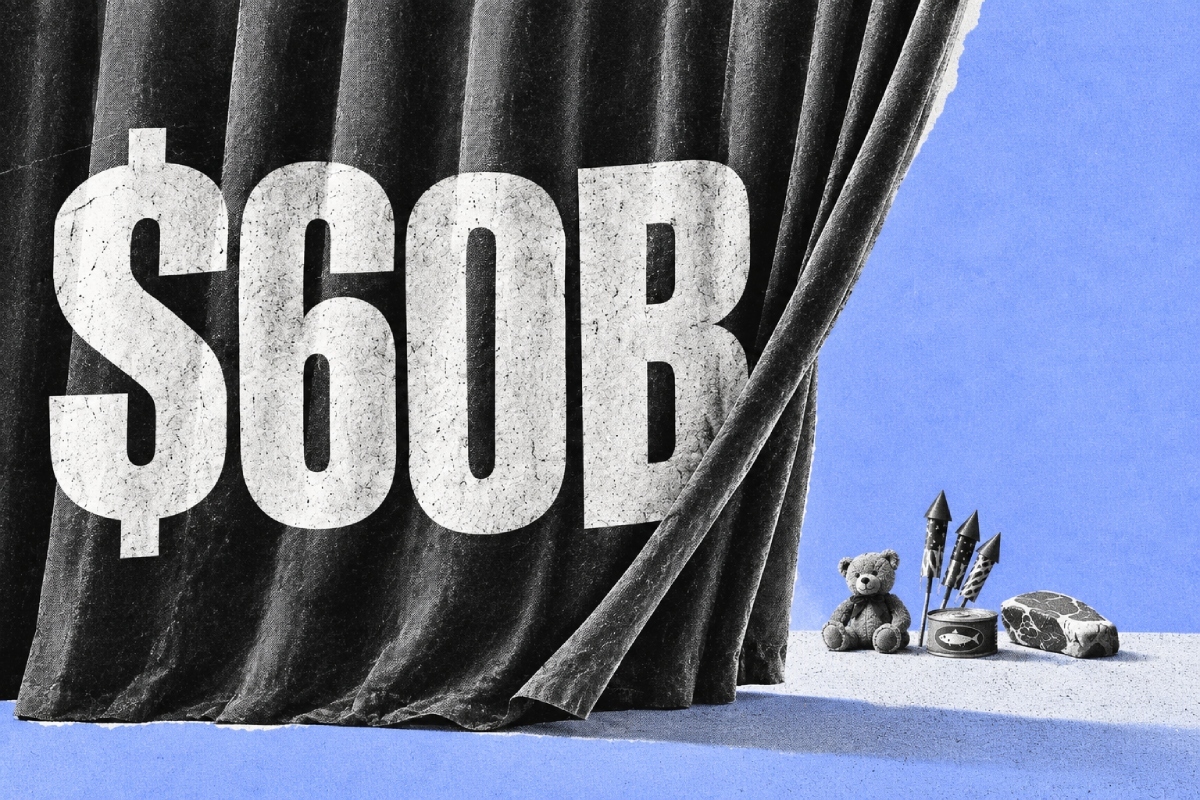
Together, the lists cover about $60 billion in trade, or roughly one-seventh of the $415 billion the countries exchanged in goods last year. (That $60 billion is the value of the products covered, not the amount of tariffs.)
The problem is that none of the products really matters in this trade war.
The U.S. list features toys, fireworks, household products, and sporting goods. China's list covers American meat, seafood, dairy, grains, coal, timber, and medical equipment.
Meanwhile, key disagreements over export controls remain unresolved.
Washington restricts exports of its most advanced chips to China, while Beijing restricts exports of rare earths. And the two sides have reached a rough parity of leverage: the restrictions are hurting, but neither appears willing to absorb the costs of further escalation.
At the same time, both sides are working relentlessly to develop homegrown alternatives to whatever they rely on from each other.
Bessent says the U.S. wants to break its reliance on Chinese rare earths within 12 to 24 months. And Huawei plans to launch two new AI chips in 2027 that will challenge Nvidia in China.
So these window-dressing, red-carpet summits work well to soothe investors and keep the global markets in check.
But the real motive behind these deals is just to buy time while both sides try to wean themselves off each other's supply chains.
- Dan Runkevicius, Editor

🏠 New-home prices post biggest drop on record
The average price of a new single-family home fell by $47,700 in August to $478,700, the biggest monthly drop on record, according to new Census Bureau data. Prices are now at their lowest since August 2024 as builders cut prices and offer incentives to move unsold homes while mortgage rates climb.
💻 Citi is still buying the AI dip
The recent selloff in chip stocks hasn't shaken Citigroup's confidence in AI. "We favor the U.S. as the AI narrative remains strong," the bank said, adding that it's buying the dip in AI stocks despite concerns about high valuations, rising interest rates, and the U.S. midterm elections in November.
🛒 Grocery prices are weighing on Americans
U.S. consumer sentiment fell to a four-month low in September as higher grocery and gas prices weighed on households. The University of Michigan's sentiment index dropped to 48.1 from 51.7 in August, while expectations for personal finances fell by about 10%.
🤖 Bill Gates warns of AI extinction risk
Microsoft co-founder Bill Gates warned that AI is "powerful enough" to potentially wipe out a substantial portion of humanity. His comments echo concerns from prominent AI researchers and executives about the technology's long-term risks, even as companies continue to pour hundreds of billions of dollars into its development.
🛢️ Hormuz reopening gets a boost
Oil prices fell Friday after The New York Times reported that Iran had proposed a plan to end the war, reopen the Strait of Hormuz, and revive nuclear talks. Brent and WTI fell about 3%. President Trump also said he'd discussed the conflict with Chinese President Xi Jinping, adding, "I think we're going to do great," without elaborating.
Uncle Sam is building a critical minerals stockpile
The Trump administration has talked about reducing U.S. reliance on China for critical minerals. Now it's putting serious money behind the effort.
A new public-private stockpile could direct billions of dollars toward copper, lithium, tungsten, nickel, and other critical materials, adding a major new buyer as shortages emerge in some markets.
An $11 billion stockpile
Last week, commodity giants Glencore and Mercuria each committed $500 million to Project Vault, a public-private initiative to build a strategic U.S. stockpile of critical minerals.
The U.S. Export-Import Bank, a federal agency that finances American exports, has separately approved up to $10 billion in financing for the project.
The stockpile is intended to give U.S. companies access to critical materials during supply disruptions or foreign export restrictions.
It would also make the federal government a buyer of minerals already in demand from data centers, power grids, defense, and manufacturing.
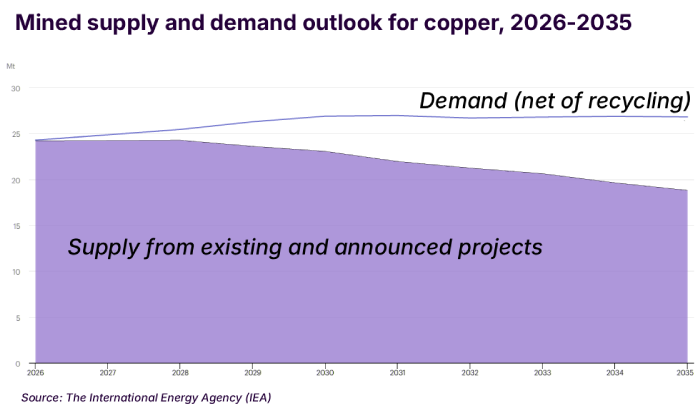
Copper is already running short
Copper shortages show why Washington is moving now.
S&P Global expects global demand to rise 50% from 2025 to 2040, potentially leaving an annual supply shortfall of 10 million metric tons by the end of that period.
Copper isn't alone. The International Energy Agency expects lithium demand to outstrip supply by 2035 and forecasts a sizable cobalt shortfall, too.
📌 Bottom line: The AI boom has already produced big winners in the minerals sector. The Global X Copper Miners ETF (COPX), iShares MSCI Global Metals & Mining Producers ETF (PICK), and Sprott Critical Materials ETF (SETM) are up roughly 27% to 30% this year. Project Vault could bring billions more in buying as the U.S. builds its strategic stockpile.
Bessent’s stronger-yen push comes with a Treasury problem
Treasury Secretary Scott Bessent is doubling down on his push for a stronger Japanese yen. But the policies needed to strengthen it could create another problem for the U.S. Treasury market.
Why Bessent still wants a stronger Japanese currency
Bessent said Friday that he had a "productive call" with Japanese Finance Minister Satsuki Katayama, days after President Trump raised concerns about the weak yen with Japanese Prime Minister Sanae Takaichi.
"We discussed the desirability of a strong yen that reflects Japan's strong economic fundamentals," Bessent said.
The comments came about a week after the Bank of Japan raised interest rates to 1.25%, the highest level since April 1995.
Bessent has held this position for months. He's pushed Japan toward higher interest rates and supported efforts to strengthen the yen, in part because disorderly currency markets could spill over into U.S. bonds.
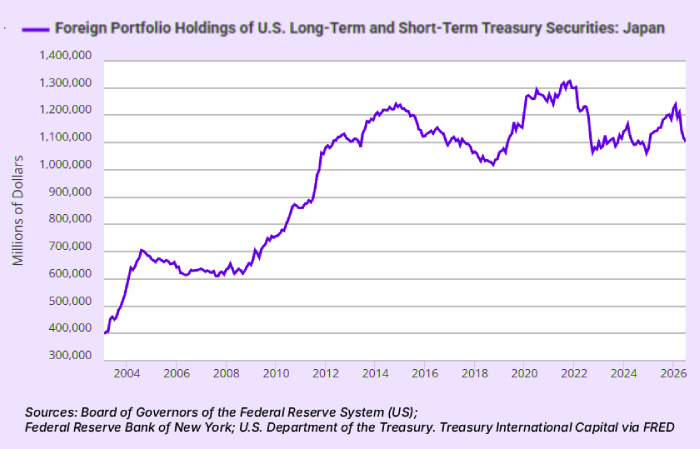
Japan is the largest foreign holder of Treasurys, with roughly $1.1 trillion. But its holdings have fallen for three straight months, dropping by about $106 billion since April.
The other side of a stronger yen
Years of ultra-low rates encouraged Japanese investors to put money overseas in search of higher returns.
As rates rise at home, Japanese bonds become more competitive, giving investors another reason to bring money back to Japan. And either path carries a risk for Treasurys.
A weak yen could push Japan toward intervention and asset sales, while higher Japanese rates could reduce demand for U.S. bonds.
📌 Bottom line: Japan's era of ultra-cheap money helped funnel capital into U.S. markets for decades. With Japanese rates at a 31-year high, some of that money now has more reason to stay home.