Fed’s Powell lets the stagflation out of the bag (again)

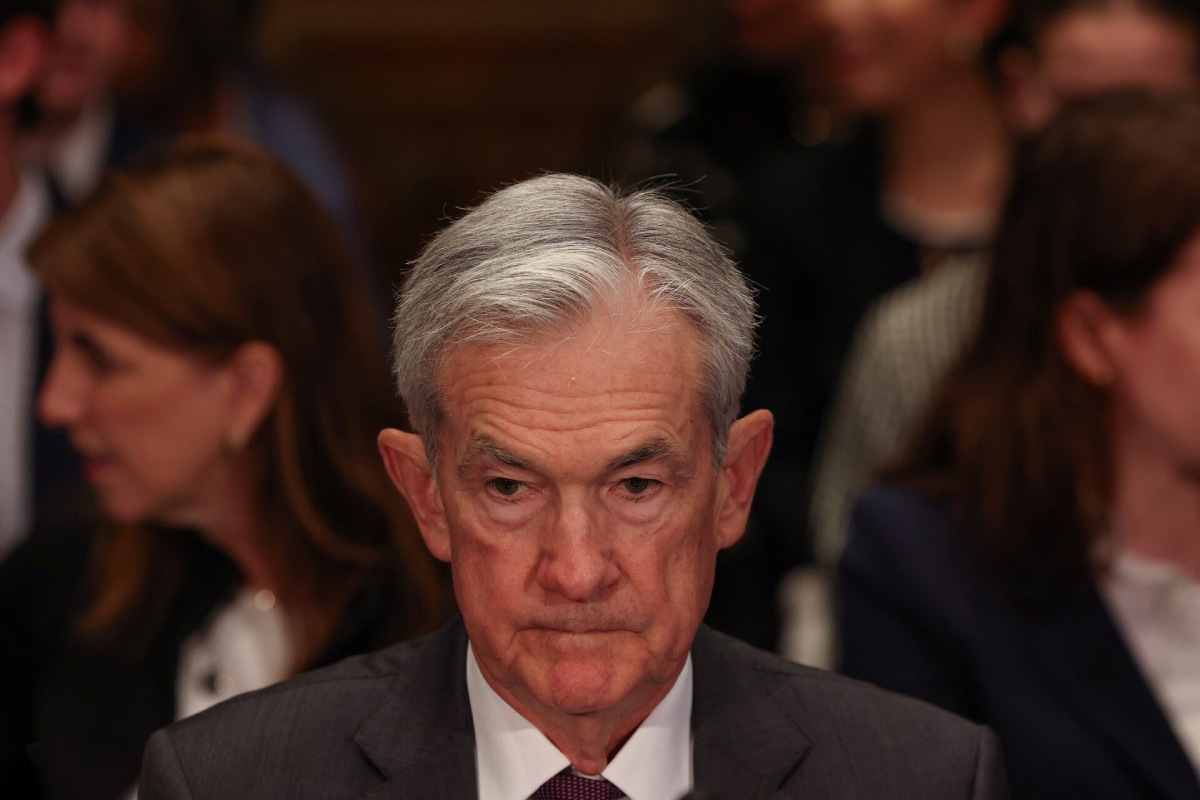
The U.S. economic picture is increasingly showing signs of stagflation — a mix of a weakening job market and stubbornly high inflation — and the Federal Reserve’s top officials are now acknowledging it, albeit indirectly.
Following the Fed’s decision last week to cut interest rates by 25 basis points, Chair Jerome Powell remarked that “conditions in the labor market are cooling, and inflation remains somewhat elevated.”
He also conceded, “Our two goals are a bit in tension… it’s very unusual,” referring to the central bank’s dual mandate of price stability and maximum employment, both of which have eroded over the past year as job losses accumulated and consumer prices remained well above the Fed’s 2% target.
Market commentator The Kobeissi Letter characterized Powell’s remarks as “yet another way to say stagflation.”
As InvestorsObserver reported in August, Powell may have begun recognizing both the “stag” and the “flation” after more than a year of publicly dismissing the possibility. At the time, he told the annual Jackson Hole Symposium that risks were rising for both inflation and employment.
The Fed’s commentary is filled with contradictions galore
The Fed’s messaging at its December meeting was riddled with contradictions.
On one hand, Powell’s Fed cut rates to counter labor-market weakness. On the other hand, policymakers raised their GDP forecasts, citing surprisingly resilient consumer spending. This apparent paradox underscores the policy bind the central bank now faces.
Some economists argue there may be a deeper reason the Fed can’t reconcile its narrative: artificial intelligence may be suppressing job growth even as it boosts corporate productivity and profits.
Goldman Sachs reported in October that, outside of healthcare, many industries are failing to register job gains.
Apollo chief economist Torsten Slok added that “what is likely happening is that job growth is weaker because of AI implementation and lower immigration.”
For the Fed, there may be a cautious silver lining. Major voices, including BlackRock, Elon Musk, and OpenAI’s Sam Altman, argue that AI will ultimately be deflationary, driving productivity and output faster than the growth of the money supply.
BlackRock has even described AI as “the deflationary growth engine.”
However, economists warn that the transition could be painful for workers. Rapid automation may displace certain roles before new ones emerge, potentially widening inequality, suppressing wage growth, and creating pockets of long-term unemployment, even as overall productivity surges.
Such a shift could accelerate what The Wall Street Journal calls a “two-speed economy,” in which wealth and opportunity flow to those with high-end skills, leaving lower-skilled workers further behind.