Cathie Wood: Consumer AI adoption is outpacing internet adoption

Cognizant Research last week pushed back on concerns over the amount of money being poured into the artificial intelligence sector, calling fears of an AI bubble "overblown."
In an article published by the World Economic Forum, Cognizant CEO Ravi Kumar S. and Olivier O'Donoghue, the company’s head of research, say concerns about an AI bubble are growing.
They point to what some see as a disconnect between the trillions of dollars being invested in AI infrastructure and the technology’s “translation into business, economic and social value.” The concern is especially pronounced given the slow pace of enterprise adoption.
The Cognizant team also referenced a widely discussed study recently released by MIT analysts. That study found 95% of AI projects are failing. Cognizant disputes that conclusion. The firm cites its own research showing AI could add $1 trillion to GDP and influence $4.4 trillion in consumer purchases in the U.S. alone.
Cognizant notes that “today’s large investments in AI and infrastructure are tied to a promise of the technology’s future potential.” It adds that “progress toward that potential is happening fast.” The firm also points out that in the three years since its last study on AI’s impact on jobs, that impact has increased by 30%.
"In other words, AI capability has developed so rapidly in the last three years that we’re already ahead of our decade-long projections calculated when GenAI first emerged in the market," they wrote.
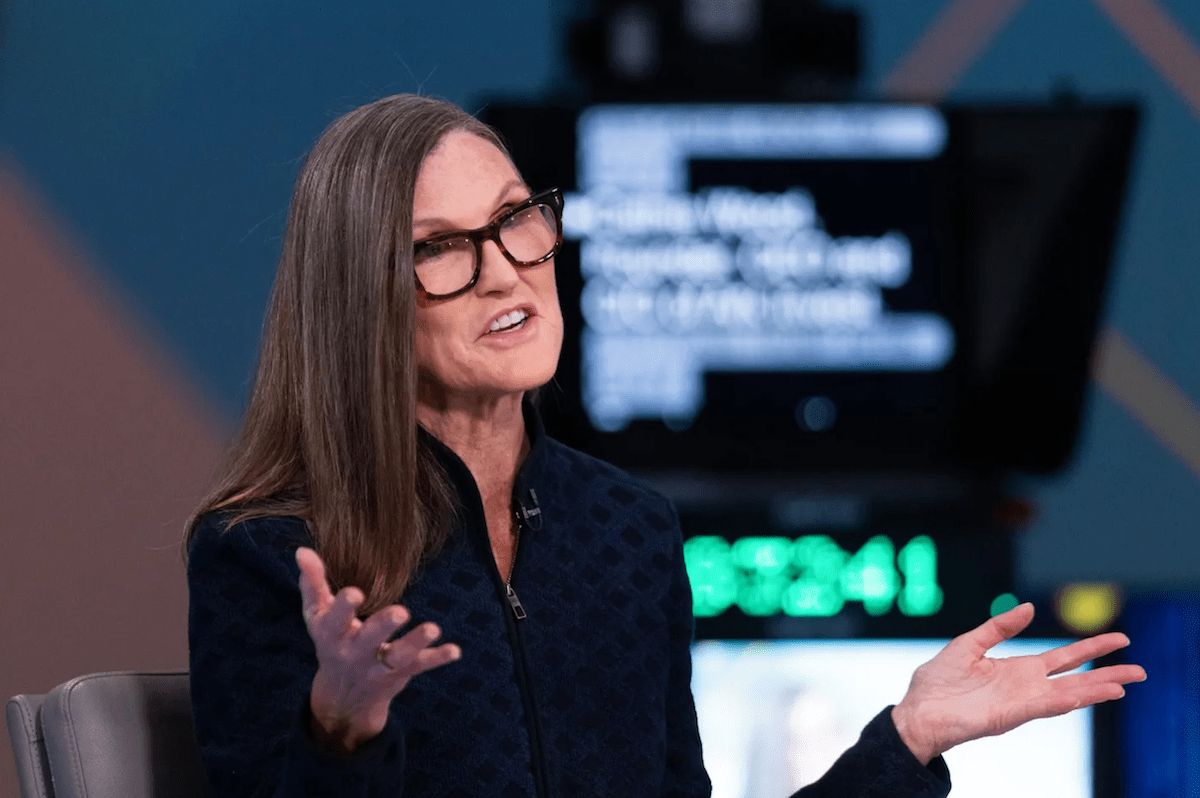
Ark Invest founder Cathie Wood also addressed concerns about the AI bubble - among other topics - in her 2026 Outlook released on Thursday.
Citing research from Gartner, Wood writes that investments in data center systems grew 47% in 2025 to nearly $500 billion, with another 20% growth expected this year to $600 billion. This compares to $150 to $200 billion spent annually on AI in the decade prior to the launch of ChatGPT.
Gartner also just released data estimating that global AI spending will reach $2.6 trillion in 2026, a 40% year-over-year increase. Approximately $401 billion of that total will be going toward AI infrastructure, according to Gartner.
“Investment of that magnitude begs the question: ‘What and where will the returns be on this investment?’” Wood said.
According to Wood, one of the biggest beneficiaries of the AI boom beyond publicly traded semiconductors and major cloud companies, are "the growth and returns on investment are benefiting AI-natives yet to enter the public markets."
"AI companies are some of the fastest growing businesses in history," Wood added. "According to our research, consumers are adopting AI at twice the pace at which they adopted the internet in the nineties."
She expects to see "material steps forward" this year with AI models becoming more useful for people, businesses and developers "through user experiences that are more intentional, intuitive, and integrated."
"In the enterprise, many AI implementations are in early days, delayed by bureaucracy, inertia, and/or the prerequisite to reorganize and build the data foundations necessary to make AI useful," Wood said. "In 2026, organizations likely will learn that they need to train models on their own data and iterate quickly, or risk being left behind by more aggressive competitors."